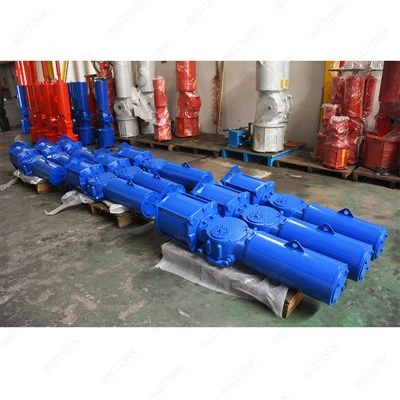
As a supplier of air actuators, I often get asked about the lifespan of these essential components. Air actuators, also known as pneumatic actuators, are widely used in various industries, including manufacturing, automotive, aerospace, and more. They convert compressed air energy into mechanical motion, making them crucial for controlling valves, dampers, and other mechanical devices.
The lifespan of an air actuator can vary significantly depending on several factors. Understanding these factors can help users make informed decisions about their maintenance schedules and replacement strategies.
Factors Affecting the Lifespan of Air Actuators
1. Quality of Manufacturing
The quality of materials used in the construction of an air actuator plays a vital role in determining its lifespan. High - quality materials such as stainless steel, aluminum alloys, and high - grade plastics are more resistant to wear, corrosion, and fatigue. For example, our Scotch Yoke Type Actuator is made with precision - engineered components and high - quality materials, ensuring long - term durability.
2. Operating Conditions
The environment in which an air actuator operates can have a profound impact on its lifespan. Harsh conditions such as extreme temperatures, high humidity, dust, and chemical exposure can accelerate wear and tear. In extremely hot environments, the lubricants within the actuator may break down more quickly, leading to increased friction and premature failure. On the other hand, in a cold environment, the seals may become brittle and lose their flexibility. Our Pneumatic Piston Actuator is designed to withstand a wide range of operating temperatures, but it is still important to consider the specific conditions of your application.
3. Frequency of Use
The more frequently an air actuator is used, the faster it will experience wear. In applications where the actuator is constantly cycling, such as in a high - speed manufacturing line, the moving parts will experience more friction and fatigue compared to less - frequently used actuators. For intermittent use, the lifespan of the actuator may be extended. However, even in intermittent use, proper maintenance is still necessary.
4. Maintenance
Regular maintenance is crucial for extending the lifespan of an air actuator. This includes cleaning, lubrication, and inspection of the actuator's components. Proper lubrication reduces friction between moving parts, which in turn reduces wear. Inspecting the seals, pistons, and rods for damage or wear can help identify potential problems before they lead to complete failure. For example, our Single Acting Actuator comes with detailed maintenance instructions to ensure optimal performance and longevity.
Typical Lifespan Ranges
Under normal operating conditions and with proper maintenance, a well - made air actuator can last anywhere from 5 to 15 years. Low - quality actuators or those operating in harsh environments may have a significantly shorter lifespan, perhaps only 1 to 3 years.
In some cases, with exceptional manufacturing quality, ideal operating conditions, and meticulous maintenance, air actuators can last even longer. For example, in a clean, temperature - controlled industrial environment, an actuator may exceed its expected lifespan.
Extending the Lifespan of Air Actuators
1. Choose the Right Actuator
Selecting an air actuator that is suitable for your specific application is the first step in ensuring a long lifespan. Consider factors such as the required torque, speed, and operating environment. Our BG Series Scotch Yoke Actuator is available in different configurations to meet a wide range of application requirements.
2. Implement a Maintenance Program
Develop a regular maintenance schedule for your air actuators. This should include tasks such as lubrication, inspection of seals and gaskets, and checking for any signs of leakage or abnormal wear. Keep detailed records of maintenance activities to track the performance of the actuators over time.
3. Monitor Operating Conditions
Install sensors to monitor the operating conditions of the air actuators, such as temperature, pressure, and vibration. Unusual changes in these parameters can indicate potential problems. By detecting issues early, you can take corrective action before they cause significant damage.
Comparison of Different Types of Air Actuators
Single Acting Actuators
Single Acting Actuators use compressed air to move the actuator in one direction and a spring to return it to its original position. These actuators are relatively simple in design, which can contribute to a longer lifespan in some applications. However, the spring can wear out over time, especially if the actuator is cycled frequently.


Double Acting Actuators
Double Acting Actuators use compressed air to move the actuator in both directions. They generally have a more complex design compared to single - acting actuators. While this complexity can sometimes increase the risk of failure, modern double - acting actuators are often built with high - quality components that can provide a long and reliable service life.
Scotch Yoke Actuators
Scotch yoke actuators, such as our Scotch Yoke Type Actuator, are known for their high torque output and durability. The scotch yoke mechanism is designed to convert linear motion into rotary motion efficiently. These actuators are often used in applications where high torque is required, such as in large - scale industrial valves. With proper maintenance, scotch yoke actuators can have a very long lifespan.
Pneumatic Piston Actuators
Pneumatic Piston Actuators are another popular type of air actuator. They use a piston to convert the energy of compressed air into linear or rotary motion. Piston actuators are known for their simplicity and reliability. The lifespan of a pneumatic piston actuator can be extended by ensuring proper lubrication and preventing contamination of the air supply.
Conclusion
The lifespan of an air actuator is influenced by multiple factors, including manufacturing quality, operating conditions, frequency of use, and maintenance. By understanding these factors and taking appropriate measures, you can maximize the lifespan of your air actuators and ensure reliable operation in your applications.
If you are in the market for high - quality air actuators or need more information about extending the lifespan of your existing actuators, we are here to help. We offer a wide range of air actuators, including Single Acting Actuator, BG Series Scotch Yoke Actuator, Scotch Yoke Type Actuator, Double Acting Actuator, and Pneumatic Piston Actuator. Contact us today to discuss your specific requirements and start a procurement discussion.
References
- Bhattacharyya, B., & Choudhury, A. (2018). Pneumatic Actuators: Design, Modeling, and Control. CRC Press.
- Murphy, R. (2019). Industrial Automation: Principles and Applications. Cengage Learning.
- Parker Hannifin Corporation. (2020). Pneumatic Products Manual.