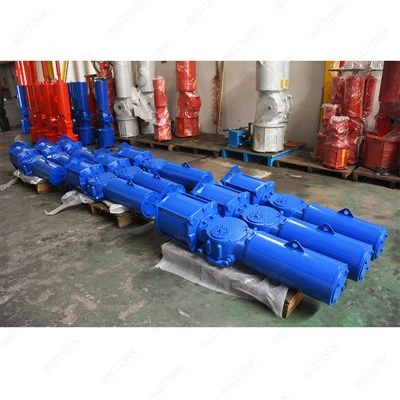
Hey there! As a supplier of Scotch Yoke Type Actuators, I get a lot of questions about noise reduction. People are tired of the loud, disruptive sounds that some actuators can produce. So, let's dive into what the noise reduction measures for a Scotch Yoke Type Actuator are.
Understanding Scotch Yoke Type Actuators
First off, Scotch Yoke Type Actuators are pretty cool. They're used in a bunch of industries like oil and gas, water treatment, and chemical processing. These actuators can convert linear motion into rotary motion, which is great for opening and closing valves.
There are different types available on my website. For example, the Double Acting Actuator provides bidirectional power, and the Heavy Duty Actuator is built to handle tough jobs. The Scotch Yoke Valve Actuator is specifically designed for valve operations, and then there's the Double Acting Actuator with its dual - action features. The BG Series Scotch Yoke Actuator is another popular choice among our customers.
What Causes Noise in Scotch Yoke Type Actuators?
Before we talk about reducing noise, it's important to know what causes it. One of the main culprits is mechanical vibration. When the actuator's components move, they can vibrate against each other, creating noise. For example, the yoke moving back and forth can generate vibrations that lead to a rattling or clanging sound.
Another cause is the impact between parts. When the actuator reaches the end of its stroke, there's often a sudden impact as the moving parts come to a stop. This impact generates a loud noise. Airflow can also be a factor. If the air is moving through the actuator too quickly or unevenly, it can cause whistling or hissing sounds.
Noise Reduction Measures
1. Lubrication
Regular and proper lubrication is a game - changer. Lubricants can reduce friction between the moving parts of the actuator. When there's less friction, there are fewer vibrations. You can use high - quality industrial lubricants that are specifically formulated for use in actuators. Apply the lubricant at the recommended intervals, and make sure to cover all the contact points between the yoke, piston, and other moving components. This simple step can significantly quiet down your actuator.
2. Cushioning Devices
Adding cushioning devices can help absorb the impact when the actuator reaches the end of its stroke. There are two common types: hydraulic and pneumatic cushions. Hydraulic cushions use a small amount of hydraulic fluid to slow down the moving parts gradually. Pneumatic cushions, on the other hand, use compressed air to provide a soft stop. By installing these cushions, you can reduce the loud noise caused by the sudden impact, making the actuator much quieter.
3. Isolation Mounts
Isolation mounts are another great measure. These mounts are made of materials like rubber or elastomers. They're placed between the actuator and the mounting surface. Their job is to isolate the actuator from the surrounding structure, preventing the transmission of vibrations. When the vibrations don't spread, the noise level is reduced. You can choose isolation mounts based on the size and weight of your actuator to ensure they work effectively.
4. Silencers
Silencers are specifically designed to reduce the noise caused by airflow. They're usually installed at the air inlet or outlet of the actuator. Silencers work by disrupting the airflow patterns, which reduces the whistling and hissing sounds. There are different types of silencers available in the market, and you can select one that suits the specifications of your actuator.


5. Tightening and Alignment
Loose parts can cause a lot of noise. Make sure all the bolts and fasteners in the actuator are tightened properly. Also, check the alignment of the components. Misaligned parts can cause uneven wear and extra vibrations, which lead to noise. Use the right tools to tighten the components and ensure proper alignment according to the manufacturer's instructions.
Implementing Noise Reduction Measures
When you're implementing these noise reduction measures, it's important to do a step - by - step inspection. First, check for any obvious signs of wear or damage. Replace any worn - out parts before proceeding. Then, start with lubrication. Make sure to clean the parts first to ensure the lubricant works effectively.
For cushioning devices, follow the installation instructions carefully. Incorrect installation can lead to reduced performance or even damage to the actuator. When installing isolation mounts, make sure they're properly positioned and that the actuator is firmly attached to them.
Silencers should be installed at the appropriate air ports, and you need to check the airflow after installation to ensure it's still compatible with the actuator's operation. And finally, double - check the tightening and alignment of all components.
Benefits of Noise Reduction
Reducing the noise of your Scotch Yoke Type Actuator has several benefits. First of all, it creates a more comfortable working environment. In industrial settings, excessive noise can be a health hazard, causing hearing problems and stress for workers. By reducing the noise, you're taking care of your employees' well - being.
Secondly, it can improve the overall efficiency of the actuator. When there's less vibration and impact, the parts last longer, reducing the need for frequent maintenance and replacements. This, in turn, saves you money in the long run.
Conclusion
Well, there you have it - a rundown of the noise reduction measures for Scotch Yoke Type Actuators. Whether you're using a Double Acting Actuator or a BG Series Scotch Yoke Actuator, implementing these measures can make a big difference.
If you're interested in purchasing high - quality Scotch Yoke Type Actuators or need more advice on noise reduction, feel free to reach out. We're here to help you find the right solutions for your needs. Let's get your operations running quieter and more efficiently.
References
- Industrial Actuator Handbook
- Machinery Noise and Vibration Control Manual