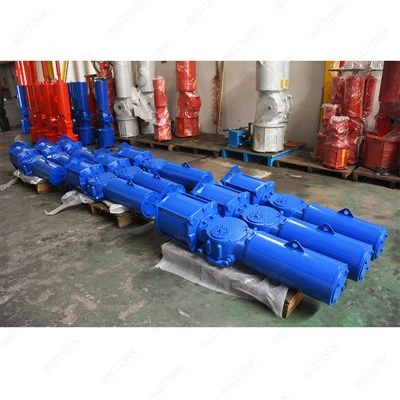
Hey there! As a supplier of Valve Actuator Air, I've been getting a lot of questions about the mounting position of these things. So, I thought I'd sit down and write a blog post to share some insights.
First off, let's talk about what a valve actuator air is. In simple terms, it's a device that uses compressed air to operate a valve. These are super important in a bunch of industries, like manufacturing, oil and gas, and water treatment. They can open and close valves quickly and accurately, which helps control the flow of liquids and gases.
Now, the mounting position of a valve actuator air is a big deal. It can really affect how well the actuator works and how long it lasts. There are a few different mounting positions to consider, and each has its own pros and cons.
Horizontal Mounting
One common mounting position is horizontal. When you mount a valve actuator air horizontally, it's placed parallel to the ground. This position has some advantages. For starters, it's often easier to install and maintain. You can access all the parts of the actuator more easily, which is great for when you need to do some repairs or adjustments.
Another benefit is that horizontal mounting can help with drainage. If there's any moisture or condensation inside the actuator, it can drain out more easily in a horizontal position. This can prevent rust and corrosion, which can damage the actuator over time.
However, there are also some downsides to horizontal mounting. One issue is that it can put more stress on the seals. The weight of the actuator and the pressure from the compressed air can cause the seals to wear out faster. This can lead to leaks, which can be a real headache.
Vertical Mounting
Vertical mounting is another option. In this position, the valve actuator air is mounted perpendicular to the ground. This can have some advantages, especially in certain applications.
One of the main benefits of vertical mounting is that it can save space. If you're working in a tight area, mounting the actuator vertically can free up some room. It can also be a good option if you need to install the actuator in a location where there's limited horizontal space.
Vertical mounting can also help with the flow of compressed air. In some cases, it can improve the efficiency of the actuator by allowing the air to flow more smoothly. This can result in better performance and faster operation.
But, like horizontal mounting, vertical mounting also has its drawbacks. One problem is that it can be more difficult to access the parts of the actuator for maintenance. You might need to use special tools or equipment to reach certain areas.
Another issue is that vertical mounting can cause problems with drainage. If there's any moisture inside the actuator, it might not drain out properly. This can lead to water buildup, which can damage the internal components.
Upside - Down Mounting
Believe it or not, there are also situations where upside - down mounting of a valve actuator air can be used. This might seem a bit strange, but it can be useful in some specific applications.
One advantage of upside - down mounting is that it can help with the flow of certain types of fluids. In some cases, it can prevent the buildup of debris or sediment in the actuator. This can improve the reliability and performance of the actuator.
However, upside - down mounting also comes with some challenges. One of the main issues is that it can be difficult to install and secure the actuator properly. You need to make sure that it's firmly attached to the valve to prevent it from coming loose.
Another concern is that the seals and other components might be affected by gravity in an upside - down position. This can lead to premature wear and tear, and potentially cause leaks.
Factors to Consider When Choosing a Mounting Position
So, how do you decide which mounting position is right for your valve actuator air? Well, there are a few factors you need to consider.
First, think about the application. What kind of valve are you using the actuator with? What kind of fluid or gas is flowing through the valve? Some applications might require a specific mounting position to ensure proper operation.
For example, if you're working with a fluid that contains a lot of sediment, upside - down mounting might be a good option to prevent the sediment from building up in the actuator. On the other hand, if you're working in a cramped space, vertical mounting might be your best bet.
Second, consider the maintenance requirements. As I mentioned earlier, some mounting positions are easier to access for maintenance than others. You want to choose a position that will make it easy for you to inspect, repair, and replace parts when needed.
Third, think about the environmental conditions. If you're working in a humid or wet environment, you'll want to choose a mounting position that allows for proper drainage. If you're in an area with a lot of dust or debris, you might need to choose a position that protects the actuator from contamination.


Our Products and Solutions
As a supplier of Valve Actuator Air, we offer a wide range of products to suit different needs. Whether you're looking for a Pneumatic Butterfly Valve Actuator, an Air Operated Actuator, or a Compressed Air Valve Actuator, we've got you covered.
Our Valve Actuator Air products are designed with high - quality materials and advanced technology to ensure reliable performance. We also offer a variety of Industrial Valve Actuators that can be customized to fit your specific requirements.
When it comes to mounting, we can provide expert advice to help you choose the best position for your application. Our team of technicians has years of experience in the industry and can answer all your questions.
Contact Us for More
If you're in the market for a valve actuator air and are not sure which mounting position is right for you, or if you have any other questions about our products, don't hesitate to reach out. We're here to help you make the best decision for your business. Whether you're a small - scale operation or a large industrial company, we've got the solutions you need.
References
- Industrial Valve Handbook: Covers the basics of valve operation and actuator mounting.
- Pneumatic Systems Design Manual: Provides detailed information on the design and installation of pneumatic valve actuators.