Company Profile
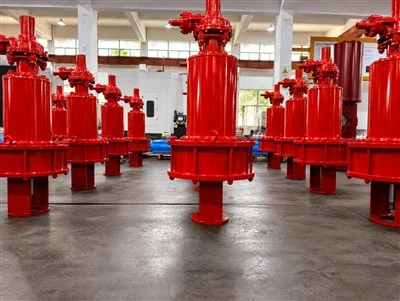
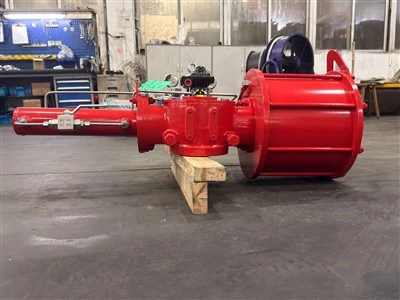
Founded in 2006, Zhejiang Bigtork Valve Automation Co., Ltd. specializes in the design and manufacture of pneumatic and hydraulic actuators for rotary and linear valve applications. Since 2011, BIGTORK has supported domestic and international oil & gas and industrial projects, providing actuator sizing, application engineering, manufacturing, testing and technical support for demanding valve automation requirements.
Why Choose Us?
Proven Experience
Founded in 2006, BIGTORK has built extensive experience in the design and manufacture of pneumatic and hydraulic valve actuators. Since 2011, we have supported valve automation projects in domestic and international markets, serving a wide range of industrial applications.
Engineering Expertise
Our engineering team supports actuator sizing, configuration and application engineering for both standard and project-specific requirements. Proprietary sizing tools help ensure accurate actuator selection, while technical support is available throughout project execution and the product lifecycle.
Manufacturing Capacity
BIGTORK operates four dedicated actuator production lines with an annual production capacity of approximately 60,000 units. Advanced CNC machining centres and CNC lathes support efficient production, dimensional accuracy and consistent product quality.
Quality Assurance
Quality is controlled throughout material inspection, machining, assembly and final testing. Critical components are sourced from qualified suppliers, and every actuator undergoes final inspection and functional testing before delivery. Test documentation can be provided in accordance with project requirements.
Lifecycle Support
From actuator selection and project configuration to manufacturing, testing and after-sales support, BIGTORK works with customers throughout the equipment lifecycle. Our engineering and service teams provide responsive support to help ensure reliable actuator operation and efficient project execution.
Global Project Experience
BIGTORK has supported valve manufacturers, engineering companies and industrial customers across international markets. Experience gained from oil & gas and industrial valve automation projects enables us to respond to diverse application requirements and demanding operating conditions.
-
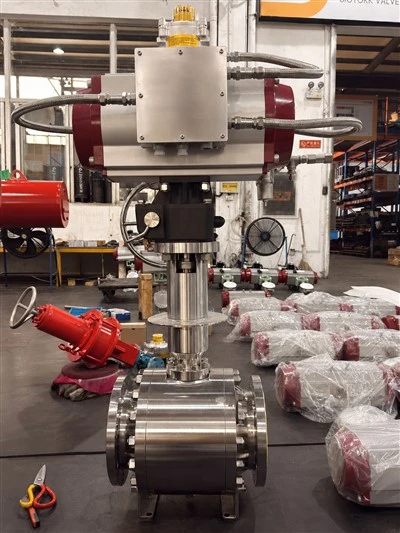
![Pneumatic Actuator With Ball Valve]() Pneumatic Actuator With Ball ValveThis is a rack-and-pinion pneumatic actuator designed for use with industrial piping systems.read more
Pneumatic Actuator With Ball ValveThis is a rack-and-pinion pneumatic actuator designed for use with industrial piping systems.read more -
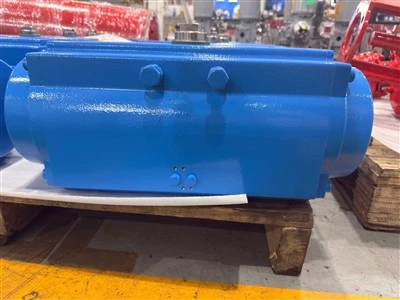
![AT190 SR Spring-return pneumatic Actuator]() AT190 SR Spring-return pneumatic ActuatorThe AT190SR spring-return pneumatic actuator features a robust, one-piece design with a highly recognizable blue industrial coating. With its sturdy, compact body, it is suitable for field applications that demand safe reset, stableread more
AT190 SR Spring-return pneumatic ActuatorThe AT190SR spring-return pneumatic actuator features a robust, one-piece design with a highly recognizable blue industrial coating. With its sturdy, compact body, it is suitable for field applications that demand safe reset, stableread more -
![Single-acting Rack-and-pinion Pneumatic Actuator]() Single-acting Rack-and-pinion Pneumatic ActuatorThe AT Series pneumatic actuators feature a rack-and-pinion drive mechanism and are specifically designed for industrial automation valves. Suitable Right-angle valves such as ball valves, butterfly valves, and plug valves, they provideread more
Single-acting Rack-and-pinion Pneumatic ActuatorThe AT Series pneumatic actuators feature a rack-and-pinion drive mechanism and are specifically designed for industrial automation valves. Suitable Right-angle valves such as ball valves, butterfly valves, and plug valves, they provideread more -
![Air Power Actuator]() Air Power ActuatorA rack-and-pinion pneumatic actuator is a valve drive device that converts compressed air energy into rotational motion to open and close valves. The Bigtork® model is particularly suitable for 90° rotary valves such as ball valves,read more
Air Power ActuatorA rack-and-pinion pneumatic actuator is a valve drive device that converts compressed air energy into rotational motion to open and close valves. The Bigtork® model is particularly suitable for 90° rotary valves such as ball valves,read more -
![Pneumatic Actuator AT Seriesr]() Pneumatic Actuator AT SeriesrA pneumatic actuator is a device that uses compressed air as its power source to drive valves for opening, closing, or regulating control. This device is also known as a pneumatic actuator or pneumatic unit, and is commonly referred to asread more
Pneumatic Actuator AT SeriesrA pneumatic actuator is a device that uses compressed air as its power source to drive valves for opening, closing, or regulating control. This device is also known as a pneumatic actuator or pneumatic unit, and is commonly referred to asread more -
![Actuator Air]() Actuator AirThis is a type of actuator commonly used in industrial automation systems to convert pneumatic energy into mechanical motion. This actuator is frequently used in valve control, robotic arms, and material handling systems.read more
Actuator AirThis is a type of actuator commonly used in industrial automation systems to convert pneumatic energy into mechanical motion. This actuator is frequently used in valve control, robotic arms, and material handling systems.read more -
![Waterproof Actuator]() Waterproof ActuatorRack & pinion pneumatic actuator is a weatherproof and waterproof actuator protects it keeps out wind, rain, dust and water. This waterproof actuator allows IP65 IP66 IP67 IP68 proof level that make it suitable in some harsh outdoorread more
Waterproof ActuatorRack & pinion pneumatic actuator is a weatherproof and waterproof actuator protects it keeps out wind, rain, dust and water. This waterproof actuator allows IP65 IP66 IP67 IP68 proof level that make it suitable in some harsh outdoorread more -
![90 Degree Rotary Actuator]() 90 Degree Rotary Actuator90 degree rotary actuator adopts high strength extruded aluminum cylinder body, with fine machining and hard anodizing treatment on the inner surface, has a long service life, low friction coefficient, and fast action.The surface of the 90read more
90 Degree Rotary Actuator90 degree rotary actuator adopts high strength extruded aluminum cylinder body, with fine machining and hard anodizing treatment on the inner surface, has a long service life, low friction coefficient, and fast action.The surface of the 90read more -
![Double Acting Rotary Actuator]() Double Acting Rotary ActuatorDouble acting rotary actuator has ports at each end of the actuator and can operates in both directions. Double acting rotary actuator can have higher torque in specific situations than spring return actuators. This applies there is a needread more
Double Acting Rotary ActuatorDouble acting rotary actuator has ports at each end of the actuator and can operates in both directions. Double acting rotary actuator can have higher torque in specific situations than spring return actuators. This applies there is a needread more -
![Rack and Pinion Type Actuator]() Rack and Pinion Type ActuatorThe AT series pneumatic actuator is the latest rack and pinion type aluminum alloy actuator, which developed and designed using new technologies, materials, and processes. The product has a compact structure, linear torque output, andread more
Rack and Pinion Type ActuatorThe AT series pneumatic actuator is the latest rack and pinion type aluminum alloy actuator, which developed and designed using new technologies, materials, and processes. The product has a compact structure, linear torque output, andread more


The Rack and Pinion Actuator is often chosen for its exceptional ability to offer precise control over valve operations in a wide array of industrial settings. This type of actuator utilises a gear mechanism where the pinion, a circular gear, meshes with a rack, a linear gear, to convert linar motion into rotational motion. This design is both efficient and compact, making it a popular choice for applications where space is limited but accuracy is critical.
Benefits of Rack And Pinion Actuator
Consistent torque
They offer a uniform torque output throughout the rotation, aligning well with valves that require a nearly constant force, like ball or butterfly valves.
Compact design
Typically more lightweight and compact, they're ideal for situations with limited space.
Durability
With fewer moving parts, they often exhibit longer lifespans in specific environments.
Cost-effective
Generally less expensive than their scotch-yoke counterparts for the same torque output.
Types of Rack And Pinion Actuator
Rotary pneumatic actuators
Rotary actuators convert the linear motion of the piston into a rotary motion. They are used to rotate valves and other control devices. The rotation is usually limited to a 90-degree angle, but some actuators can rotate up to 360 degrees. They are commonly used in the automotive industry for tasks such as opening and closing valves, and they can also be used for conveyor belt movement and machine handling. The rack and pinion is a common rotary actuator that uses a pinion gear to rotate a toothed shaft (rack) to produce the rotary movement.
Linear pneumatic actuators
Linear actuators produce a linear or straight-line motion from the rotary motion of the piston in the cylinder. The linear motion moves a piston rod in and out of the actuator's housing. They are used to control gate valves, globe valves, and other linear motion valves. They are also used to control manual valves and to open and close and adjust the flow of liquids or gases in a pipeline system. A rodless or cable pneumatic actuator does not have a central piston rod. Instead, the piston is connected to the end of the actuator by a cable that is wound on a drum. They can be used when a traditional linear actuator is impractical due to space limitations.
Spring return pneumatic actuators
Spring return actuators have a spring that pushes the piston back to the start position when the compressed air is released. The spring return actuator is the most common type of actuator for on/off applications. They require air to open the valve and use the spring to close it. They are used when the valve must fail in a certain position, typically closed. Spring return actuators are compact, which makes them suitable for small spaces. They are also cost-effective and require less air to operate. The double-acting pneumatic actuator uses compressed air to open and close the valve. It consists of a piston in a cylindrical housing with air ports at each end.
Application of Rack And Pinion Actuator
The versatility of pneumatic rack and pinion actuators makes them suitable for a wide range of applications in various industries.
Valve control:
In industries such as chemical processing, oil and gas refining, and water treatment, where precise flow and pressure control are critical, pneumatic actuators are often used to control various types of valves. Whether it is a ball valve, butterfly valve, gate valve or globe valve, the pneumatic rack and pinion actuator can quickly open, close, or modulate the valve position in response to the control signal sent by the pneumatic controller.
Motion control:
Pneumatic rack and pinion actuators are commonly used in automated production lines, packaging machinery, and robotics for gripping, clamping, and positioning tasks. The actuator's linear movement or rotary motion allows for precise control and fast response, improving production efficiency.
Shut-off and damper:
Pneumatic rack and pinion actuators are often used to control shutters, dampers, and other flow regulation components. In ventilation systems, dust removal equipment, and other scenarios, the actuator can quickly adjust the opening and closing of the dampers, ensuring proper air flow and system operation.
Machinery automation:
Pneumatic actuators are widely used in the automation of machinery and equipment, such as cutting machines, assembly lines, and pressing machines. The actuator can drive the movement of tools, workpieces, and other components, achieving automated control of the entire production process.
Surface treatment:
In industries such as painting, coating, and electroplating, pneumatic actuators are commonly used to control the movement of spray guns, nozzles, and other coating equipment. The actuators can precisely position the spray equipment to ensure uniform coating and high-quality surface treatment.
Other applications:
In addition to the above applications, pneumatic rack and pinion actuators have many other uses. For example, in the automotive industry, they are used to control vehicle doors, power windows, and other systems. In the field of aerospace and defense, they can be used to control aircraft flaps, landing gear, and other components. In the field of medical equipment, they can be used to control the movement of surgical instruments and diagnostic devices. The wide range of applications of pneumatic actuators demonstrates their versatility and adaptability to different industries and scenarios.

Components of Rack And Pinion Actuator
Actuator body
Extruded hard anodized aluminum allows ASTM6005 body, powder polyester painted.
End caps
Die cast aluminum powder polyester painted in black. Different colors upon request. Also available in PTFE or ENP.
Pistons
The twin rack pistons are made from die cast aluminum then hard anodized. Also available from cast steel and galvanized. The pistons are symmetrically positioned for long cycle life and fast operation. Reversing rotation is simply performed by inverting the pistons.
Travel adjustment
The two independent external travel stop adjustment bolts can adjust ±5° at both open and close directions easily and precisely.
High-performance springs
Preloaded coated springs are made from high-quality material resistant to corrosion and longer service life, which can be changed safely and conveniently to satisfy different requirements of torque by changing the quantity of springs.
Bearings & guides
Made from low friction, long-life engineered plastics, to avoid direct contact between metals. Maintenance and replacement are easy and convenient.
O-rings
NBR rubber O-rings provide trouble-free operation at standard temperature ranges. For high- and low-temperature applications FKM or Silicone
How to Maintain Rack And Pinion Actuator
Maintenance of Rack & Pinion Actuators typically includes regular inspections, lubrication of gears and bearings, checking for wear and tear, and ensuring proper alignment. Following a preventive maintenance schedule can help prolong the actuator's lifespan and maintain optimal performance.
Control Options for Actuators
Electrical control is one of the most common options for rack and pinion actuators. These actuators are powered by an electric motor, providing precise control over movement. They are ideal for applications requiring accurate positioning and automation. With electrical control, users can easily adjust speed, direction, and stroke length based on specific requirements.
Hydraulic control is another popular choice for rack and pinion actuators. In this system, hydraulic fluid is used to generate motion, offering high force output capabilities. These actuators are suitable for heavy-duty applications where substantial power is needed. Hydraulic control provides smooth and consistent operation, making it a reliable option for various industrial settings.
Pneumatic control offers a cost-effective solution for rack and pinion actuators. Compressed air is utilized to drive the actuator, delivering quick response times and simple installation. Pneumatic actuators are lightweight and compact, making them versatile for different applications. They are commonly used in industries where rapid actuation is required, such as in manufacturing processes.
Manual control remains a straightforward option for rack and pinion actuators. Users can operate these actuators manually without the need for external power sources. While manual control may lack the precision of automated systems, it is suitable for applications where simplicity and reliability are key. Manual actuators are often used in scenarios where occasional adjustments or emergency operations are necessary.
Remote control capabilities enhance the flexibility of rack and pinion actuators. By integrating remote control systems, users can operate actuators from a distance, enabling convenient adjustments without direct physical contact. This feature is beneficial in scenarios where access to the actuator is limited or when frequent adjustments are required. Remote-controlled actuators offer increased convenience and efficiency in various industrial applications.
Rack and pinion actuators operate based on pressure conditions and input signals. They respond to changes in pressure by converting them into linear motion through the interaction of the rack and pinion gears. Torque output plays a crucial role in determining the actuator’s efficiency and effectiveness. Higher torque output allows for more substantial loads to be moved with precision.

How to Choose Rack and Pinion Actuators
Choosing the right rack and pinion actuator is crucial for optimizing performance and reliability in various applications. Here are some factors to consider when selecting an actuator:
Torque requirements
Consider the torque requirements of the application. Selecting an actuator with adequate torque capability to handle the load and overcome frictional resistance is essential. Calculate the required torque by considering factors such as load weight, speed requirements, and acceleration.
Size and pinion diameter
The size and pinion diameter of the rack and pinion actuator affect the torque output and the actuator's overall size. A larger pinion will provide higher torque but result in reduced resolution and increased actuator size. Choose a pinion size that balances the desired torque, resolution, and spatial constraints.
Speed and gear ratio
The gear ratio of the rack and pinion actuator influences speed and torque characteristics. A higher gear ratio provides increased torque but reduces speed, while a lower gear ratio offers higher speed but lower torque. Determine the appropriate gear ratio based on the application's speed and torque requirements.
Load capacity and stroke length
Consider the load capacity and stroke length of the rack and pinion actuators. Ensure the actuator can handle the maximum load and provide the required stroke length for the application's motion requirements. Select an actuator with a load capacity and stroke length that meets the specific needs of the application.
Accuracy and resolution
Take into account the accuracy and resolution requirements of the application. The pinion size and the number of teeth affect the linear resolution of the actuator. Additionally, consider factors such as backlash, friction, and repeatability to ensure the selected actuator meets the desired accuracy and resolution standards.
Environmental considerations
Consider the operating environment where the rack and pinion actuator will be used. Factors such as temperature, humidity, dust, and exposure to corrosive substances can affect the actuator's performance and durability. Choose an actuator designed for the specific environmental conditions, with appropriate sealing, protection, and material considerations.
Mounting and integration
Consider the mounting options and integration requirements of the rack and pinion actuator within the system. Ensure the actuator's dimensions, mounting configurations, and interface compatibility align with the available space and other components. Consider factors such as accessibility for maintenance and installation ease.
Control system
Consider the control system requirements for the rack and pinion actuator. Determine whether the actuator needs to be compatible with the existing control system, such as digital signals, analog signals, or communication protocols. Consider the control precision, feedback requirements, and compatibility of the actuator with the control system.
Application area
Finally, consider the specific application area of the rack and pinion actuator. Different manufacturers and models may be optimized for particular applications or industries, such as automation, robotics, machine tools, packaging, or medical equipment. Selecting an actuator tailored to the specific application area can improve performance and reliability.
Bigtork® have covered an area of total 20000 square meters, which its workshop for machining, assemble, testing and its warehouse for raw material, semi-finished product and finished product.


Our Certificates


FAQ
Zhejiang Bigtork Valve Automation Co., Ltd. is one of the leading rack and pinion actuator manufacturers and suppliers in China. We warmly welcome you to buy customized rack and pinion actuator at competitive price from our factory. Contact us for more details.
Double Acting Rotary Actuator, 90 Degree Rotary Actuator, rack and pinion actuator-
![Actuator with Bevel Gear Manual Override]() Actuator with Bevel Gear Manual OverrideBuilt around a heavy-duty scotch yoke transmission and supported by a dependable mechanical emergency override, theread more
Actuator with Bevel Gear Manual OverrideBuilt around a heavy-duty scotch yoke transmission and supported by a dependable mechanical emergency override, theread more -
![ZSS300 Pneumatic Linear Actuator]() ZSS300 Pneumatic Linear ActuatorThe ZSS300 is a single-cylinder, air-to-open pneumatic actuator designed for reliable linear valve operation inread more
ZSS300 Pneumatic Linear ActuatorThe ZSS300 is a single-cylinder, air-to-open pneumatic actuator designed for reliable linear valve operation inread more -
![P350 Double-Acting Scotch Yoke Actuator]() P350 Double-Acting Scotch Yoke ActuatorThis scotch yoke pneumatic actuator adopts a high-output torque structural design and is suitable for automated openingread more
P350 Double-Acting Scotch Yoke ActuatorThis scotch yoke pneumatic actuator adopts a high-output torque structural design and is suitable for automated openingread more -
![Pneumatic Actuator With Ball Valve]() Pneumatic Actuator With Ball ValveThis is a rack-and-pinion pneumatic actuator designed for use with industrial piping systems.read more
Pneumatic Actuator With Ball ValveThis is a rack-and-pinion pneumatic actuator designed for use with industrial piping systems.read more -
![AT190 SR Spring-return pneumatic Actuator]() AT190 SR Spring-return pneumatic ActuatorThe AT190SR spring-return pneumatic actuator features a robust, one-piece design with a highly recognizable blueread more
AT190 SR Spring-return pneumatic ActuatorThe AT190SR spring-return pneumatic actuator features a robust, one-piece design with a highly recognizable blueread more -
![Single-acting Rack-and-pinion Pneumatic Actuator]() Single-acting Rack-and-pinion Pneumatic ActuatorThe AT Series pneumatic actuators feature a rack-and-pinion drive mechanism and are specifically designed forread more
Single-acting Rack-and-pinion Pneumatic ActuatorThe AT Series pneumatic actuators feature a rack-and-pinion drive mechanism and are specifically designed forread more