Company Profile
Founded in 2006, Zhejiang Bigtork Valve Automation Co., Ltd. specializes in the design and manufacture of pneumatic and hydraulic actuators for rotary and linear valve applications. Since 2011, BIGTORK has supported domestic and international oil & gas and industrial projects, providing actuator sizing, application engineering, manufacturing, testing and technical support for demanding valve automation requirements.
Why Choose Us?
Proven Experience
Founded in 2006, BIGTORK has built extensive experience in the design and manufacture of pneumatic and hydraulic valve actuators. Since 2011, we have supported valve automation projects in domestic and international markets, serving a wide range of industrial applications.
Engineering Expertise
Our engineering team supports actuator sizing, configuration and application engineering for both standard and project-specific requirements. Proprietary sizing tools help ensure accurate actuator selection, while technical support is available throughout project execution and the product lifecycle.
Manufacturing Capacity
BIGTORK operates four dedicated actuator production lines with an annual production capacity of approximately 60,000 units. Advanced CNC machining centres and CNC lathes support efficient production, dimensional accuracy and consistent product quality.
Quality Assurance
Quality is controlled throughout material inspection, machining, assembly and final testing. Critical components are sourced from qualified suppliers, and every actuator undergoes final inspection and functional testing before delivery. Test documentation can be provided in accordance with project requirements.
Lifecycle Support
From actuator selection and project configuration to manufacturing, testing and after-sales support, BIGTORK works with customers throughout the equipment lifecycle. Our engineering and service teams provide responsive support to help ensure reliable actuator operation and efficient project execution.
Global Project Experience
BIGTORK has supported valve manufacturers, engineering companies and industrial customers across international markets. Experience gained from oil & gas and industrial valve automation projects enables us to respond to diverse application requirements and demanding operating conditions.
-
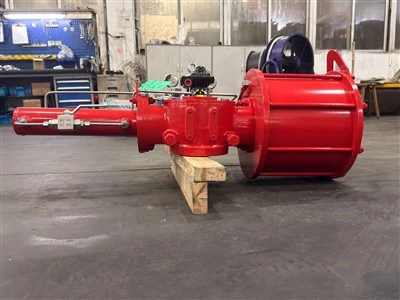
![Actuator with Bevel Gear Manual Override]() Actuator with Bevel Gear Manual OverrideBuilt around a heavy-duty scotch yoke transmission and supported by a dependable mechanical emergency override, the actuator provides a stable, reliable, maintainable and customizable automation solution for large-diameter,read more
Actuator with Bevel Gear Manual OverrideBuilt around a heavy-duty scotch yoke transmission and supported by a dependable mechanical emergency override, the actuator provides a stable, reliable, maintainable and customizable automation solution for large-diameter,read more -
![Pneumatic Single-Acting Actuator With Bevel Gear Drive]() Pneumatic Single-Acting Actuator With Bevel Gear DriveThis high-performance pneumatic single-acting actuator is engineered for heavy-duty quarter-turn valve applications.This actuator incorporates a bevel gear drive mechanism that enables directional reversal and speed reduction with torqueread more
Pneumatic Single-Acting Actuator With Bevel Gear DriveThis high-performance pneumatic single-acting actuator is engineered for heavy-duty quarter-turn valve applications.This actuator incorporates a bevel gear drive mechanism that enables directional reversal and speed reduction with torqueread more -
![Pneumatic Quarter-Turn Valve Actuator]() Pneumatic Quarter-Turn Valve ActuatorBIGTORK pneumatic rotary actuators are specifically designed for industrial automation valve control applications and are suitable for 90° rotary valves such as ball valves and butterfly valves.read more
Pneumatic Quarter-Turn Valve ActuatorBIGTORK pneumatic rotary actuators are specifically designed for industrial automation valve control applications and are suitable for 90° rotary valves such as ball valves and butterfly valves.read more -
![Compact Pneumatic Quarter-Turn Actuator]() Compact Pneumatic Quarter-Turn ActuatorThis product is a compact pneumatic quarter-turn actuator designed for industrial automation control applications. It is primarily used for the opening and closing control of ball valves, butterfly valves, and other 90-degree rotaryread more
Compact Pneumatic Quarter-Turn ActuatorThis product is a compact pneumatic quarter-turn actuator designed for industrial automation control applications. It is primarily used for the opening and closing control of ball valves, butterfly valves, and other 90-degree rotaryread more -
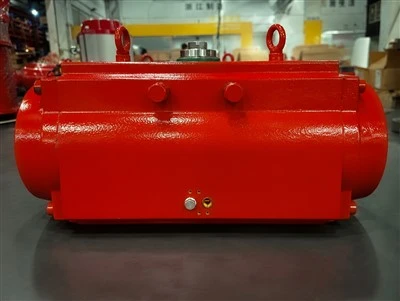
![Large Bore Spring Return Actuator]() Large Bore Spring Return ActuatorThe large-bore spring-return actuator is a heavy-duty, single-acting, spring-return Scottish yoke pneumatic actuator designed specifically for the automated control of large ball valves, butterfly valves, plug valves, and other 90° rotaryread more
Large Bore Spring Return ActuatorThe large-bore spring-return actuator is a heavy-duty, single-acting, spring-return Scottish yoke pneumatic actuator designed specifically for the automated control of large ball valves, butterfly valves, plug valves, and other 90° rotaryread more -
![Angular Actuator]() Angular ActuatorThe angle actuators are powered by pneumatic or hydraulic systems, offering efficient and reliable solutions for 90-degree angle valves, dampers, and various industrial equipment. With their compact design and reliable performance, theyread more
Angular ActuatorThe angle actuators are powered by pneumatic or hydraulic systems, offering efficient and reliable solutions for 90-degree angle valves, dampers, and various industrial equipment. With their compact design and reliable performance, theyread more -
![Part Turn Actuator]() Part Turn ActuatorPart turn actuator are 90˚ driving mechanisms that can be powered by compressed air or hydraulic oil from an external source to converts linear motion of a bar sliding back and forth into a rotational motion. Scotch yoke part turn actuatorread more
Part Turn ActuatorPart turn actuator are 90˚ driving mechanisms that can be powered by compressed air or hydraulic oil from an external source to converts linear motion of a bar sliding back and forth into a rotational motion. Scotch yoke part turn actuatorread more -
![Rotary Piston Actuator]() Rotary Piston ActuatorScotch yoke rotary piston actuators are designed for use over a wide range of pressures or temperatures. BG series air pressure actuators use pressurize air or gas to move a piston back and forth, which is connected to an oscillating yokeread more
Rotary Piston ActuatorScotch yoke rotary piston actuators are designed for use over a wide range of pressures or temperatures. BG series air pressure actuators use pressurize air or gas to move a piston back and forth, which is connected to an oscillating yokeread more


What is Pneumatic Rotary Actuator?
Rotary actuators transform pneumatic, hydraulic, or electric energy to mechanical rotation. Pneumatic rotary actuators utilize the pressure of compressed air to generate oscillatory rotary motions. The two most common configurations of pneumatic rotary actuators include rack and pinion and vane configurations.
Key Benefits of Pneumatic Rotary Actuators
Fast Operating Capability
Pneumatic rotary actuators can be configured for rapid valve opening or closing, subject to actuator size, valve torque, air pressure, tubing and airflow capacity.
01
Straightforward Mechanical Design
Pneumatic rotary actuators use established mechanical drive systems that support reliable operation and practical maintenance in industrial valve applications.
02
Compact Torque Output
Rack-and-pinion actuators provide a compact solution for many small and medium quarter-turn valves, while scotch-yoke designs are available for higher-torque requirements.
03
Safe operation
Pneumatic systems are generally considered safe as they do not pose the risk of electrical shock or fire.
04
Application-Specific Configuration
Materials, seals, coatings, temperature ranges, environmental protection and accessories should be selected according to the actuator series and actual site conditions.
05
Pneumatic Rotary Actuator Mechanisms and Configurations
Rack-and-Pinion Mechanism
Rack-and-pinion actuators use pistons with integrated racks to rotate a central pinion shaft. Their compact design is suitable for many small and medium quarter-turn valves.
Scotch-Yoke Mechanism
Scotch-yoke actuators convert piston movement into rotary output through a yoke mechanism and are commonly selected for larger valves or applications requiring higher torque near the beginning or end of travel.

Application of Pneumatic Rotary Actuator
Oil and Gas:
Pneumatic rotary actuators provide reliable opening and closing of ball, butterfly and plug valves in process pipelines, utility systems and industrial equipment. Double-acting configurations are commonly used where compressed air is available for operation in both directions.
Fail-Safe and Emergency Shutdown Applications:
Spring-return pneumatic rotary actuators use stored spring force to move the valve to a specified fail-open or fail-close position if the air supply is lost. They can be configured for isolation and emergency shutdown applications according to the required safety function and project specifications. systems.
Modulating Flow-Control Applications:
Pneumatic rotary actuators can be equipped with pneumatic or electro-pneumatic positioners for modulating valve service. The actuator and positioner control the valve position according to the input signal and process-control requirements.
Fast-Acting Valve Applications:
Pneumatic rotary actuators can be configured for rapid valve opening or closing where the process requires a short operating time. Actual operating speed depends on actuator size, valve torque, available air pressure, tubing size, solenoid-valve flow and exhaust capacity.
High-Torque Quarter-Turn Valve Applications:
Scotch-yoke pneumatic actuators are commonly selected for large ball, butterfly and plug valves or for applications requiring increased torque near the beginning or end of valve travel. Actuator selection should be based on the valve torque curve and minimum available air pressure.
Harsh and Hazardous-Area Applications:
Pneumatic rotary actuators can be configured for outdoor, corrosive, low-temperature and hazardous-area valve applications. Materials, seals, coatings, environmental protection and electrical accessories should be selected according to the actual operating conditions and required approvals.
Components of Pneumatic Rotary Actuator
Actuator Housing
Contains the internal components and forms the pressure chambers for compressed-air operation.
Pistons and Racks
Convert the linear force generated by compressed air into mechanical movement.
Pinion Shaft
Converts piston movement into rotary torque to operate the connected valve
End Caps and Sealing Components
End caps enclose the pressure chambers, while seals help ensure reliable and leak-tight operation.

1. Inspect the actuator housing, end caps, mounting bracket and accessories for visible damage, corrosion or looseness.
2. Check air tubing, fittings, ports and seals for leakage.
3. Verify that the supply air is clean, dry and within the pressure range specified for the actuator.
4. Confirm that the actuator mounting bolts, valve connection and coupling remain secure and correctly aligned.
5. Operate the actuator through its full travel and verify the open and closed positions.
6. Test the specified fail-safe action on spring-return configurations under controlled conditions.
7. Inspect solenoid valves, limit switch boxes, positioners, filter regulators and other accessories according to their applicable instructions.
8. Check the manual override, if fitted, and return it to its normal operating position after testing.
9. Replace seals and wear components according to the operating conditions and the applicable BIGTORK maintenance manual.
Do not add external lubrication unless it is permitted by the applicable actuator manual and seal configuration.
In a double-acting pneumatic rotary actuator, compressed air is alternately supplied to opposite sides of the piston assembly to rotate the output shaft in both directions. Air pressure is required for both opening and closing movements.
In a spring-return actuator, compressed air drives the actuator in one direction and compresses the spring module. If the air supply is removed, stored spring force moves the actuator to its specified fail-open or fail-close position.
The required configuration should be selected according to the valve torque, minimum available air pressure, fail action, operating time and project control philosophy.
Key Factors Affecting Pneumatic Rotary Actuator Performance
Reliable actuator performance depends on correct sizing, adequate air supply, proper installation and suitable control accessories. The following factors should be reviewed during actuator selection and commissioning.
Correct Torque Sizing
Use the valve manufacturer’s break-to-open, running and end-to-close torque data and apply an appropriate sizing margin according to the valve condition and project requirements.
Minimum Available Air Pressur
Size the actuator using the minimum pressure available at the actuator during operation, rather than the compressor’s nominal discharge pressure.
Operating-Speed Control
Opening and closing speed depends on actuator size, valve torque, supply pressure, tubing, fittings, solenoid-valve flow and exhaust capacity.
Mounting and Alignment
Incorrect mounting, coupling misalignment or excessive valve-stem load can reduce performance and increase wear.
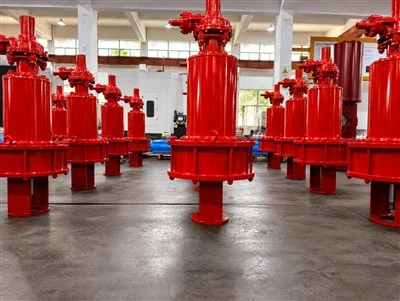
BIGTORK’s production facility covers approximately 20,000 m² and includes dedicated areas for machining, assembly, testing and warehousing.


Our Certificates


FAQ
Zhejiang Bigtork Valve Automation Co., Ltd. is one of the leading pneumatic rotary actuator manufacturers and suppliers in China. We warmly welcome you to buy customized pneumatic rotary actuator at competitive price from our factory. Contact us for more details.
Rotary Piston Actuator, Part Turn Actuator, pneumatic rotary actuator-
![Actuator with Bevel Gear Manual Override]() Actuator with Bevel Gear Manual OverrideBuilt around a heavy-duty scotch yoke transmission and supported by a dependable mechanical emergency override, theread more
Actuator with Bevel Gear Manual OverrideBuilt around a heavy-duty scotch yoke transmission and supported by a dependable mechanical emergency override, theread more -
![ZSS300 Pneumatic Linear Actuator]() ZSS300 Pneumatic Linear ActuatorThe ZSS300 is a single-cylinder, air-to-open pneumatic actuator designed for reliable linear valve operation inread more
ZSS300 Pneumatic Linear ActuatorThe ZSS300 is a single-cylinder, air-to-open pneumatic actuator designed for reliable linear valve operation inread more -
![P350 Double-Acting Scotch Yoke Actuator]() P350 Double-Acting Scotch Yoke ActuatorThis scotch yoke pneumatic actuator adopts a high-output torque structural design and is suitable for automated openingread more
P350 Double-Acting Scotch Yoke ActuatorThis scotch yoke pneumatic actuator adopts a high-output torque structural design and is suitable for automated openingread more -
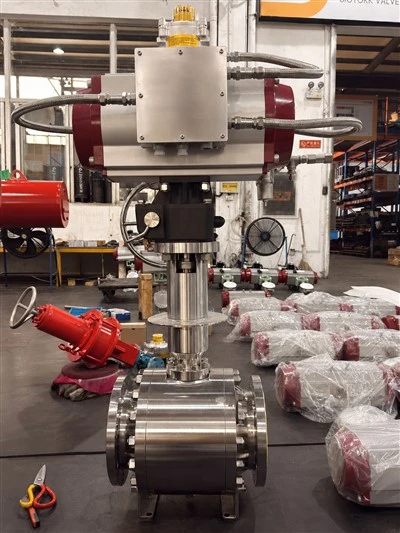
![Pneumatic Actuator With Ball Valve]() Pneumatic Actuator With Ball ValveThis is a rack-and-pinion pneumatic actuator designed for use with industrial piping systems.read more
Pneumatic Actuator With Ball ValveThis is a rack-and-pinion pneumatic actuator designed for use with industrial piping systems.read more -
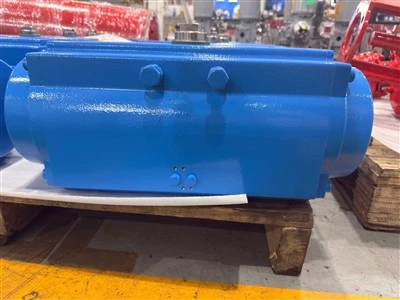
![AT190 SR Spring-returnpneumatic Actuator]() AT190 SR Spring-returnpneumatic ActuatorThe AT190SR spring-return pneumatic actuator features a robust, one-piece design with a highly recognizable blueread more
AT190 SR Spring-returnpneumatic ActuatorThe AT190SR spring-return pneumatic actuator features a robust, one-piece design with a highly recognizable blueread more -
![Single-acting Rack-and-pinion Pneumatic Actuator]() Single-acting Rack-and-pinion Pneumatic ActuatorThe AT Series pneumatic actuators feature a rack-and-pinion drive mechanism and are specifically designed forread more
Single-acting Rack-and-pinion Pneumatic ActuatorThe AT Series pneumatic actuators feature a rack-and-pinion drive mechanism and are specifically designed forread more