Company Profile
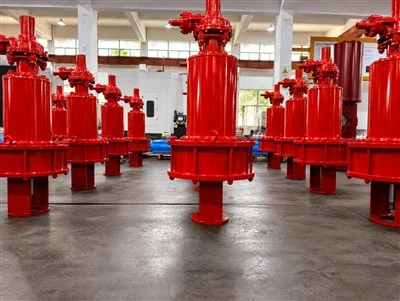
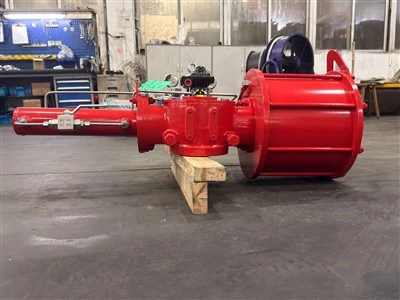
Founded in 2006, Zhejiang Bigtork Valve Automation Co., Ltd. specializes in the design and manufacture of pneumatic and hydraulic actuators for rotary and linear valve applications. Since 2011, BIGTORK has supported domestic and international oil & gas and industrial projects, providing actuator sizing, application engineering, manufacturing, testing and technical support for demanding valve automation requirements.
Why Choose Us?
Proven Experience
Founded in 2006, BIGTORK has built extensive experience in the design and manufacture of pneumatic and hydraulic valve actuators. Since 2011, we have supported valve automation projects in domestic and international markets, serving a wide range of industrial applications.
Engineering Expertise
Our engineering team supports actuator sizing, configuration and application engineering for both standard and project-specific requirements. Proprietary sizing tools help ensure accurate actuator selection, while technical support is available throughout project execution and the product lifecycle.
Manufacturing Capacity
BIGTORK operates four dedicated actuator production lines with an annual production capacity of approximately 60,000 units. Advanced CNC machining centres and CNC lathes support efficient production, dimensional accuracy and consistent product quality.
Quality Assurance
Quality is controlled throughout material inspection, machining, assembly and final testing. Critical components are sourced from qualified suppliers, and every actuator undergoes final inspection and functional testing before delivery. Test documentation can be provided in accordance with project requirements.
Lifecycle Support
From actuator selection and project configuration to manufacturing, testing and after-sales support, BIGTORK works with customers throughout the equipment lifecycle. Our engineering and service teams provide responsive support to help ensure reliable actuator operation and efficient project execution.
Global Project Experience
BIGTORK has supported valve manufacturers, engineering companies and industrial customers across international markets. Experience gained from oil & gas and industrial valve automation projects enables us to respond to diverse application requirements and demanding operating conditions.
-
![ZSS300 Pneumatic Linear Actuator]() ZSS300 Pneumatic Linear ActuatorThe ZSS300 is a single-cylinder, air-to-open pneumatic actuator designed for reliable linear valve operation in demanding industrial applications.read more
ZSS300 Pneumatic Linear ActuatorThe ZSS300 is a single-cylinder, air-to-open pneumatic actuator designed for reliable linear valve operation in demanding industrial applications.read more -
![FC Linear Pneumatic Actuator]() FC Linear Pneumatic ActuatorThis series of actuators consists of single-acting, linear-travel pneumatic actuators designed for the automated control of industrial valves, featuring an air-to-open design. Under normal air supply conditions, the actuator pushes theread more
FC Linear Pneumatic ActuatorThis series of actuators consists of single-acting, linear-travel pneumatic actuators designed for the automated control of industrial valves, featuring an air-to-open design. Under normal air supply conditions, the actuator pushes theread more -
![Double-acting Linear Actuator]() Double-acting Linear ActuatorThe BIGTORK double-acting linear actuator is designed for high-load valve control applications. Featuring a double-acting pneumatic drive mechanism, it converts a stable air supply into powerful, smooth linear thrust, providing reliableread more
Double-acting Linear ActuatorThe BIGTORK double-acting linear actuator is designed for high-load valve control applications. Featuring a double-acting pneumatic drive mechanism, it converts a stable air supply into powerful, smooth linear thrust, providing reliableread more -
![Linear Valve Actuator]() Linear Valve ActuatorThis device is specifically designed to verify the thrust performance of linear pneumatic actuators, enabling the direct measurement of the actuator’s linear thrust output under various operating conditions and at different angles.read more
Linear Valve ActuatorThis device is specifically designed to verify the thrust performance of linear pneumatic actuators, enabling the direct measurement of the actuator’s linear thrust output under various operating conditions and at different angles.read more -
![Side-Ported Single-Acting Linear Pneumatic Actuator]() Side-Ported Single-Acting Linear Pneumatic ActuatorThis single-acting linear pneumatic actuator features a side-ported air inlet configuration, with the air supply port arranged on the side of the actuator body. This design allows the air connection to better match on-site pneumatic pipingread more
Side-Ported Single-Acting Linear Pneumatic ActuatorThis single-acting linear pneumatic actuator features a side-ported air inlet configuration, with the air supply port arranged on the side of the actuator body. This design allows the air connection to better match on-site pneumatic pipingread more -
![Ip67 Linear Actuator]() Ip67 Linear ActuatorIp67 linear actuator is a weatherproof and waterproof actuator protects it keeps out wind, rain, dust and water. This ip67 linear actuator allows IP65 IP66 IP67 even highest IP68 proof level that make it suitable in some harsh outdoorread more
Ip67 Linear ActuatorIp67 linear actuator is a weatherproof and waterproof actuator protects it keeps out wind, rain, dust and water. This ip67 linear actuator allows IP65 IP66 IP67 even highest IP68 proof level that make it suitable in some harsh outdoorread more -
![Ip68 Linear Actuator]() Ip68 Linear ActuatorIp68 linear actuator is a weatherproof and waterproof actuator protects it keeps out wind, rain, dust and water. This ip68 linear actuator allows IP65 IP66 IP67 even highest IP68 proof level that make it suitable in some harsh outdoorread more
Ip68 Linear ActuatorIp68 linear actuator is a weatherproof and waterproof actuator protects it keeps out wind, rain, dust and water. This ip68 linear actuator allows IP65 IP66 IP67 even highest IP68 proof level that make it suitable in some harsh outdoorread more -
![Marine Linear Actuator]() Marine Linear ActuatorLinear actuator is a device that uses compressed air or liquid to push a piston for linear motion. It can convert pneumatic or hydraulic energy into mechanical force and is used to control the opening and closing of linear valves such asread more
Marine Linear ActuatorLinear actuator is a device that uses compressed air or liquid to push a piston for linear motion. It can convert pneumatic or hydraulic energy into mechanical force and is used to control the opening and closing of linear valves such asread more -
![High Thrust Linear Actuator]() High Thrust Linear ActuatorHigh thrust linear actuator is a device that uses compressed air or liquid to push a piston for linear motion. High thrust linear actuator can convert pneumatic or hydraulic energy into mechanical force and is used to control the openingread more
High Thrust Linear ActuatorHigh thrust linear actuator is a device that uses compressed air or liquid to push a piston for linear motion. High thrust linear actuator can convert pneumatic or hydraulic energy into mechanical force and is used to control the openingread more


What is Pneumatic Linear Actuator?
Pneumatic linear actuators offer rapid, cost-effective industrial linear motion solutions by utilizing compressed air, providing a design simplicity that is beneficial in equally straightforward motion systems.
Superior force and torque
Unlike electric actuators, which often have limited force capabilities, pneumatic actuators excel in generating substantial force and torque. This makes them particularly well-suited for heavy-duty tasks that involve lifting, pushing, or pulling significant loads.
Streamlined design and maintenance
Pneumatic actuators boast a straightforward design that is both safe and reliable. Their simplicity also makes them easier to maintain and less prone to malfunctions compared to more intricate electromechanical systems.
Rapid response
Pneumatic actuators can react swiftly to changes in air pressure, enabling fast and precise movements that are essential for many industrial processes.
Broad versatility
Available in a wide range of sizes, configurations, and force capacities, pneumatic actuators can be tailored to suit a variety of applications, ensuring flexibility and adaptability.
Seamless integration
Integrating pneumatic actuators into existing pneumatic systems is a straightforward process, which simplifies setup and minimizes the need for additional components.
Types of Pneumatic Linear Actuator
Rodded pneumatic linear actuator: In this type of actuator, there is an internal rod, which extends outside the cylinder to move the load forward and then retracts. Typically, the rod and the bore are round.
Rodless pneumatic cable actuator: As the name implies, cable-driven actuators use an internal cable instead of a rod to move the load. The cable fastens to the piston inside the cylinder but also extends outside, where it attaches to a pulley. Cable actuators are very efficient and function well where high repeatability is needed. They can also work with spring assist for emergency stopping. As with all types of actuators, correctly sizing the device is essential.
Rodless pneumatic band actuator: Rodless band cylinders are a good choice where space is very limited because there is no rod to protrude from the cylinder as it extends.
Rodless pneumatic magnetically-coupled actuator: This style of actuator uses magnets instead of physical attachments to draw and retract the piston within the cylinder. The piston is sealed within a tube, which attaches to a carrier using magnetic force so that the piston and carrier move together as one. Magnetically-coupled cylinders are very powerful. They can be sized to move loads a very short distance or several feet. Because the piston is sealed inside, there is no danger of damage from external dirt, corrosive materials, or other harsh elements. This also means these cylinders can function while submerged.
Application of Pneumatic Linear Actuator
Bending and clamping
Compact pneumatic cylinders employ direct pressure to extend and retract a piston rod. This action is commonly used to impart bending and clamping functions in various automated manufacturing processes. In such cases, the benefit of using compact pneumatic cylinders is that they offer a lighter, space-saving, more configurable actuation method that doesn’t sacrifice control, power or efficiency.
Valve actuation
Pneumatic linear actuators are often used with rising-stem valves to modulate the opening mechanism. They are commonly employed to control diaphragm and piston valves. With a diaphragm valve, air pressure moves the diaphragm up or down depending on whether the valve is normally open or closed. Piston actuators use the available air pressure to deliver the appropriate actuating force for the valve.
Material handling
Rodless pneumatic cylinders provide an optimal solution for material handling applications, such as pick-and-place processes in the food and beverage industry. These space-saving pneumatic linear actuators feature a piston connected to an external carriage by a magnetic or mechanical coupling system. Characterised by their long stroke, rodless cylinders are perfect for quickly, efficiently and precisely moving loads on a linear path.
Injection moulding
Pneumatic injection moulding involves injecting a specified amount of molten thermoplastic material under pressure into a mould. Pneumatic injection moulding machines regularly employ a double-acting pneumatic actuator to inject the molten plastic. In such applications, a flow control valve controls the airflow into the cylinder, while a directional control valve controls the direction of the piston movement.
Punching and pressing
Pneumatic punching machines use high-pressure gas from a compressor to create the downward force needed for punching metal and non-metal pipes and plates. The compressed air is conveyed through a pipeline to a solenoid valve, which the operator controls using a foot pedal. This engages the cylinder to exert the ensuing punching motion. Using pneumatics makes the whole process simpler, safer and more efficient.
Check valves. These are one-way valves that are installed to the hose, which connects the compressor to the buffer tank. They let the compressed air gather in the buffer tanks, but prevent backflow into the compressor tank.
Compressor. It is a mechanical device that increases the pressure of air by reducing its volume. This is a pump powered by gas or electricity. It compresses the air to a higher PSI (pounds per square inch). Compressors have a tank connected to store the air before it’s released into the pneumatic track. An air compressor is a specific type of gas compressor.
Regulators and gauges. These are equipment that is connected to the compressor or compressor tank. To release air into the pneumatic track, the regulator is electrically or mechanically triggered. Gauges are also electric or mechanic measuring instruments. They let the computer system or operator to regulate and check the PSI of the air inside the compressor.
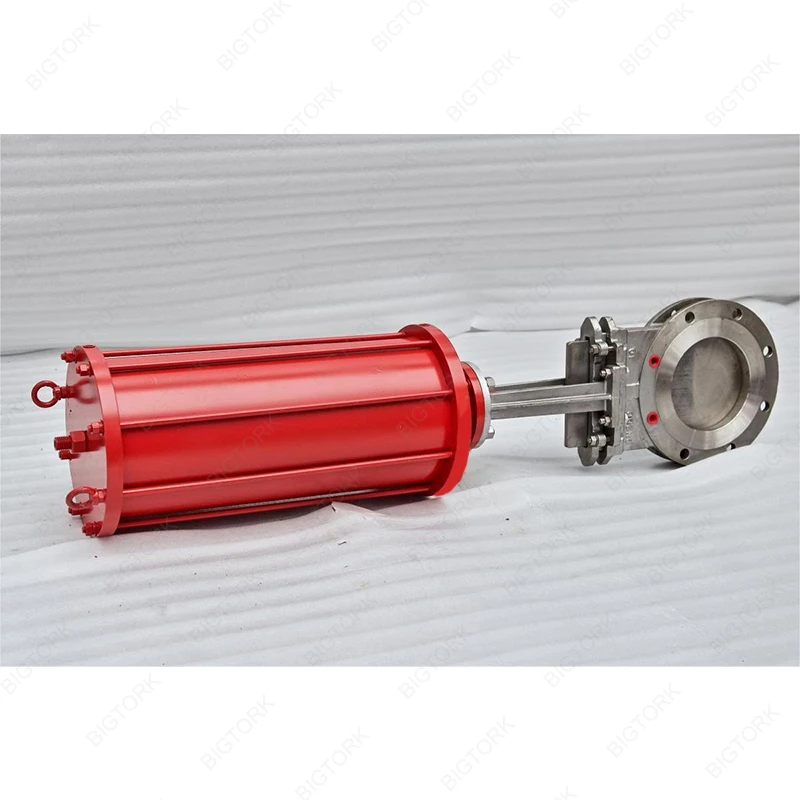

Accumulator or buffer tank. Buffer tanks are secondary storage units for the compressed air that came from the compressor. They are storing the high-PSI compressed air for the pneumatic actuators. These tanks help in preventing irregular airflow surges in the actuators, allowing the compressor cycle to maximise its shutoff timing. They also allow the compressor to be in the exact distance from the actuators in projects.
Feed lines. These are hoses that move the pressurised air through the pneumatic system. The largest diameter hoses are installed to handle the PSI. These large hoses allow the pressurised air to travel faster, eliminating the airflow backups.
Actuators. These are the components of the pneumatic system that do the hard work. Many types of actuators are powered by pressurised air. The most frequently used are cylinder and plunge. The pressurised air is released into the cylinder to make a piston move forward as the air is forced to the chamber.
How to Maintain Pneumatic Linear Actuator
Lubrication : The separation of components lies at the base of the process, and it is a great way to successful maintenance. Proper lubrication is the thing most companies emphasize. It allows increasing the time of usage for such elements as nuts and bolts. Besides that, the possibility of equipment failure will be lessened with the help of lubrication.
Take note that choosing the type of lubrication is a task only a qualified technician can solve. Characteristics like moisture or consistency should impact the choice.
Oil cooling: This is another element of actuators' maintenance. But you have to discuss this process with your sales representative. Not every model can be used with oil cooling.
Linear actuator performance is influenced by several key factors. These include but are not necessarily limited to:
1.The design and quality of the components, such as gearboxes or lead screws. This can affect the smoothness of the motion and the overall precision of the device.
2.The choice of materials for guides and housing impacts durability and friction.
3.Feedback systems, like sensors and limit switches, play a role in accurate positioning and safety.
4.Voltage and current control mechanisms on the power source influence the actuator's speed, force, and responsiveness capabilities.
5.Environment conditions. Such factors as temperature, humidity, and load weight can impact an actuator's efficiency and longevity
When Pneumatic Actuators Make Sense
Pneumatics provide both high speed and force in a small footprint. They are best suited for fast, point-to-point movements, and can withstand hard stops without damage. Applications that require many actuators in the same process benefit from the ease of pneumatic installations and the ability to drive many devices from a single compressor.
In applications that require explosion-proof components, or where there are other environmental safety concerns, such as heat build-up, pneumatic linear actuators are typically preferred over electric versions
Despite their low initial cost, operating and maintenance costs can be the bane of pneumatic installations. That’s why it’s important to ensure that the compressor and other air handling equipment are properly sized.
Compressed air is a consumable, like electricity, and a compressor that’s not fully utilized can be a large cost sink. Pressure losses throughout the air delivery system can reduce efficiency and increase operating costs significantly, so regular maintenance is critical.
The main consideration for pneumatic applications is whether the facility is already equipped for air preparation and delivery.
In most industrial operations, the necessary infrastructure will already be in place. Then, the decision regarding pneumatic or electric linear actuators will come down to suitability for the application and the scale of the operation. With pneumatics, connecting more devices typically results in better utilization of the supporting hardware without a significant increase in complexity of the system, so large-scale deployments are preferred to one-off implementations.
The Future of Pneumatic Linear Actuators
As technology continues to advance, the future of pneumatic linear actuators looks promising. Emerging trends and developments will shape their evolution and expand their applications:
Advanced materials and design
Research into new materials and design innovations will lead to more durable, lightweight, and efficient pneumatic actuators. Materials such as advanced composites and high-strength alloys may enhance performance and reliability.
Integration with artificial intelligence
The integration of artificial intelligence (ai) into pneumatic systems can lead to more adaptive and intelligent actuators. Ai algorithms can analyze data from sensors to optimize actuator performance, predict maintenance needs, and improve overall system efficiency.
Increased customization
The demand for customized solutions will drive innovation in pneumatic actuators. Manufacturers will offer more tailored options to meet specific application requirements, providing greater flexibility and adaptability.
Globalization and market expansion
As industries globalize, the demand for pneumatic actuators will continue to grow. Emerging markets and new applications will drive expansion, leading to increased adoption and innovation in pneumatic technology.
What’s the Difference Between Band Cylinders, Cable Cylinders and Magnetic Linear Actuators?
Band cylinders, cable cylinders and magnetic cylinders are linear actuators that each offer their own particular benefits as part of a pneumatic motion system.
Band Cylinders have a carrier which supports attached loads and is directly attached to the piston
These cylinders utilize sealing and dust bands across the length to seal the piston and carrier connection point. This type of pneumatic actuator is best for most applications, especially those where external guides cannot be used.
Cable Cylinders are the first rodless actuator ever invented and use a pair of cables attached to an internal piston to move an external clevis mount.
These pneumatic actuators are best for applications where there are external guides available or those requiring greater distance between the cylinder and the load being moved.
Magnetic Cylinders have the carrier magnetically connected to the internal piston
This makes for a completely remote connection with no material connection point, allowing the carrier to be uncoupled from the piston. These actuators are best for applications that require safety and a carrier that can be disconnected or in applications requiring ingress protection.
Bigtork® have covered an area of total 20000 square meters, which its workshop for machining, assemble, testing and its warehouse for raw material, semi-finished product and finished product.


Our Certificates


FAQ
Zhejiang Bigtork Valve Automation Co., Ltd. is one of the leading pneumatic linear actuator manufacturers and suppliers in China. We warmly welcome you to buy customized pneumatic linear actuator at competitive price from our factory. Contact us for more details.
High Thrust Linear Actuator, pneumatic linear actuator, Ip67 Linear Actuator-
![Actuator with Bevel Gear Manual Override]() Actuator with Bevel Gear Manual OverrideBuilt around a heavy-duty scotch yoke transmission and supported by a dependable mechanical emergency override, theread more
Actuator with Bevel Gear Manual OverrideBuilt around a heavy-duty scotch yoke transmission and supported by a dependable mechanical emergency override, theread more -
![ZSS300 Pneumatic Linear Actuator]() ZSS300 Pneumatic Linear ActuatorThe ZSS300 is a single-cylinder, air-to-open pneumatic actuator designed for reliable linear valve operation inread more
ZSS300 Pneumatic Linear ActuatorThe ZSS300 is a single-cylinder, air-to-open pneumatic actuator designed for reliable linear valve operation inread more -
![P350 Double-Acting Scotch Yoke Actuator]() P350 Double-Acting Scotch Yoke ActuatorThis scotch yoke pneumatic actuator adopts a high-output torque structural design and is suitable for automated openingread more
P350 Double-Acting Scotch Yoke ActuatorThis scotch yoke pneumatic actuator adopts a high-output torque structural design and is suitable for automated openingread more -
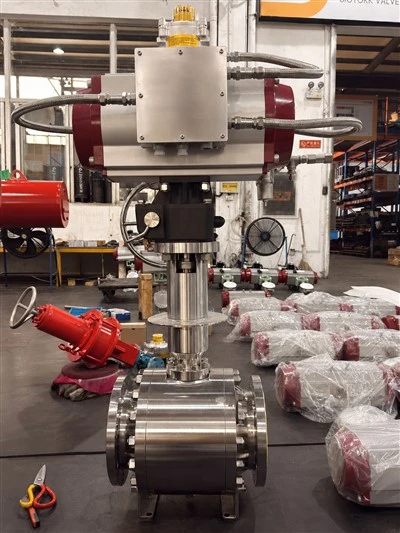
![Pneumatic Actuator With Ball Valve]() Pneumatic Actuator With Ball ValveThis is a rack-and-pinion pneumatic actuator designed for use with industrial piping systems.read more
Pneumatic Actuator With Ball ValveThis is a rack-and-pinion pneumatic actuator designed for use with industrial piping systems.read more -
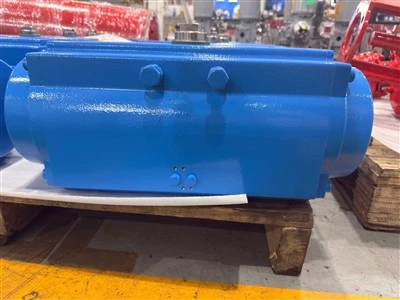
![AT190 SR Spring-returnpneumatic Actuator]() AT190 SR Spring-returnpneumatic ActuatorThe AT190SR spring-return pneumatic actuator features a robust, one-piece design with a highly recognizable blueread more
AT190 SR Spring-returnpneumatic ActuatorThe AT190SR spring-return pneumatic actuator features a robust, one-piece design with a highly recognizable blueread more -
![Single-acting Rack-and-pinion Pneumatic Actuator]() Single-acting Rack-and-pinion Pneumatic ActuatorThe AT Series pneumatic actuators feature a rack-and-pinion drive mechanism and are specifically designed forread more
Single-acting Rack-and-pinion Pneumatic ActuatorThe AT Series pneumatic actuators feature a rack-and-pinion drive mechanism and are specifically designed forread more