Company Profile
ZHEJIANG BIGTORK VALVE AUTOMATION CO,.LTD was located in famous pump and valve manufacturer base--Wenzhou City, China since founded by Mr zhang in 2006. Bigtork® take part in domestic and oversea gas and oil project in 2011, and now have a extensive experience in industry valve automation and flow control. Company has signed framement agreement with SINOPEC and CNOOC as qualified Pneumatic Actuator supplier. Meanwhile, we are the reliable business partner of foreign world famous brand.
Why Choose Us?
Rich experience
BIGTORK not only focus on manufacturing Rotary & Linear and Pneumatic & Hydraulic valve actuator, but also offering one industry process control solution since founded by Mr zhang in 2006. We have 18+ extended production experience and 14+ extensive globle project undergo.
Strong R&D ability
Our team involves 6 engineers who owns domestic and oversea project work experience. We supply 100% technical support and problem solution for whole product life. Size selection tool that self owned software is avaivable for every clients.
Quality assurance
All series products strictly controlled with 9 processes by ISO and other system. The business partner of the raw material and components are profession major which supply for world renowned brand. A product warranty was provided with final testing and test report accordance with international product standards.
One stop service
Bigtork offer OEM & ODM services according to your requests from pre-sale to after-sale period. Each project has its own sale service tracking records. Each staffs is well trained to master proficient skill and full professional knowledge to support industry flow control one stop solution service.
-
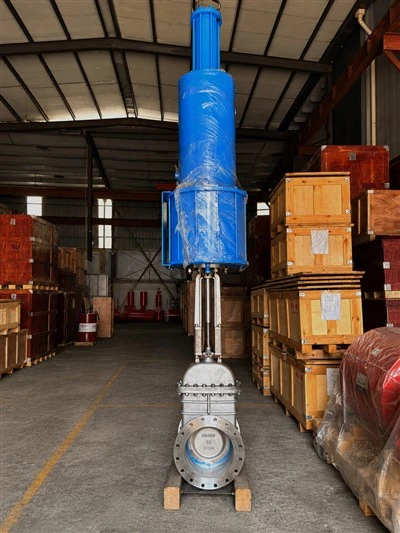
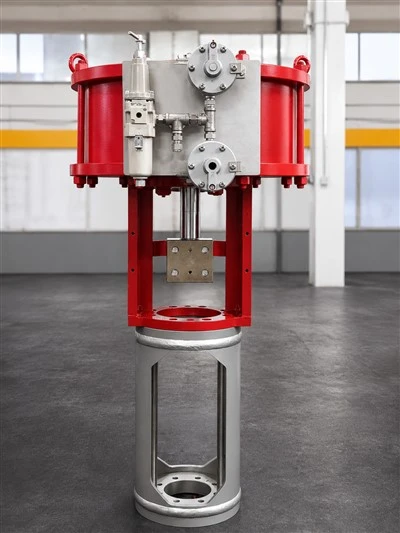
![High Power Linear Actuator]() High Power Linear ActuatorA high power linear actuator is a mechanical device that can convert linear motion into rotational motion, or convert rotational motion into linear motion. Power linear linear actuators as a straight stroke actuator are widely used inread more
High Power Linear ActuatorA high power linear actuator is a mechanical device that can convert linear motion into rotational motion, or convert rotational motion into linear motion. Power linear linear actuators as a straight stroke actuator are widely used inread more

What is Hydraulic Linear Actuator?
Hydraulic linear actuators use fluid and pressure to provide movement and apply force. They have a high-power density which enable small package sizes that provide a high load/thrust capacity from a relatively small cylinder.
High force capabilities
The ability of hydraulics to deliver high force is a leading reason for the popularity of this technology. High pressures allow smaller cylinders to reach very large forces. For example, 3-inch and 5-inch bore cylinders at 2200 psi can achieve approximately 15,000 lbf (66,723.3 kN) and 43,000 lbf (191,273.5 kN), respectively.
Simple design
Hydraulic technology is well-understood, and cylinder design is straight-forward. Many engineers are quite comfortable using hydraulics.
Rugged construction
Hydraulic actuators have a reputation for being tough enough to withstand harsh conditions. They can be durable and reliable when deployed in the right applications. Their robust design means they can handle shock loads.
Affordable
The initial purchase price of hydraulic cylinders is usually low.
Types of Hydraulic Linear Actuator
1.Mini hydraulic linear actuators
Mini hydraulic linear actuators are compact yet powerful, making them ideal for smaller machinery where space is limited. Despite their small size, these actuators are still able to generate high force output, providing precise linear motion control. They come with extensive control options, allowing for smooth and precise movements. With their compact size, micro mini hydraulic linear actuators can be easily integrated into industrial automation systems, offering a reliable actuator solution for linear motion control in compact machinery.
2.Heavy duty hydraulic linear actuators
Heavy-duty hydraulic linear actuators are designed to handle high force and heavy loads, making them ideal for industrial machinery. These actuators provide smooth and precise linear motion control, ensuring reliable operation of industrial automation systems. With their high force capabilities, heavy-duty hydraulic linear actuators are most commonly used in heavy machinery applications, where precision and reliability are of utmost importance. Whether it's lifting heavy loads, moving industrial machinery, or providing straight-line motion control, heavy-duty actuators are the preferred solution.
3.Waterproof hydraulic linear actuators
Waterproof hydraulic linear actuators are specially designed to withstand harsh environments and outdoor applications. These actuators are sealed to offer protection against dust, water, and corrosion, ensuring reliable operation even in challenging conditions. With their waterproof capabilities, these actuators are ideal for industrial automation systems that are exposed to outdoor elements. Whether it's outdoor machinery or equipment used in wet environments, waterproof hydraulic linear actuators offer the durability and reliability required for these applications, backed by an industry leading 18-month warranty.
Industrial machinery: Hydraulic actuators are used in various industrial machines, including presses, shears, and metal-forming equipment, to provide the force needed for bending, cutting, and shaping metal and other materials.
Construction equipment: Hydraulic actuators power heavy machinery like excavators, bulldozers, and cranes, enabling them to lift and move heavy loads, dig trenches, and perform other essential construction tasks.
Aerospace: Hydraulic actuators are used in aircraft for functions like extending and retracting landing gear, controlling flight surfaces (flaps, ailerons, rudders), and actuating cargo doors.
Automotive industry: In vehicles, hydraulic actuators are employed in braking systems, power steering systems, and automatic transmissions. They provide precise control and responsiveness for safe and efficient driving.
Agricultural machinery: Hydraulic actuators are used in tractors, combines, and other agricultural equipment to power various functions, such as lifting and lowering attachments, steering, and controlling implements like plows and seeders.
Marine industry: Hydraulic actuators are utilized in boats and ships for functions like steering systems, anchor deployment, and controlling hatches and doors.
Material handling: They are used in material handling equipment such as forklifts, conveyors, and palletizers to lift, move, and position heavy loads efficiently.
Oil and gas industry: Hydraulic actuators are essential in the oil and gas sector for controlling drilling equipment, valves, and other machinery used in drilling, extraction, and processing operations.
Manufacturing automation: Hydraulic actuators play a crucial role in automated manufacturing processes, including robotic assembly lines and cnc machinery, where they provide precise control and positioning.
Mining equipment: Hydraulic actuators are used in mining machinery for functions such as rock drilling, ore transportation, and controlling heavy equipment like bulldozers and loaders.
Civil engineering: They are employed in civil engineering applications like bridge and dam construction, where large structures and heavy materials need to be moved and positioned accurately.
Environmental and waste management: Hydraulic actuators are used in waste compactors, recycling equipment, and waste handling systems to compress and process waste materials efficiently.
Medical devices: In the medical field, hydraulic actuators are used in various equipment, such as patient lifts, surgical tables, and diagnostic devices, to provide precise movement and positioning.
Defense and military: Hydraulic actuators are used in military vehicles, aircraft, and equipment for various applications, including weapon systems, landing gear, and vehicle mobility.
Entertainment industry: Hydraulic actuators are employed in stage and entertainment equipment, such as hydraulic lifts, platforms, and special effects devices used in theaters, concerts, and theme parks.
Environmental control systems: They are used in environmental control systems for tasks like adjusting the position of air dampers and valves in heating, ventilation, and air conditioning (hvac) systems.
Offshore drilling: In offshore drilling platforms, hydraulic actuators control various equipment, including the positioning of drilling rigs, pipe handling systems, and wellhead control.
Railway systems: Hydraulic actuators are used in railway applications for functions such as controlling brakes, doors, and switches.
Components of Hydraulic Linear Actuator
A complete hydraulic linear actuator system consists of the following major components:
1.A hydraulic pump, used to maintain hydraulic liquid pressure in the system
2.A sealed piston cylinder assembly that allows a piston linear motion inside the cylinder.
3.Hoses to pass pressurized fluid to/from the cylinder
4.A system for measuring the precise position of the piston inside the cylinder.
A familiar example of a manually operated hydraulic actuator is a hydraulic car jack. Typically though, the term “hydraulic actuator” refers to a device controlled by a hydraulic pump and in our case, one capable of providing thousands of ft-lbs of force in service of heavy duty machinery and equipment.


1.Inspect the actuator regularly for any damage or wear and tear.
2.Lubricate the moving parts of the actuator with a suitable lubricant.
3.Keep the actuator free of dirt, dust and other debris.
4.Make sure that the power supply to the actuator is functioning properly.
5.If any part of the actuator needs to be replaced, only use genuine replacement parts from the manufacturer.
6.Check the electrical connections regularly and make sure they are secure and properly insulated.
7.Keep the environment around the actuator clean and free of obstructions.
8.Make sure that all safety devices are working properly before operating the actuator.
9.Regularly test the performance of the actuator to ensure it is operating at peak efficiency.
A linear actuator is a mechanical device that creates motion in a straight line. It is often used as an alternative to traditional hydraulic or pneumatic cylinders, which can be more expensive and difficult to maintain. Linear actuators can be powered by electricity, compressed air, or hydraulics.
When an electric linear actuator receives power, it creates a magnetic field around the rod inside the housing. This magnetic field interacts with the rod, causing it to move. The amount of force generated by the actuator depends on the strength of the magnetic field and the length of the stroke (the distance the rod can travel).
Compressed air-powered linear actuators work similarly to electric ones, but use compressed air instead of electricity to create the magnetic field. Hydraulic linear actuators use fluid pressure to generate force. They are typically used for heavy-duty applications where high levels of force are required.
No matter which type of linear actuator is used, the resulting motion is usually converted into rotary motion through a crank or cam as necessary. Linear actuators are widely used in industrial automation and robotics applications, automotive systems, and medical devices.
A linear actuator works by converting energy into a linear motion which can be used to move or control an object. Linear actuators come in many shapes and sizes and they can be powered by electricity, compressed air, or hydraulics. Depending on the application, the force generated by the actuator is controlled using a magnetic field, fluid pressure, or other means of generating power. The resulting motion is then converted into a rotary motion as required. Linear actuators are vers.
Linear Actuators: Electric vs. Hydraulic
Consider and compare hidden system costs: labor for plumbing and wiring, safety interlocks, control tuning and programming, etc.
Hydraulics still provide the most power density and overall force in most cases, but require hydraulic power supplies which need maintenance, can be noisy, and are prone to leaking oil sooner or later.
Electric actuator costs vary widely. Permanent magnet DC units with simple PWM controllers are much lower in price than servo or stepper motor versions. In addition, the quality of the ball-screw itself varies.
Electric actuators cannot, in theory, control on force directly. That is, they struggle ramping up to a specific load via a programmed load vs. time profile, and then holding that load for a specific time period. A supplier may be able to claim their controller can do this, but its often done indirectly (perhaps through position and load value comparisons) and has limitations. Often, there is judder while holding a load and heat generated that can be detrimental.
One form of electric actuator, the true linear motor does handle force control better than servo ball screw actuators, but can generate heat while holding a force. And the max force provided tends to be lower
Hydraulic actuators do provide a level of resilience (due to oil compressibility) that electric actuators do not. For long stroke cylinders, this can be a detriment on some applications. Also, the oil compressibility may make them better suited for some load control applications since it can provide some cushion that you may otherwise need to recreate mechanically.
Electric actuators often require dedicated controllers or power supplies (both open and / or closed loop). Capture that initial cost and any learning curve or programming requirements.
calculating hydraulic actuator costs, you must consider the need for a filtered hydraulic power unit that will work with the required servo valves without contamination.
Electric actuators typically provide the highest positioning accuracy.
Multi-stage servo valves are often required for high-flow hydraulic applications. Some control systems struggle with these.
Distributed control electronics and faster communication protocols often favor electrical actuators in multi-axis applications previously utilizing hydraulics.
Hydraulic cylinders with internal feedback sensors are costly and often must be custom-ordered.
Some electric actuators (often based on screw pitch) can back drive or have difficulty holding a locked position.
Bigtork® have covered an area of total 20000 square meters, which its workshop for machining, assemble, testing and its warehouse for raw material, semi-finished product and finished product.


Our Certificates


FAQ
Zhejiang Bigtork Valve Automation Co., Ltd. is one of the leading hydraulic linear actuator manufacturers and suppliers in China. We warmly welcome you to buy customized hydraulic linear actuator at competitive price from our factory. Contact us for more details.
hydraulic linear actuator-
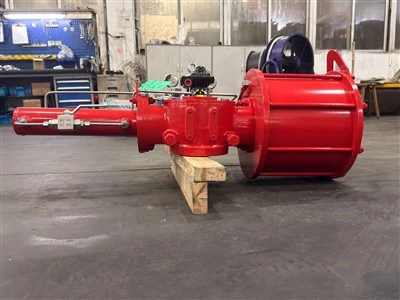
![Double-Acting P350Scotch Yoke Actuator]() Double-Acting P350Scotch Yoke ActuatorThis scotch yoke pneumatic actuator adopts a high-output torque structural design and is suitable for automated openingread more
Double-Acting P350Scotch Yoke ActuatorThis scotch yoke pneumatic actuator adopts a high-output torque structural design and is suitable for automated openingread more -
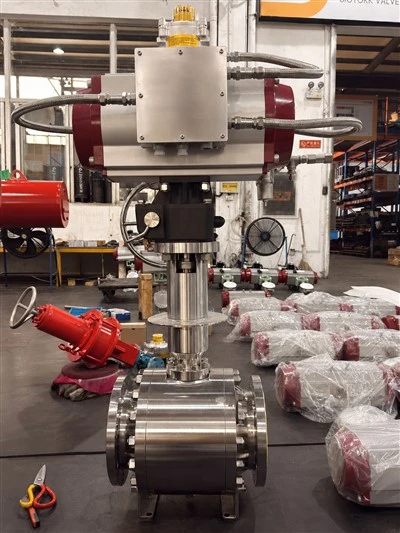
![Pneumatic Actuator WithBall Valve]() Pneumatic Actuator WithBall ValveThis is a rack-and-pinion pneumatic actuator designed for use with industrial piping systems.read more
Pneumatic Actuator WithBall ValveThis is a rack-and-pinion pneumatic actuator designed for use with industrial piping systems.read more -
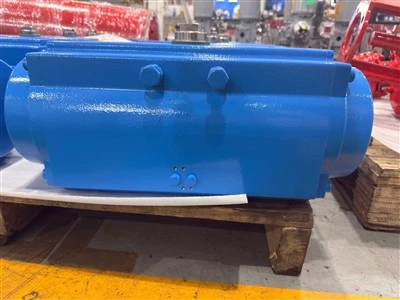
![AT190 SR Spring-returnpneumatic Actuator]() AT190 SR Spring-returnpneumatic ActuatorThe AT190SR spring-return pneumatic actuator features a robust, one-piece design with a highly recognizable blueread more
AT190 SR Spring-returnpneumatic ActuatorThe AT190SR spring-return pneumatic actuator features a robust, one-piece design with a highly recognizable blueread more -
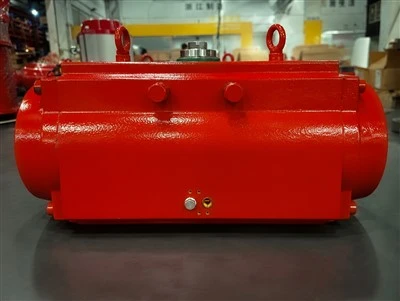
![Single-acting Rack-and-pinion Pneumatic Actuator]() Single-acting Rack-and-pinion Pneumatic ActuatorThe AT Series pneumatic actuators feature a rack-and-pinion drive mechanism and are specifically designed forread more
Single-acting Rack-and-pinion Pneumatic ActuatorThe AT Series pneumatic actuators feature a rack-and-pinion drive mechanism and are specifically designed forread more -
![FC Linear Pneumatic Actuator]() FC Linear Pneumatic ActuatorThis series of actuators consists of single-acting, linear-travel pneumatic actuators designed for the automatedread more
FC Linear Pneumatic ActuatorThis series of actuators consists of single-acting, linear-travel pneumatic actuators designed for the automatedread more -
![Double-acting Linear Actuator]() Double-acting Linear ActuatorThe BIGTORK double-acting linear actuator is designed for high-load valve control applications. Featuring aread more
Double-acting Linear ActuatorThe BIGTORK double-acting linear actuator is designed for high-load valve control applications. Featuring aread more