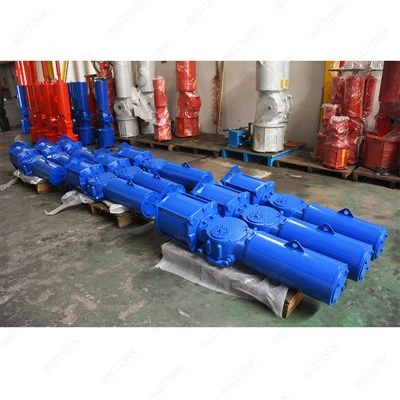
As a supplier of waterproof actuators, I understand the growing demand for energy - efficient solutions in today's industrial and commercial sectors. Reducing the power consumption of waterproof actuators not only helps in cutting down operational costs but also contributes to a more sustainable environment. In this blog, I will share some effective strategies to achieve this goal.
1. Select the Right Actuator Type
The first step in reducing power consumption is to choose the appropriate actuator type for your specific application. Different types of actuators have different power requirements. For instance, Air Power Actuators are often more energy - efficient compared to some electric counterparts, especially in applications where high - speed and intermittent operation are required.
Air power actuators use compressed air to generate motion, and the power consumption is mainly related to the air compressor's operation. By using a well - sized and efficient air compressor, and optimizing the air pressure and flow rate, significant energy savings can be achieved.
Another option is the 90 Degree Rotary Actuator. This type of actuator is designed for applications that require a specific 90 - degree rotation. Its simple and compact design can lead to lower power consumption as it can precisely perform the required motion without excessive energy waste.
2. Optimize Actuator Sizing
One of the most common mistakes is over - sizing the actuator for a particular application. An over - sized actuator will draw more power than necessary to perform the task. When selecting a waterproof actuator, carefully analyze the load requirements, such as the force or torque needed to move the load, the speed of operation, and the duty cycle.
For example, if you are using a Rack and Pinion Type Actuator to move a small - to - medium - sized load, choosing an actuator with the right gear ratio and power rating can prevent unnecessary power consumption. A properly sized actuator will operate at its optimal efficiency, reducing both energy usage and wear and tear on the components.
3. Implement Energy - Saving Control Strategies
Advanced control strategies can significantly reduce the power consumption of waterproof actuators. For electric actuators, using variable - speed drives (VSDs) is an effective way. VSDs allow the actuator to operate at different speeds depending on the load requirements. When the load is light, the actuator can run at a lower speed, consuming less power.
In the case of pneumatic actuators like Single - acting Rack - and - pinion Pneumatic Actuator and Double Acting Rotary Actuator, implementing pressure regulators and flow control valves can help optimize the air consumption. By adjusting the air pressure and flow rate according to the actual needs of the application, energy waste can be minimized.
4. Regular Maintenance and Lubrication
Proper maintenance is crucial for the efficient operation of waterproof actuators. Over time, dirt, debris, and corrosion can accumulate on the actuator components, increasing friction and resistance. This, in turn, leads to higher power consumption as the actuator has to work harder to overcome these obstacles.
Regularly cleaning the actuator, checking for any signs of wear or damage, and replacing worn - out parts can ensure smooth operation. Additionally, proper lubrication of moving parts reduces friction, allowing the actuator to operate more efficiently with less power.
5. Use Energy - Recovery Systems
In some applications, it is possible to implement energy - recovery systems for waterproof actuators. For example, in a pneumatic system, when an actuator extends or retracts, the compressed air can be redirected and reused. By installing energy - recovery devices such as air accumulators, the energy that would otherwise be wasted can be stored and used later, reducing the overall power consumption of the system.


6. Temperature and Environmental Considerations
The operating environment can have a significant impact on the power consumption of waterproof actuators. High temperatures can cause the actuator components to expand, increasing friction and resistance. In extremely cold conditions, the viscosity of lubricants may change, also affecting the actuator's performance.
Ensuring that the actuator operates within its recommended temperature range can improve its efficiency. This may involve providing insulation, cooling systems, or heating elements as necessary. Additionally, protecting the actuator from harsh environmental factors such as dust, moisture, and chemicals can prevent damage and maintain its energy - efficiency.
7. System Integration and Automation
Integrating the waterproof actuator into a larger automation system can also lead to power savings. By coordinating the operation of multiple actuators and other equipment, the overall system can operate more efficiently. For example, in a production line, actuators can be programmed to start and stop in sequence, reducing idle time and power consumption.
Automation systems can also monitor the actuator's performance in real - time and make adjustments based on the actual load and operating conditions. This intelligent control can optimize the power usage of the actuator and the entire system.
If you are interested in learning more about reducing power consumption of waterproof actuators or are looking to purchase high - quality waterproof actuators, we are here to help. Our team of experts can provide you with detailed information and customized solutions based on your specific needs. Contact us for procurement discussions, and let's work together to achieve energy - efficient operations.
References
- Manufacturer's manuals of various actuator products.
- Industry reports on energy - efficient actuator technologies.
- Research papers on the optimization of actuator performance.