Company Profile
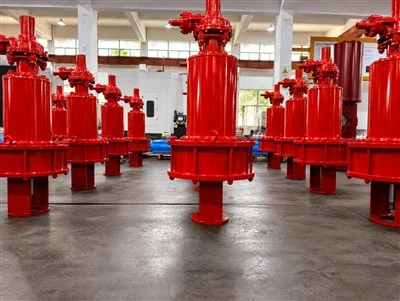
Founded in 2006, Zhejiang Bigtork Valve Automation Co., Ltd. specializes in the design and manufacture of pneumatic and hydraulic actuators for rotary and linear valve applications. Since 2011, BIGTORK has supported domestic and international oil & gas and industrial projects, providing actuator sizing, application engineering, manufacturing, testing and technical support for demanding valve automation requirements.
Why Choose Us?
Proven Experience
Founded in 2006, BIGTORK has built extensive experience in the design and manufacture of pneumatic and hydraulic valve actuators. Since 2011, we have supported valve automation projects in domestic and international markets, serving a wide range of industrial applications.
Engineering Expertise
Our engineering team supports actuator sizing, configuration and application engineering for both standard and project-specific requirements. Proprietary sizing tools help ensure accurate actuator selection, while technical support is available throughout project execution and the product lifecycle.
Manufacturing Capacity
BIGTORK operates four dedicated actuator production lines with an annual production capacity of approximately 60,000 units. Advanced CNC machining centres and CNC lathes support efficient production, dimensional accuracy and consistent product quality.
Quality Assurance
Quality is controlled throughout material inspection, machining, assembly and final testing. Critical components are sourced from qualified suppliers, and every actuator undergoes final inspection and functional testing before delivery. Test documentation can be provided in accordance with project requirements.
Lifecycle Support
From actuator selection and project configuration to manufacturing, testing and after-sales support, BIGTORK works with customers throughout the equipment lifecycle. Our engineering and service teams provide responsive support to help ensure reliable actuator operation and efficient project execution.
Global Project Experience
BIGTORK has supported valve manufacturers, engineering companies and industrial customers across international markets. Experience gained from oil & gas and industrial valve automation projects enables us to respond to diverse application requirements and demanding operating conditions.
-
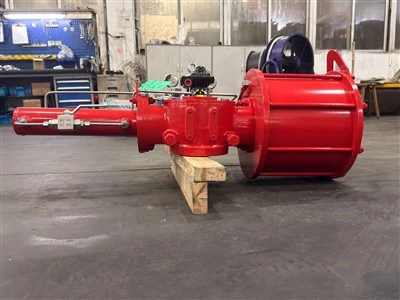
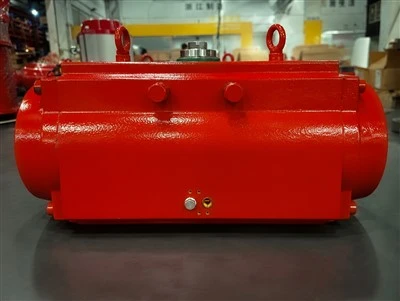
![P350 Double-Acting Scotch Yoke Actuator]() P350 Double-Acting Scotch Yoke ActuatorThis scotch yoke pneumatic actuator adopts a high-output torque structural design and is suitable for automated opening and closing control of 90° rotary valves such as ball valves and butterfly valves. The actuator features a compactread more
P350 Double-Acting Scotch Yoke ActuatorThis scotch yoke pneumatic actuator adopts a high-output torque structural design and is suitable for automated opening and closing control of 90° rotary valves such as ball valves and butterfly valves. The actuator features a compactread more -
![BG Series Scotch Yoke Actuator]() BG Series Scotch Yoke ActuatorThe BG Series Scotch Yoke Actuator is a compact, high-torque, and reliable quarter-turn actuator designed specifically for the automated control of ball valves, butterfly valves, and plug valves.read more
BG Series Scotch Yoke ActuatorThe BG Series Scotch Yoke Actuator is a compact, high-torque, and reliable quarter-turn actuator designed specifically for the automated control of ball valves, butterfly valves, and plug valves.read more -
![Spring Return Actuator]() Spring Return ActuatorA spring return actuator utilizes stored spring energy to generate motion, enabling the controlled movement of air or fluid in a single direction to drive the piston. This action is used to precisely open or close the valve. The design isread more
Spring Return ActuatorA spring return actuator utilizes stored spring energy to generate motion, enabling the controlled movement of air or fluid in a single direction to drive the piston. This action is used to precisely open or close the valve. The design isread more -
![Double Acting Actuator]() Double Acting ActuatorA double acting actuator is a sophisticated device designed to operate valves by applying force in both opening and closing movements. Unlike their single acting counterparts, which use a spring to return to the original position, doubleread more
Double Acting ActuatorA double acting actuator is a sophisticated device designed to operate valves by applying force in both opening and closing movements. Unlike their single acting counterparts, which use a spring to return to the original position, doubleread more -
![Air Actuator]() Air ActuatorAn scotch yoke air actuator is a valve switch device can converts energy into compressed air into rotary mechanical motion to achieve the valve open and close. It mostly called scotch yoke pneumatic actuator. Bigtork® scotch yoke airread more
Air ActuatorAn scotch yoke air actuator is a valve switch device can converts energy into compressed air into rotary mechanical motion to achieve the valve open and close. It mostly called scotch yoke pneumatic actuator. Bigtork® scotch yoke airread more -
![Air Torque Actuator]() Air Torque ActuatorBG series scotch yoke air torque actuator are designed in many different model number combinations of actuator sizes, cylinder diameters. The scotch and yoke actuator can provide a wide torque output range from 360Nm to 110000Nm, which theread more
Air Torque ActuatorBG series scotch yoke air torque actuator are designed in many different model number combinations of actuator sizes, cylinder diameters. The scotch and yoke actuator can provide a wide torque output range from 360Nm to 110000Nm, which theread more -
![Air Pressure Actuator]() Air Pressure ActuatorScotch yoke air pressure actuators are designed for use over a wide range of pressures or temperatures. BG series air pressure actuators use pressurize air or gas to move a piston back and forth, which is connected to an oscillating yokeread more
Air Pressure ActuatorScotch yoke air pressure actuators are designed for use over a wide range of pressures or temperatures. BG series air pressure actuators use pressurize air or gas to move a piston back and forth, which is connected to an oscillating yokeread more -
![Heavy Duty Actuator]() Heavy Duty ActuatorThe heavy duty actuator are available as pneumatic or hydraulic scotch yoke actuators for 90 degree angular valves, dampers or any device.BG series is accompanied by a complete sets of accessories modular, involving side-mounted handwheel,read more
Heavy Duty ActuatorThe heavy duty actuator are available as pneumatic or hydraulic scotch yoke actuators for 90 degree angular valves, dampers or any device.BG series is accompanied by a complete sets of accessories modular, involving side-mounted handwheel,read more -
![Actuator Scotch Yoke]() Actuator Scotch YokeValve actuator scotch yoke type are 90˚ driving mechanisms that can be powered by compressed air or hydraulic oil from an external source to converts linear motion of a bar sliding back and forth into a rotational motion. Rotary actuatorread more
Actuator Scotch YokeValve actuator scotch yoke type are 90˚ driving mechanisms that can be powered by compressed air or hydraulic oil from an external source to converts linear motion of a bar sliding back and forth into a rotational motion. Rotary actuatorread more -
![Single Acting Actuator]() Single Acting ActuatorA single acting actuator have either air or liquid supplied to one side of the piston, and the energy to move the valve comes from a spring on the opposite side. The pressure of the air or liquid in the single acting actuator can opens orread more
Single Acting ActuatorA single acting actuator have either air or liquid supplied to one side of the piston, and the energy to move the valve comes from a spring on the opposite side. The pressure of the air or liquid in the single acting actuator can opens orread more -
![Double Acting Actuator]() Double Acting ActuatorDouble acting actuator has ports at each end of the actuator and can operates in both directions. Double acting actuator can have higher torque in specific situations than spring return actuators. This applies there is a need for very highread more
Double Acting ActuatorDouble acting actuator has ports at each end of the actuator and can operates in both directions. Double acting actuator can have higher torque in specific situations than spring return actuators. This applies there is a need for very highread more -
![Heavy Duty Rotary Actuator]() Heavy Duty Rotary ActuatorThe heavy duty rotary actuator are available as pneumatic or hydraulic scotch yoke actuators for 90 degree angular valves, dampers or any device.BG series is accompanied by a complete sets of accessories modular, involving side-mountedread more
Heavy Duty Rotary ActuatorThe heavy duty rotary actuator are available as pneumatic or hydraulic scotch yoke actuators for 90 degree angular valves, dampers or any device.BG series is accompanied by a complete sets of accessories modular, involving side-mountedread more


What is Scotch Yoke Actuator?
Scotch yoke actuators are mechanical devices used to automatically open and close valves or dampers. The scotch yoke is a mechanism that converts linear motion of a bar sliding back and forth into a rotational motion.
Benefits of Scotch Yoke Actuator
Compactness
Its compact design is advantageous in space-constrained applications.
Smooth output motion
The mechanism ensures a continuous acceleration and velocity profiles which help to minimize jerk and inertial loading.
Simplicity and reliability
Fewer moving parts mean easier manufacturing and maintenance, and often greater reliability.
High torque output:
One of the key advantages of a Scotch yoke actuator is its ability to deliver high torque output. The unique design of the Scotch yoke mechanism converts rotary motion into linear motion with a constant torque profile throughout the stroke. This consistent torque output makes it ideal for applications that require precise control and the ability to handle heavy loads effortlessly.
Versatile applications:
Scotch yoke actuators find extensive use in a wide range of applications. They are commonly employed in valve automation, where they provide precise control over the opening and closing of valves. These actuators can handle both linear and rotary valve motions, making them suitable for gate valves, globe valves, and other types of industrial valves. Additionally, Scotch yoke actuators are used in various other applications such as damper control, process control, and even in heavy machinery for linear motion tasks.
Enhanced safety features:
Safety is paramount in industrial environments, and Scotch yoke actuators are designed with this in mind. They often come equipped with features such as emergency shut-off capabilities, fail-safe options, and position feedback systems. These safety features ensure that the actuator can quickly respond to emergency situations, prevent equipment damage, and safeguard personnel.
Types of Scotch Yoke Actuator
1.Double acting scotch yoke actuators:
In the example below, air supplied at port 2 is released into the chamber and forces the piston towards the central module of the scotch yoke actuator, in turn performing the counterclockwise rotation through the scotch yoke mechanism and opening of the connected valve. Exhaust air is exited through port 4. To perform the closing operation air is supplied through port 4 from the central module of the actuator. Forcing the piston to the end of the body chamber and clockwise rotation is achieved. Exhaust air is exited through port 2.
2.Spring return scotch yoke actuators:
For Spring Return Scotch Yoke Actuators, air supplied at port 2 is released into the chamber and forces the piston towards the central module of the actuator, this compresses the spring in the opposite chamber and performs the counterclockwise rotational movement, opening the valve. Exhaust air is exited through port 4. Depressurisation to port 2 through the use of an intentional or non-intentional action allows the spring to move the piston back towards the opposite end of the air chamber and immediately closes the valve. Exhaust air is exited through port 2.
Industrial automation: Used in assembly lines for moving parts or products.
Material handling: For lifting and moving heavy materials in manufacturing and warehousing.
Machine tools: In CNC machines and other automated tools for precise positioning.
Medical equipment: In devices that require controlled linear motion, such as patient beds or surgical tables.
Agricultural machinery: For controlling the movement of plows, harvesters, and other farming equipment.
Automotive industry: In assembly lines for the precise placement of components.
Construction equipment: For controlling the movement of hydraulic rams in excavators and other heavy machinery.
Aerospace: In control systems for aircraft components and satellite deployment mechanisms.
Entertainment: In animatronics and other special effects for movies and theme parks.
Valve actuation: For opening and closing valves in fluid control systems.

Components of Scotch Yoke Actuator
Crank
The crank rotates around the fixed link as its centre point and the sliding pin as its endpoint.
01
Sliding pin
This sliding pin is a fixed link to the double slider crankshaft on the other side. It is also attached to a crank
02
Sliding yoke
The sliding yoke has a slot that attaches to a sliding pin that slides inside the sliding yoke.
03
Fixed link
When the crank rotates around the fixed link, the sliding pin slides into the slot of the yoke, and the yoke slides forward and backwards.
04
Connecting rod or piston
It achieves the output reprocessing motion of the scotch yoke mechanism. The piston or reciprocating part is added to a sliding yoke.
05
Safety warnings and caution
Prior to maintenance work on the scotch and yoke actuator, it is necessary to disconnect all air and electrical supplies from actuator.
The recommended air pressure is given according to the design pressure in principle. If local conditions require higher pressure, an assessment should be performed. However, it is recommended that the maximum air pressure should be not more than 0.6MPa.
Ensure the service environment conditions are compatible with scotch and yoke actuators before installation.
The air supply shall be clean, use of non-corrosive components, compressed air or other gas as suitable.
●Attention: The spring sleeve and end covers provide protection structure of the spring assembly. Spring is pre-compressed and is always under pressure, the nuts and bolts securing this assembly should not be tampered with to avoid any accidents.
●Attention: Before any assembly/dissassembly work of the actuator, the operator shall make sure the actuator spring is not energized and the actuator air supply is shut off. Failure to do so may result in injuries.
●Attention: During mounting of an actuator on a valve, never insert your hand in the valve bore.
Due to heavy weight of the actuator, it is advisable to provide support in the middle of the spring cartridge at the installation site.
Air supply shall be clean, use of non-corrosive components, compressed air or other gas as suitable.
The air pressure is given according to the design pressure in principle. If local conditions require higher pressure, an assessment should be performed.
However, it is recommended that the maximum air pressure should be not more than 0.6MPa.
The spring sleeve and end covers provide protection structure of the spring assembly. Spring is pre-compressed and is always under pressure, the nuts and bolts securing this assembly should not be tampered with to avoid any accidents.
During inspection maintenance, ensure that the air supply is cut off and pressure is fully discharged.
Receiving and storage
Unloading
Actuators should be unloaded carefully. The actuators should be carefully lowered from the truck to the ground, not dropped. Only hoists and slings with adequate load capacity to handle the weight of the actuators should be used. Do not hook hoists into or fasten chains around by motors, cylinders, or hand wheels. Failure to carefully follow these recommendations is likely to result in damage to the actuators.
Storage
Actuators should be stored in the fully closed position to prevent entry of foreign material that could cause damage to the seating surfaces. Whenever practical, actuators should be stored indoors. If outside storage is required, means should be provided to protect operating mechanisms, such as gears, motor and cylinders, from weather elements. During outside storage, actuators should be protected from the weather, sunlight, ozone, and foreign material. In colder climates, where actuators may be subject to freezing temperatures, it is absolutely essential to remove water from the actuators interior and close the tightly before storage. Failure to do so may result in a cracked castings.
Store actuators so that no heavy loads are applied to the actuators body.
Inspection before installation
Actuators should be inspected at the time of receipt for damage in shipment. The initial inspection should verify compliance with specifications, directions of opening and size. Inspection personnel should look for broken hand wheels, cracked parts, loose bolts, missing parts and accessories, if applicable, and any other evidence of mishandling during shipment.
Inspection and maintenance
The scotch & yoke actuators are designed for long term maintenance-free service. Preventive maintenance shall be based on the actual operating conditions.
Actuators in stored for long period of time or with low operating cycles should be cycled at least once every 90 days.
Outside paints can be renewed if required based on environment conditions.
Internal seals should be every 3 to 6 years depending on the operating conditions.
Gas supply: The gas-powered scotch yoke actuator uses pressurized gas as the driving force, which, depending on the specific application and site requirements, the gas source is a natural gas pipeline, an onsite compressor, or bottled gas.
Pneumatic cylinder: The gas enters the pneumatic cylinder, which is the core component of the actuator. The cylinder contains a piston that moves linearly when pressurized gas is applied.
Scotch yoke mechanism
The linear motion of the piston is converted into rotary motion using the scotch yoke mechanism. The scotch yoke consists of a yoke (a slotted, U-shaped component) attached to the piston rod and a pin mounted on the rotating output shaft. The yoke slides along the pin as the piston moves linearly, causing the output shaft to rotate.
Output shaft
The output shaft's rotation is transferred to the valve stem, causing the valve to open or close, depending on the direction of the rotation. The shaft is connected to the valve using a coupling, which ensures proper alignment and torque transmission.
Spring return mechanism
Some gas-powered scotch yoke actuators have a spring return mechanism, which enables the valve to return to a predetermined fail-safe position in the event of a loss of gas supply or system failure.
Rack and Pinion vs. Scotch-Yoke: When to Specify Which?
Torque profile needs:
For ball or butterfly valves that demand consistent torque throughout the rotation, rack, and pinion actuators are preferable.
The scotch-yoke design is advantageous for gate or globe valves that require high torque at the start and end of operation.
Space & weight considerations:
In constrained spaces or where weight is a concern, the compact nature of rack and pinion actuators may be beneficial.
Durability & maintenance:
In clean environments, the more straightforward design of the rack and pinion might have an edge in terms of longevity.
The wear and tear on the scotch-yoke's sliding parts may require more frequent maintenance in dirty or harsh conditions.
Cost sensitivity:
Budget constraints might lean towards rack and pinion actuators, though weighing initial costs against potential maintenance and longevity is essential.
Operational speed:
Depending on design specifics, speed requirements may favor one actuator type over the other.
Bigtork® have covered an area of total 20000 square meters, which its workshop for machining, assemble, testing and its warehouse for raw material, semi-finished product and finished product.


Our Certificates


FAQ
Zhejiang Bigtork Valve Automation Co., Ltd. is one of the leading scotch yoke actuator manufacturers and suppliers in China. We warmly welcome you to buy customized scotch yoke actuator at competitive price from our factory. Contact us for more details.
Air Torque Actuator, Actuator Scotch Yoke, Scotch Yoke Valve Actuator-
![Actuator with Bevel Gear Manual Override]() Actuator with Bevel Gear Manual OverrideBuilt around a heavy-duty scotch yoke transmission and supported by a dependable mechanical emergency override, theread more
Actuator with Bevel Gear Manual OverrideBuilt around a heavy-duty scotch yoke transmission and supported by a dependable mechanical emergency override, theread more -
![ZSS300 Pneumatic Linear Actuator]() ZSS300 Pneumatic Linear ActuatorThe ZSS300 is a single-cylinder, air-to-open pneumatic actuator designed for reliable linear valve operation inread more
ZSS300 Pneumatic Linear ActuatorThe ZSS300 is a single-cylinder, air-to-open pneumatic actuator designed for reliable linear valve operation inread more -
![P350 Double-Acting Scotch Yoke Actuator]() P350 Double-Acting Scotch Yoke ActuatorThis scotch yoke pneumatic actuator adopts a high-output torque structural design and is suitable for automated openingread more
P350 Double-Acting Scotch Yoke ActuatorThis scotch yoke pneumatic actuator adopts a high-output torque structural design and is suitable for automated openingread more -
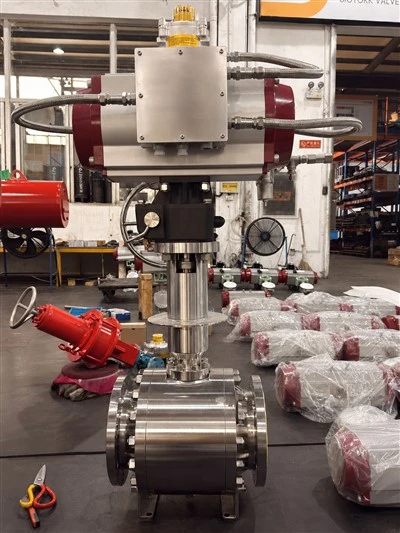
![Pneumatic Actuator With Ball Valve]() Pneumatic Actuator With Ball ValveThis is a rack-and-pinion pneumatic actuator designed for use with industrial piping systems.read more
Pneumatic Actuator With Ball ValveThis is a rack-and-pinion pneumatic actuator designed for use with industrial piping systems.read more -
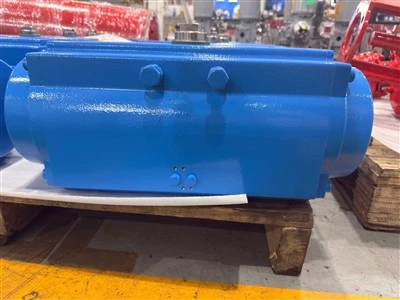
![AT190 SR Spring-returnpneumatic Actuator]() AT190 SR Spring-returnpneumatic ActuatorThe AT190SR spring-return pneumatic actuator features a robust, one-piece design with a highly recognizable blueread more
AT190 SR Spring-returnpneumatic ActuatorThe AT190SR spring-return pneumatic actuator features a robust, one-piece design with a highly recognizable blueread more -
![Single-acting Rack-and-pinion Pneumatic Actuator]() Single-acting Rack-and-pinion Pneumatic ActuatorThe AT Series pneumatic actuators feature a rack-and-pinion drive mechanism and are specifically designed forread more
Single-acting Rack-and-pinion Pneumatic ActuatorThe AT Series pneumatic actuators feature a rack-and-pinion drive mechanism and are specifically designed forread more