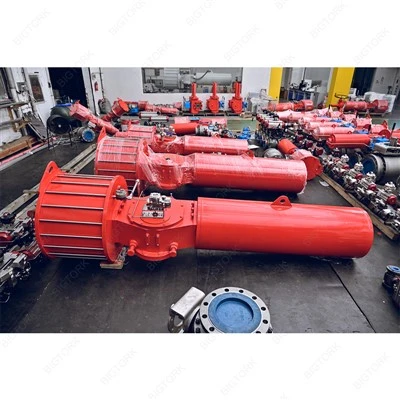
Hey there, fellow industry enthusiasts! As a supplier of pneumatic rotary actuators, I've seen firsthand the importance of precision in high - precision applications. Whether it's in manufacturing, automation, or robotics, the accuracy of these actuators can make or break a project. So, in this blog, I'm gonna share some tips on how to boost the precision of pneumatic rotary actuators for those demanding high - precision tasks.
Understanding the Basics of Pneumatic Rotary Actuators
Before we dive into the ways to improve precision, let's quickly go over what pneumatic rotary actuators are. These nifty devices convert compressed air energy into rotational motion. They're used in a wide range of applications because they're relatively simple, cost - effective, and can handle a decent amount of torque.
There are different types of pneumatic rotary actuators out there. For example, the Pneumatic Quarter - Turn Valve Actuator is often used for valve control, where it needs to rotate 90 degrees precisely. It's a common choice in industries like chemical processing and water treatment. Then there's the Angular Actuator, which can rotate to a specific angle as required by the application, making it suitable for tasks where variable angular positioning is needed.
Factors Affecting the Precision of Pneumatic Rotary Actuators
Air Quality
The quality of the compressed air used is a major factor. If the air is dirty, wet, or contains contaminants, it can cause wear and tear on the actuator components. For instance, dust particles can scratch the internal seals, leading to air leakage. This leakage can result in inconsistent rotational movement and reduce the overall precision of the actuator. To fix this, we recommend using proper air filters and dryers in the pneumatic system. These devices can remove moisture, dust, and other impurities from the compressed air, ensuring a clean and stable supply to the actuator.
Friction and Wear
Friction within the actuator can also have a big impact on precision. Over time, the moving parts in the actuator, like gears and bearings, will experience wear. This wear increases friction, which can cause delays in movement and inaccurate positioning. To minimize friction, high - quality lubricants should be used. Regular maintenance, including lubricant replacement and inspection of worn parts, is crucial. For example, in a Pneumatic Single - Acting Actuator With Bevel Gear Drive, the bevel gears need to be well - lubricated to ensure smooth and precise rotation.


Pressure Regulation
Inconsistent air pressure can lead to variations in the actuator's rotational speed and torque. If the pressure is too high, the actuator may move too quickly and overshoot the desired position. On the other hand, if the pressure is too low, the actuator may not have enough force to reach the required position. Installing a reliable pressure regulator in the pneumatic system can help maintain a constant air pressure. This regulator should be calibrated regularly to ensure accurate pressure control.
Design and Component Selection
Actuator Design
The design of the actuator itself plays a significant role in precision. Some actuators are designed with features that enhance accuracy. For example, some Part Turn Actuator models have built - in mechanical stops that limit the rotation to a specific angle. This can prevent over - rotation and improve the precision of the actuator. When choosing an actuator for a high - precision application, it's important to consider the design features that can contribute to accuracy.
Component Quality
Using high - quality components is essential. This includes the seals, bearings, and gears. Inferior components are more likely to wear out quickly, leading to reduced precision. For example, a low - quality seal may not be able to maintain a proper airtight seal, causing air leakage. When sourcing components, look for suppliers with a good reputation for quality. In the case of Rotary Piston Actuator, high - quality pistons and cylinders are crucial for smooth and precise operation.
Control Systems
Feedback Devices
Adding feedback devices to the actuator can significantly improve precision. Encoders, for example, can provide real - time information about the actuator's position. This information can be used to adjust the control signals to the actuator, ensuring that it reaches and maintains the desired position accurately. Proximity sensors can also be used to detect when the actuator has reached a specific position. By integrating these feedback devices with the control system, you can create a closed - loop control system that continuously monitors and corrects the actuator's position.
Control Algorithms
The control algorithms used in the control system also matter. Advanced algorithms can compensate for factors like friction, inertia, and air pressure variations. For example, a PID (Proportional - Integral - Derivative) controller can calculate the appropriate control signals based on the difference between the desired position and the actual position of the actuator. This allows for more precise control and faster response times.
Testing and Calibration
Once the actuator is installed and integrated into the system, it's important to conduct thorough testing and calibration. Testing can help identify any potential issues with precision, such as over - or under - rotation. Calibration can then be used to adjust the actuator's settings to achieve the desired precision. This may involve adjusting the pressure regulator, setting the limits on the feedback devices, or fine - tuning the control algorithms. Regular testing and calibration should be performed throughout the actuator's lifespan to ensure that it continues to operate with high precision.
Conclusion
Improving the precision of pneumatic rotary actuators for high - precision applications requires a comprehensive approach. From ensuring the quality of the compressed air to selecting the right components and implementing advanced control systems, every step matters. As a supplier of pneumatic rotary actuators, I understand the challenges you face in achieving high precision. We're committed to providing you with the best products and support to help you meet your precision requirements.
If you're looking to upgrade your pneumatic rotary actuators for high - precision applications, or if you have any questions about how to improve precision, we'd love to have a chat. Contact us to discuss your project needs and let's find the perfect solution together.
References
- Pneumatic Actuator Handbook, [Publisher name, Year of publication]
- Journal of Precision Engineering, multiple issues related to pneumatic actuators
- Industry - specific whitepapers on high - precision pneumatic applications