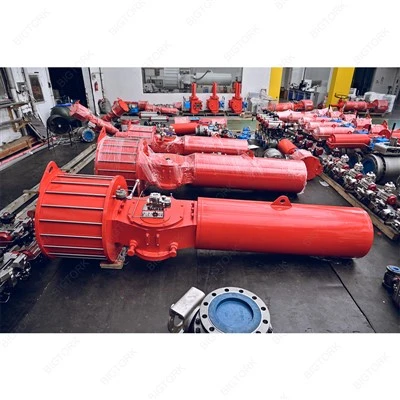
Pneumatic actuators are devices that convert energy from compressed air into mechanical motion, which is used to operate valves, dampers, and other industrial equipment. As a pneumatic actuator supplier, I am often asked whether pneumatic actuators can be used in the packaging industry. The answer is a resounding yes, and in this blog post, I will explore the reasons why pneumatic actuators are an excellent choice for packaging applications.
Advantages of Pneumatic Actuators in Packaging Industries
1. High - Speed Operation
One of the primary requirements in the packaging industry is high - speed production. Pneumatic actuators can achieve rapid actuation times, making them ideal for fast - paced packaging lines. For example, in a bottling plant where hundreds of bottles need to be capped per minute, pneumatic actuators can quickly open and close the capping mechanisms, ensuring a high throughput. The speed of pneumatic actuators is due to the fast response of compressed air. When the air pressure is applied or released, the actuator can move almost instantaneously, reducing the cycle time of the packaging process.
2. Precision and Repeatability
Precision is crucial in packaging to ensure that products are properly sealed, labeled, and measured. Pneumatic actuators can provide accurate and repeatable motion. They can be designed to move to specific positions with high precision, which is essential for tasks such as filling containers with the exact amount of product. In addition, the repeatability of pneumatic actuators means that the same motion can be achieved over and over again, ensuring consistent quality in the packaging process. For instance, in a food packaging line, pneumatic actuators can be used to precisely control the amount of sauce or seasoning added to each package.
3. Clean and Safe Operation
The packaging industry often deals with food, pharmaceuticals, and other sensitive products. Pneumatic actuators are a clean option as they do not use lubricants or fluids that could contaminate the products. Compressed air is a clean energy source, and pneumatic actuators can be easily cleaned and maintained to meet the hygiene standards of the packaging industry. Moreover, pneumatic actuators are safer to operate compared to some other types of actuators. They do not generate sparks, which is important in environments where there is a risk of explosion or fire, such as in the packaging of flammable materials.
4. Cost - Effectiveness
Pneumatic actuators are generally more cost - effective than other types of actuators, such as electric or hydraulic actuators. The initial cost of purchasing pneumatic actuators is relatively low, and they are also easy to install and maintain. Compressed air is a widely available and inexpensive energy source, which further reduces the operating costs. In a large - scale packaging operation, the cost savings can be significant over time.
Types of Pneumatic Actuators Used in Packaging
1. Industrial Valve Actuators
Industrial Valve Actuators are commonly used in packaging to control the flow of liquids, gases, or solids. For example, in a packaging line for beverages, valve actuators can be used to control the flow of the drink into the bottles. They can open and close valves quickly and accurately, ensuring the proper filling of the containers.
2. Industrial Pneumatic Actuators
Industrial Pneumatic Actuators are versatile and can be used in a variety of packaging applications. They can be used to operate conveyor belts, pushing mechanisms, and sorting devices. These actuators can provide linear or rotary motion, depending on the requirements of the packaging process.
3. Air Torque Actuator
Air Torque Actuator is capable of providing high torque with a compact design. In the packaging industry, they can be used for tasks such as tightening caps or lids. The high - torque output ensures that the caps are tightened properly, preventing leakage during transportation and storage.
4. Large Bore Spring Return Actuator
Large Bore Spring Return Actuator is often used in applications where a large amount of force is required. In packaging, they can be used to operate large - scale packaging machinery, such as palletizers. The spring - return feature ensures that the actuator returns to its original position when the air pressure is released, providing a reliable and safe operation.
5. Single Acting Actuator
Single Acting Actuator is a simple and cost - effective option for packaging applications. They are powered by air pressure in one direction and rely on a spring or other mechanism to return to the original position. They can be used in tasks such as lifting, pushing, or clamping operations in the packaging line.
Applications of Pneumatic Actuators in Packaging
1. Filling and Capping
As mentioned earlier, pneumatic actuators play a vital role in filling and capping operations. They control the valves to ensure the accurate filling of products into containers and operate the capping mechanisms to seal the containers tightly.
2. Labeling
In the labeling process, pneumatic actuators can be used to position the labels accurately on the products. They can control the movement of the labeling heads, ensuring that the labels are applied at the correct location and orientation.
3. Packaging Sealing
For heat - sealing or adhesive - sealing processes, pneumatic actuators can apply the necessary pressure to seal the packages properly. They can also control the movement of the sealing jaws, ensuring a consistent and reliable seal.


4. Sorting and Conveying
Pneumatic actuators are used in sorting and conveying systems to move products along the packaging line. They can push products onto different conveyor belts or divert them to specific locations based on their size, shape, or weight.
Challenges and Solutions
1. Compressed Air Quality
The quality of compressed air can affect the performance of pneumatic actuators. Moisture, dirt, and oil in the compressed air can cause corrosion and wear in the actuators, reducing their lifespan. To address this issue, proper air filtration and drying systems should be installed to ensure that the compressed air is clean and dry.
2. Noise Pollution
Pneumatic actuators can generate noise during operation, which can be a problem in the workplace. To reduce noise, silencers can be installed on the exhaust ports of the actuators. Additionally, proper maintenance of the actuators can also help to reduce noise levels.
3. Energy Efficiency
Although pneumatic actuators are generally cost - effective, improving their energy efficiency can further reduce operating costs. Advanced control systems can be used to optimize the air pressure and flow rate, ensuring that the actuators use only the amount of energy required for the task.
Conclusion
In conclusion, pneumatic actuators are well - suited for the packaging industry due to their high - speed operation, precision, clean and safe nature, and cost - effectiveness. There are various types of pneumatic actuators available that can be used in different packaging applications, from filling and capping to sorting and conveying. While there are some challenges associated with using pneumatic actuators, such as compressed air quality, noise pollution, and energy efficiency, these can be effectively addressed with proper solutions.
If you are in the packaging industry and are looking for reliable and efficient pneumatic actuators, I invite you to contact us to discuss your specific requirements. We have a wide range of pneumatic actuators that can meet the needs of your packaging operations. Let's work together to improve the efficiency and quality of your packaging process.
References
- "Pneumatic Actuators: Principles, Designs, and Applications" by J. Smith
- "Packaging Technology Handbook" by R. Johnson
- Industry reports on pneumatic actuators and packaging machinery.