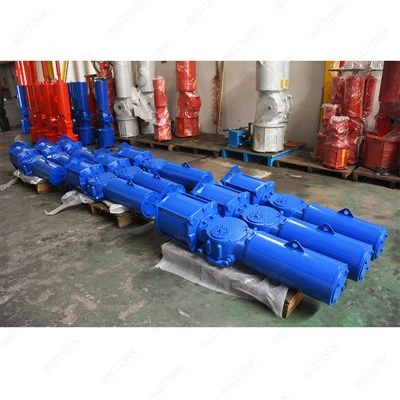
The lifespan of a scotch yoke actuator is a critical consideration for industries relying on these devices for efficient operation. As a seasoned scotch yoke actuator supplier, I've delved deep into the factors that determine how long these actuators serve, and I'm here to share my insights.
Understanding the Basics of Scotch Yoke Actuators
Scotch yoke actuators are popular in various industrial applications, including valves in oil and gas, petrochemical, and water treatment plants. Their design converts linear motion into rotary motion, offering high torque output and precise control. The scotch yoke mechanism consists of a piston, a yoke, and a shaft. The piston's linear movement within the cylinder causes the yoke to move, which in turn rotates the shaft.
Factors Influencing the Lifespan of Scotch Yoke Actuators
1. Operating Conditions
The environment in which a scotch yoke actuator operates significantly impacts its lifespan. In harsh conditions such as high temperatures, extreme humidity, or exposure to corrosive chemicals, the actuator's components can degrade faster. For instance, in an offshore oil rig, the actuator is constantly exposed to saltwater, which can corrode the metal parts. This corrosion weakens the structure and can lead to failure over time.
On the other hand, actuators operating in clean, controlled environments with moderate temperatures tend to last longer. In a pharmaceutical manufacturing plant, where the environment is relatively clean and temperature - controlled, the actuators experience less wear and tear.
2. Frequency of Use
How often the actuator is used also plays a crucial role. Actuators that are in continuous operation, such as those in a 24/7 production line, will naturally experience more wear than those used intermittently. Each time the actuator is cycled, there is friction between the moving parts, which gradually wears down the components.
For example, an actuator in a bottling plant that is constantly opening and closing valves to fill bottles will have a shorter lifespan compared to an actuator in a backup system that is only used during emergencies.
3. Maintenance Practices
Regular maintenance is the key to extending the lifespan of a scotch yoke actuator. Proper lubrication of the moving parts reduces friction and prevents premature wear. Inspecting the seals regularly for leaks and replacing them when necessary helps maintain the actuator's performance.
Also, checking the alignment of the components ensures smooth operation. A misaligned actuator can cause uneven stress on the parts, leading to faster deterioration. If a company neglects maintenance, it will likely face actuator failures more frequently, which can result in costly downtime.
4. Quality of Components
The quality of the materials used in the construction of the actuator affects its longevity. High - quality metals and alloys resist corrosion and wear better than lower - grade materials. For example, an actuator made with stainless steel components will be more durable in a corrosive environment compared to one made with regular steel.
Similarly, the quality of the seals and gaskets is crucial. A well - made seal will prevent leaks and keep the internal components protected from contaminants.


Typical Lifespan Estimates
Under normal operating conditions and with proper maintenance, a scotch yoke actuator can last anywhere from 10 to 20 years. However, this is a general estimate, and the actual lifespan can vary widely based on the factors mentioned above.
In a well - maintained industrial plant with a relatively clean environment and moderate usage, an actuator may reach the upper end of this lifespan range. Conversely, in a harsh, high - usage environment with minimal maintenance, the actuator may fail within a few years.
Our Product Range and Their Durability
As a scotch yoke actuator supplier, we offer a wide range of products designed to meet different industrial needs. Our Heavy Duty Rotary Actuator is built to withstand high - torque applications and harsh operating conditions. Made with high - quality materials and precision engineering, these actuators are designed for long - term reliability.
The Double Acting Actuator provides power in both the extending and retracting strokes, offering greater control and efficiency. With robust construction and advanced sealing technology, it has a long lifespan even in demanding applications.
Our Heavy Duty Actuator is suitable for heavy - industrial applications where high performance and durability are required. It is designed to handle extreme temperatures, high pressures, and continuous operation, ensuring a long service life.
The Single Acting Actuator is ideal for applications where power is only required in one direction. Its simple yet effective design, combined with high - quality components, makes it a reliable choice with a decent lifespan.
Our Double - Acting P350Scotch Yoke Actuator is specifically engineered for applications that demand high - precision control and long - term performance. It is built to meet the strictest industry standards and is a great option for industries such as aerospace and automotive manufacturing.
Importance of Choosing the Right Actuator
Selecting the right scotch yoke actuator for your application is essential for maximizing its lifespan. Consider the operating conditions, load requirements, and frequency of use when making your decision. A well - chosen actuator will not only perform better but also last longer, reducing the overall cost of ownership.
Conclusion
In conclusion, the lifespan of a scotch yoke actuator is influenced by multiple factors, including operating conditions, frequency of use, maintenance practices, and the quality of components. As a supplier, we strive to provide high - quality actuators that are designed for long - term durability. Our diverse product range offers solutions for various industrial needs, ensuring that you can find the perfect actuator for your application.
If you're looking for a reliable scotch yoke actuator supplier for your next project, we're here to assist you. Our team of experts can help you choose the right actuator and provide guidance on maintenance to extend its lifespan. Contact us today to start a discussion about your requirements and take the first step towards a more efficient and reliable operation.
References
- ASME B31.3 Process Piping Code
- API 609 Butterflies Valves, Double - Flanged, Lug - Type, and Wafer - Type
- ISO 5211 Mounting Dimensions for Electric and Pneumatic Actuators