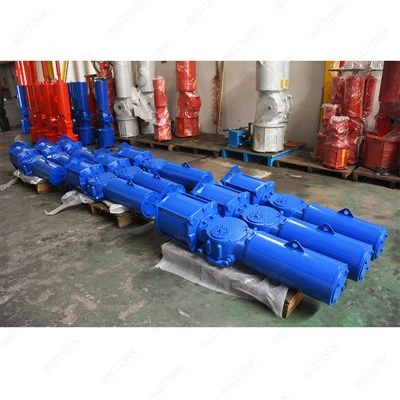
As a supplier of Rotary Piston Actuators, I've seen firsthand how pressure can have a huge impact on their performance. In this blog, I'm gonna break down how different pressure levels can affect these actuators and what it means for you.
Understanding Rotary Piston Actuators
Before we dive into the effects of pressure, let's quickly go over what Rotary Piston Actuators are. These actuators use a piston that rotates within a cylinder to convert fluid pressure into mechanical motion. They're commonly used in industrial applications where precise rotary motion is needed, like in valve control, robotics, and automation.
The Basics of Pressure and Actuator Performance
Pressure is a key factor in how well a Rotary Piston Actuator works. In simple terms, pressure is what drives the piston to rotate. When you increase the pressure, you're essentially giving the actuator more "oomph" to do its job. But it's not as straightforward as just cranking up the pressure; there are several aspects of performance that can be affected.
Torque Generation
One of the most important performance indicators is torque. Torque is the rotational force that the actuator can deliver. Higher pressure usually means more torque. When you increase the pressure of the fluid (usually air or hydraulic fluid) entering the actuator, it creates a greater force on the piston. This increased force translates into more torque at the output shaft.
For example, if you're using a Compact Pneumatic Quarter-Turn Actuator to control a valve, a higher pressure can ensure that the valve opens and closes more forcefully. This is especially important for larger valves or those that are subject to high flow rates or pressure differentials.
Speed of Rotation
Pressure also affects the speed at which the actuator rotates. Generally, higher pressure leads to a faster rotation. The increased force from the higher pressure allows the piston to move more quickly within the cylinder. However, this isn't always a linear relationship. There are other factors like the size of the actuator, the viscosity of the fluid, and the load on the output shaft that can influence the actual speed.
Imagine you're using a Pneumatic Quarter-Turn Valve Actuator to open a valve as quickly as possible. By adjusting the pressure, you can fine-tune the rotational speed of the actuator to meet your specific timing requirements.
Accuracy and Repeatability
When it comes to precision applications, accuracy and repeatability are crucial. Pressure fluctuations can have a big impact on these aspects of actuator performance. If the pressure is inconsistent, the actuator may not rotate to the exact position every time. This can lead to errors in processes that rely on precise positioning, like in CNC machining or assembly lines.
To ensure high accuracy and repeatability, it's important to maintain a stable pressure supply. Using a pressure regulator can help keep the pressure within a narrow range, which in turn improves the overall performance of the Part Turn Actuator.
The Negative Effects of High Pressure
While increasing pressure can boost performance in many ways, there are also some downsides to using excessive pressure.
Wear and Tear
High pressure puts more stress on the internal components of the actuator. The piston, seals, and bearings have to withstand greater forces, which can lead to increased wear and tear. Over time, this can cause the actuator to fail prematurely. Seals may start to leak, and the piston may become damaged, resulting in reduced performance and potentially costly repairs.
Energy Consumption
Using higher pressure usually means higher energy consumption. Whether you're using a pneumatic or hydraulic system, more pressure requires more power to maintain. This can lead to increased operating costs, especially if the actuator is running continuously. So, it's important to find the right balance between pressure and energy efficiency.
The Impact of Low Pressure
On the other hand, low pressure can also cause problems for Rotary Piston Actuators.
Insufficient Torque
If the pressure is too low, the actuator may not be able to generate enough torque to perform its task. For example, if you're trying to open a large valve with a Large Bore Spring Return Actuator and the pressure is insufficient, the valve may not open fully or may get stuck halfway. This can disrupt the operation of the entire system.
Slow Operation
Low pressure can also result in slow operation. The actuator will take longer to rotate to its desired position, which can be a problem in applications where speed is critical. In a high-speed manufacturing process, for instance, a slow-acting actuator can cause bottlenecks and reduce productivity.


Finding the Optimal Pressure
So, how do you find the optimal pressure for your Rotary Piston Actuator? It depends on several factors, including the specific application, the size and type of the actuator, and the load it needs to handle.
First, you need to understand the requirements of your application. What kind of torque do you need? How fast does the actuator need to rotate? Once you have a clear idea of these requirements, you can start testing different pressure levels.
It's also a good idea to consult the manufacturer's specifications. They usually provide guidelines on the recommended pressure range for their actuators. Following these guidelines can help ensure that you get the best performance and longevity out of your Angular Actuator.
Conclusion
As you can see, pressure plays a crucial role in the performance of Rotary Piston Actuators. It affects torque, speed, accuracy, and the overall lifespan of the actuator. By understanding how pressure impacts these aspects, you can optimize the performance of your actuators and ensure smooth operation in your industrial processes.
If you're in the market for Rotary Piston Actuators or need more information on how to choose the right pressure for your application, don't hesitate to reach out. We're here to help you make the best decisions for your business. Let's have a chat and see how we can meet your actuator needs.
References
- ["Industrial Actuators: Fundamentals, Selection, and Application" by Klaus P. Link](author, book title)
- [Technical manuals from leading actuator manufacturers](industry standards, specific product specifications)