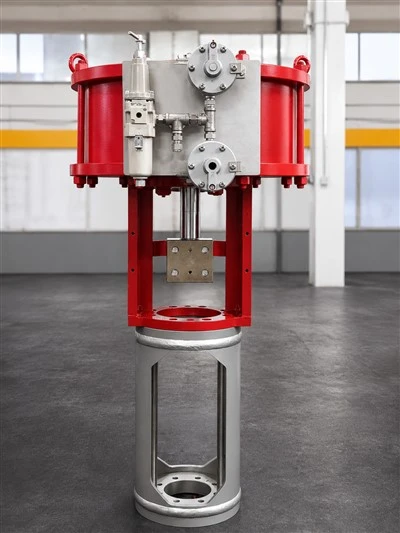
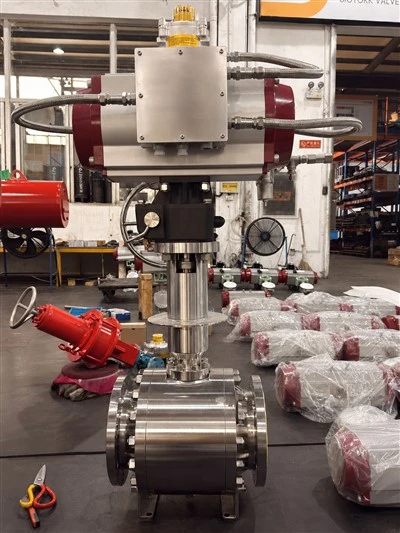
Hey there! As a supplier of Air Torque Actuators, I often get asked about the angular velocity of these nifty devices. So, I thought I'd take a bit of time to break it down for you.
First off, let's get on the same page about what an Air Torque Actuator is. It's a device that uses compressed air to generate torque, which is then used to turn a valve or perform other rotational tasks. They're super handy in a bunch of industries, like oil and gas, chemical processing, and water treatment.
Now, the big question: What is the angular velocity of an Air Torque Actuator? Angular velocity is basically how fast an object is rotating around a fixed point. It's usually measured in radians per second (rad/s), though you might also see it in degrees per second or revolutions per minute (RPM).
The angular velocity of an Air Torque Actuator can vary quite a bit depending on several factors. One of the main factors is the size of the actuator. Generally, smaller actuators can achieve higher angular velocities because they have less mass to move. For example, a small Pneumatic Piston Actuator might be able to spin at a pretty high rate, say 100 RPM or more, while a larger, Heavy Duty Actuator might max out at 20 - 30 RPM.
Another factor that affects angular velocity is the air pressure supplied to the actuator. The more pressure you have, the more force the actuator can generate, and the faster it can rotate. However, there's a limit to how much pressure you can use. If you go over the rated pressure of the actuator, you can damage it or cause it to malfunction.
The type of actuator also plays a role. For instance, a BG Series Scotch Yoke Actuator has a different mechanical design compared to other types. This design can impact how fast it can turn. Scotch yoke actuators are known for their high torque output, but that doesn't always mean they have the highest angular velocity. Some other designs, like certain Double Acting Actuator types, might be able to achieve higher speeds because of how they're built.
The load on the actuator is yet another important consideration. If the actuator has to turn a heavy valve or a large piece of equipment, it's going to rotate more slowly than if it's just moving a light object. Think of it like trying to spin a heavy wheel versus a light one. The heavy wheel takes more effort and spins more slowly.
Let's talk about how you can measure the angular velocity of an Air Torque Actuator. There are a few ways to do this. One common method is to use a tachometer. A tachometer is a device that measures the rotational speed of an object. You can attach it to the shaft of the actuator, and it'll give you a reading of how fast it's spinning.
If you don't have a tachometer, you can also calculate the angular velocity by timing how long it takes for the actuator to make a certain number of revolutions. For example, if you time how long it takes for the actuator to make 10 revolutions, you can divide the number of revolutions by the time in seconds and then convert that to RPM or rad/s.
Now, why does the angular velocity matter? Well, in many applications, you need the actuator to move at a specific speed. For example, in a chemical processing plant, you might need a valve to open or close at a certain rate to control the flow of chemicals. If the angular velocity of the actuator is too high or too low, it can lead to problems like over - or under - dosing of chemicals.
In some cases, you might need to adjust the angular velocity of the actuator. You can do this by changing the air pressure, using a flow control valve to regulate the air flow, or by changing the gearing or mechanical linkages of the actuator.


As a supplier of Air Torque Actuators, we've got a wide range of products to meet different needs. Whether you're looking for a high - speed actuator for a quick - acting valve or a more heavy - duty one for a tough job, we've got you covered. Our Scotch Yoke Valve Actuator series, for example, offers a great balance of torque and speed in many applications.
If you're in the market for an Air Torque Actuator and want to know more about the angular velocity that would work best for your specific project, or if you have any other questions, don't hesitate to reach out. We're here to help you make the right choice and ensure that your actuator performs perfectly. Whether you're a big industrial plant or a small business, we can find the right solution for you. So, let's start a conversation about your needs and see how we can assist you.
References:
- General knowledge of pneumatic actuator technology
- Industry experience in supplying Air Torque Actuators