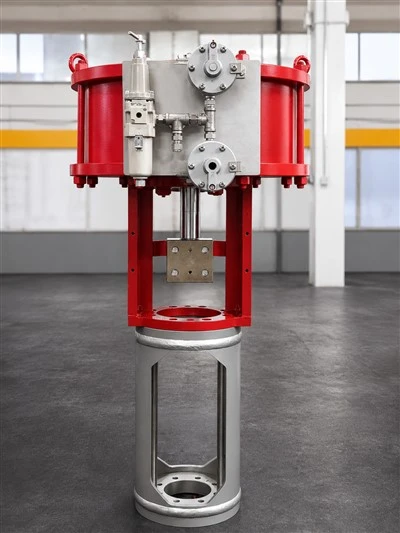
Hey there! As a supplier of Actuator Scotch Yoke, I've been getting a lot of questions lately about how to improve the dynamic response time of these actuators. So, I thought I'd write this blog to share some tips and insights that I've gathered over the years in the industry.
Understanding the Basics of Actuator Scotch Yoke
Before we dive into the ways to improve the dynamic response time, let's quickly go over what an Actuator Scotch Yoke is. A Scotch Yoke Type Actuator is a mechanism that converts linear motion into rotational motion. It's widely used in various industries, such as oil and gas, chemical, and manufacturing, to control the movement of valves and other equipment.
The dynamic response time of an actuator refers to how quickly it can respond to a change in input, like a change in pressure or a control signal. A faster response time is often desirable because it allows for more precise control and can improve the overall efficiency of the system.
Factors Affecting the Dynamic Response Time
There are several factors that can influence the dynamic response time of an Actuator Scotch Yoke. Here are some of the key ones:
1. Friction
Friction within the actuator can slow down its movement and increase the response time. This can be caused by factors such as rough surfaces, improper lubrication, or wear and tear on the components. For example, if the yoke and the piston are rubbing against each other with too much friction, the actuator will take longer to start and stop moving.
2. Mass and Inertia
The mass and inertia of the moving parts in the actuator also play a role in its dynamic response. Heavier components require more force to accelerate and decelerate, which can lead to a slower response time. So, if you have a Heavy Duty Actuator or a Heavy Duty Rotary Actuator, the mass of the components might be affecting its speed.


3. Air Pressure and Flow
In Air Pressure Actuator, the air pressure and flow rate are crucial. If the air pressure is too low or the flow is restricted, the actuator won't be able to move quickly. On the other hand, if the pressure is too high, it can cause excessive wear on the components.
4. Control System
The control system that sends signals to the actuator can also impact its response time. A slow or inaccurate control system might not send the right signals at the right time, leading to delays in the actuator's movement.
Ways to Improve the Dynamic Response Time
1. Reduce Friction
One of the most effective ways to improve the response time is to reduce friction. You can do this by using high - quality lubricants. Make sure to choose a lubricant that is suitable for the operating conditions of the actuator, such as temperature and chemical exposure. Also, regularly inspect the actuator for any signs of wear on the surfaces and replace any damaged parts. For example, if the yoke has rough edges, you can smooth them out or replace the yoke altogether.
2. Optimize Mass and Inertia
If possible, try to reduce the mass of the moving parts in the actuator. You can use lightweight materials without sacrificing the strength and durability of the components. For instance, instead of using heavy steel parts, you might consider using aluminum or composite materials. However, make sure to do a thorough analysis to ensure that the new materials can withstand the operating conditions.
3. Adjust Air Pressure and Flow
For pneumatic actuators, it's important to maintain the right air pressure and flow rate. You can install pressure regulators and flow control valves to ensure that the actuator receives a consistent and appropriate supply of air. Monitor the pressure and flow regularly and make adjustments as needed. If you notice that the actuator is responding slowly, it might be a sign that the air pressure or flow needs to be increased.
4. Upgrade the Control System
Investing in a high - quality control system can significantly improve the dynamic response time. A modern control system can send accurate and timely signals to the actuator, allowing it to respond more quickly. Look for a control system that has features like fast processing speeds, precise signal generation, and the ability to communicate with other components in the system.
Case Study: Single Acting Actuator
Let's take a look at a Single Acting Actuator as an example. A customer was experiencing slow response times in their single - acting actuator, which was used to control a valve in a chemical process. After a thorough inspection, we found that the main issue was friction in the yoke mechanism. The lubricant had worn off over time, and the surfaces were starting to get rough.
We recommended replacing the lubricant with a high - performance one and smoothing out the rough surfaces. We also adjusted the air pressure to ensure a more consistent supply. After these changes, the dynamic response time of the actuator improved significantly, and the customer was able to achieve better control over the valve operation.
Conclusion
Improving the dynamic response time of an Actuator Scotch Yoke is crucial for enhancing the efficiency and performance of your systems. By understanding the factors that affect the response time and implementing the right solutions, you can make your actuators respond faster and more accurately.
If you're facing any issues with the dynamic response time of your Actuator Scotch Yoke or are looking for ways to optimize its performance, feel free to reach out. We're here to help you find the best solutions for your specific needs. Whether you need advice on lubrication, material selection, or control system upgrades, we've got the expertise to assist you. Let's work together to get the most out of your actuators!
References
- "Actuator Handbook: Principles and Applications", Industrial Press Inc.
- Research papers on fluid power systems and actuator dynamics from academic journals.