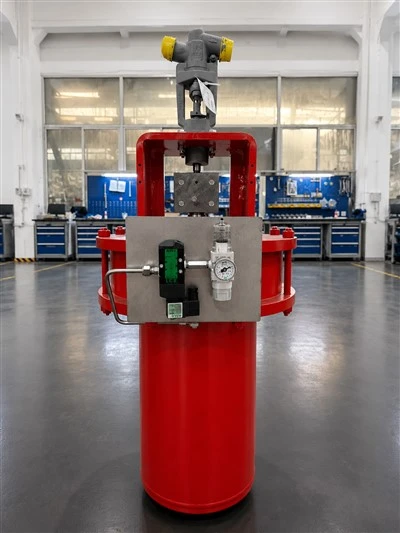
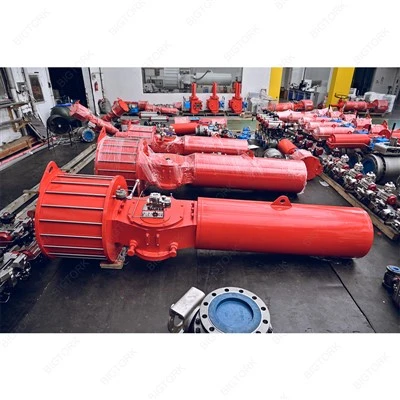
Hey there! As a supplier of Air Torque Actuators, I often get asked about overload protection. So, let's dive right into what the overload protection of an Air Torque Actuator is all about.
First off, what exactly is an Air Torque Actuator? Well, it's a device that uses compressed air to generate torque and move a valve or other mechanical components. They're widely used in industries like oil and gas, water treatment, and power generation because they're reliable, efficient, and can handle a lot of tough jobs.
Now, overload protection. Think of it as a safety net for your actuator. Just like we wear seat - belts in cars to protect ourselves from unexpected impacts, overload protection shields the Air Torque Actuator from excessive forces or torques that could damage it.
In an industrial setting, there are many situations where an actuator might face an overload. For example, if there's a blockage in the valve that the actuator is trying to open or close, the actuator will have to work much harder. Without proper overload protection, this extra strain could lead to the actuator's motor burning out, gears breaking, or other mechanical failures.
One common type of overload protection mechanism is the torque limiter. A torque limiter is like a smart switch. It's designed to disengage the actuator when the torque exceeds a pre - set limit. This way, the actuator stops working before any serious damage occurs. Once the problem has been resolved, like removing the blockage in the valve, the torque limiter can be reset, and the actuator can start working again.
Let's talk about some of the different types of Air Torque Actuators and how their overload protection works in more detail.
Pneumatic Piston Actuator
The Pneumatic Piston Actuator is a popular choice in many industrial applications. It uses a piston mechanism driven by compressed air to generate linear or rotary motion. In terms of overload protection, these actuators often come with pressure relief valves. If the pressure inside the piston chamber gets too high due to an overload situation, the pressure relief valve will open, releasing the excess pressure. This helps prevent the piston from getting damaged by the excessive force.
Spring Return Actuator
The Spring Return Actuator is another type that's widely used. It uses a spring to return the actuator to its original position when the air pressure is removed. Overload protection in spring return actuators can be a bit more complex. In addition to pressure relief valves, they may have a mechanical stop that limits the movement of the actuator. This stop prevents the spring from being over - compressed or over - extended, which could lead to spring failure.
P350 Double - Acting Scotch Yoke Actuator
The P350 Double - Acting Scotch Yoke Actuator is a high - performance actuator. It uses a scotch - yoke mechanism to convert linear motion into rotary motion. For overload protection, these actuators are often equipped with torque sensors. These sensors constantly monitor the torque being applied to the actuator. When the torque reaches the pre - set limit, the control system can either shut down the actuator or reduce the air pressure supplied to it, protecting the actuator from damage.
Air Pressure Actuator
The Air Pressure Actuator uses air pressure to operate. Similar to other types, it has guards against overload. It usually has adjustable pressure regulators. Operators can set the maximum pressure that the actuator will handle. If the air pressure exceeds this limit due to an overload, the pressure regulator will adjust or shut off the air supply, keeping the actuator safe.
Scotch Yoke Type Actuator
The Scotch Yoke Type Actuator is known for its simple yet effective design. Overload protection in this type is often achieved through mechanical and electrical means. A mechanical clutch can disengage when the torque is too high, and electrical sensors can send signals to the control system to stop or adjust the actuator's operation.
So, why is overload protection so important? Well, first of all, it saves you money. Repairing or replacing a damaged actuator can be really expensive. By having proper overload protection, you can avoid these costly repairs and keep your production running smoothly.
Secondly, it improves safety. In industries where actuators are used, a malfunctioning actuator can lead to serious accidents. For example, in a chemical plant, a valve that fails to open or close properly due to an actuator damage could cause a leak of hazardous chemicals. Overload protection helps prevent these dangerous situations.
As a supplier of Air Torque Actuators, we understand the importance of providing reliable overload protection. We offer actuators with different types of overload protection mechanisms to meet the specific needs of our customers. Whether you're in a small - scale operation or a large industrial plant, we've got the right actuator for you.
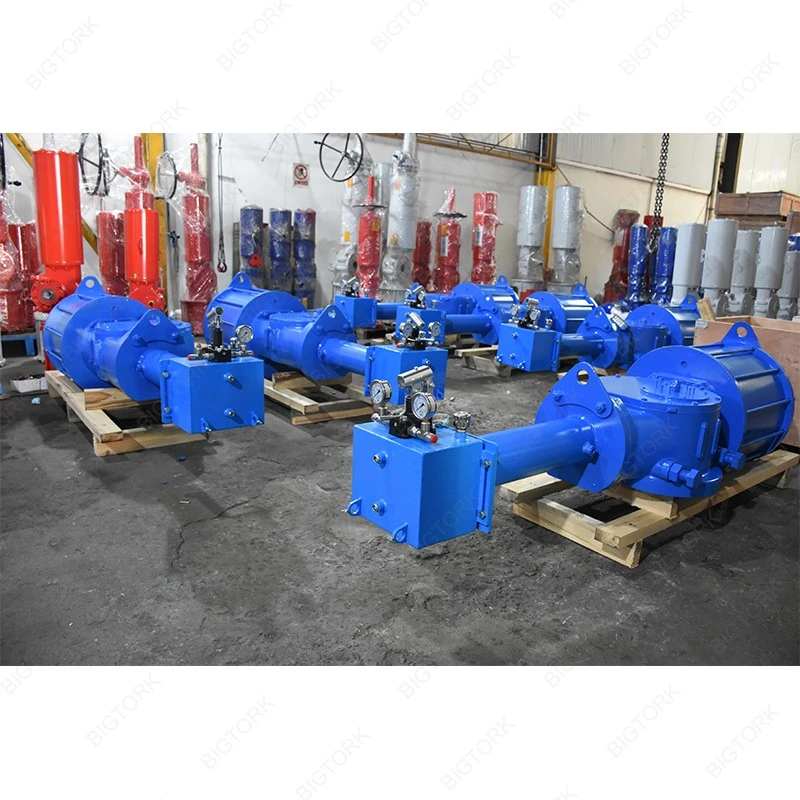

If you're interested in learning more about our Air Torque Actuators and their overload protection features or if you're looking to make a purchase, we'd love to hear from you. Just reach out to us, and our team of experts will be happy to assist you in finding the perfect actuator for your application.
References
- Industrial Actuator Handbook
- Pneumatic Actuator Design and Application Guide