What is the Frequency Response of a Valve Actuator Air?
As a trusted supplier of Valve Actuator Air, I often encounter questions from customers about the frequency response of valve actuator air. In this blog post, I will delve into the concept of frequency response, its significance in valve actuator air systems, and how it impacts industrial applications.
The frequency response of a valve actuator air refers to its ability to respond to changes in the input signal or control command at different frequencies. In simpler terms, it measures how quickly and accurately the actuator can adjust the valve position in response to a varying control signal. This characteristic is crucial in applications where rapid and precise valve movements are required, such as in process control systems, automation, and industrial machinery.
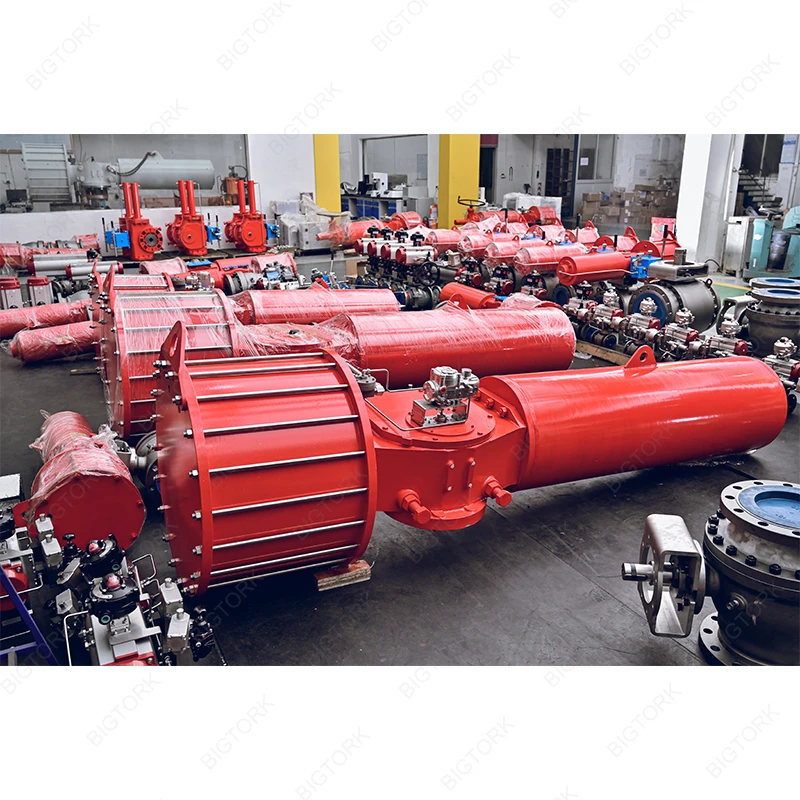

To understand the frequency response of a valve actuator air, we need to consider the components and principles involved. A typical valve actuator air system consists of a pneumatic actuator, a control valve, and a control system that sends the input signal to the actuator. The pneumatic actuator uses compressed air to generate the force required to move the valve. When a control signal is received, the actuator adjusts the air pressure to change the valve position.
The frequency response of the valve actuator air is influenced by several factors, including the design and characteristics of the actuator, the type of valve, the air supply system, and the control strategy. Let's take a closer look at each of these factors:
- Actuator Design and Characteristics: The design of the actuator plays a significant role in determining its frequency response. Factors such as the size, type, and construction of the actuator can affect its speed, accuracy, and responsiveness. For example, a smaller actuator may have a faster response time compared to a larger one, but it may also have a lower force output. Additionally, the type of actuator, such as a piston actuator or a diaphragm actuator, can have different frequency response characteristics.
- Valve Type: The type of valve used in the system also impacts the frequency response. Different valve types, such as ball valves, butterfly valves, and globe valves, have different flow characteristics and response times. For instance, a butterfly valve typically has a faster response time compared to a globe valve due to its simpler design and lower mass.
- Air Supply System: The air supply system provides the compressed air required to operate the actuator. The quality and stability of the air supply can affect the frequency response of the actuator. Factors such as air pressure, flow rate, and air cleanliness can impact the performance of the actuator. For example, a low air pressure or a dirty air supply can cause the actuator to operate slowly or erratically.
- Control Strategy: The control strategy used in the system determines how the input signal is processed and sent to the actuator. Different control strategies, such as proportional control, integral control, and derivative control, can have different effects on the frequency response. For example, a proportional control strategy can provide a quick response to changes in the input signal, but it may not be able to eliminate steady-state errors. On the other hand, an integral control strategy can eliminate steady-state errors, but it may have a slower response time.
The frequency response of a valve actuator air is typically measured using a frequency response test. In this test, a sinusoidal input signal is applied to the actuator, and the output response of the valve is measured. The test is usually conducted at different frequencies to determine the actuator's performance over a range of frequencies. The results of the frequency response test can be used to evaluate the suitability of the actuator for a particular application and to optimize the control strategy.
In industrial applications, the frequency response of a valve actuator air is critical for several reasons:
- Process Control: In process control systems, rapid and precise valve movements are required to maintain the desired process conditions. For example, in a chemical plant, the valve actuator air needs to be able to respond quickly to changes in the flow rate, pressure, or temperature of the process fluid. A slow or inaccurate response can lead to process instability, product quality issues, and increased energy consumption.
- Automation: In automated systems, valve actuators are used to control the flow of fluids and gases. The frequency response of the actuator determines how quickly the system can respond to changes in the operating conditions. For example, in a robotic assembly line, the valve actuator air needs to be able to open and close the valves rapidly to ensure smooth and efficient operation.
- Safety: In some applications, the proper functioning of the valve actuator air is critical for safety. For example, in a fire protection system, the valve actuator needs to be able to open and close the valves quickly to control the flow of fire suppression agents. A slow or malfunctioning actuator can compromise the effectiveness of the fire protection system and put lives and property at risk.
As a Valve Actuator Air supplier, we understand the importance of providing high-quality products with excellent frequency response characteristics. Our Industrial Pneumatic Actuators are designed and manufactured to meet the demanding requirements of various industrial applications. We offer a wide range of actuator types, sizes, and configurations to ensure that our customers can find the right solution for their specific needs.
In addition to our high-quality products, we also provide comprehensive technical support and after-sales service. Our team of experienced engineers and technicians can help you select the appropriate actuator for your application, optimize the control strategy, and troubleshoot any issues that may arise. We are committed to providing our customers with the best possible solutions and ensuring their satisfaction.
If you are in the market for Valve Actuator Air or Industrial Valve Actuators, we invite you to contact us for more information. Our sales team will be happy to discuss your requirements and provide you with a customized solution. We look forward to the opportunity to work with you and help you achieve your business goals.