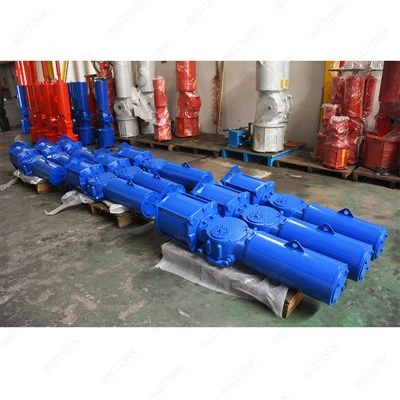
How to adjust the speed of a double - acting pneumatic rotary actuator?
As a trusted supplier of pneumatic rotary actuators, I understand that many users often face challenges when it comes to adjusting the speed of double - acting pneumatic rotary actuators. In this blog post, I will share in - depth knowledge about how to effectively adjust the speed of these actuators, along with some practical tips and insights.
Understanding Double - Acting Pneumatic Rotary Actuators
Before delving into the speed adjustment methods, it's crucial to understand the basic working principle of double - acting pneumatic rotary actuators. These actuators use compressed air to generate rotational motion. Unlike single - acting actuators, which rely on a spring to return to their original position, double - acting actuators use compressed air to drive both the forward and reverse rotations.
The compressed air is alternately supplied to two different chambers of the actuator. When air is introduced into one chamber, it causes the actuator to rotate in one direction. Then, when air is supplied to the other chamber, the actuator rotates in the opposite direction. This mechanism allows for precise control of the rotational motion, making double - acting pneumatic rotary actuators suitable for a wide range of applications, such as valve control, robotic arms, and automated machinery.
Factors Affecting the Speed of Double - Acting Pneumatic Rotary Actuators
Several factors can influence the speed of a double - acting pneumatic rotary actuator. Understanding these factors is the first step in effectively adjusting the speed.
-
Air Pressure: The air pressure supplied to the actuator is one of the most significant factors affecting its speed. Higher air pressure generally results in faster rotation, while lower air pressure leads to slower rotation. However, it's important to note that exceeding the maximum rated pressure of the actuator can cause damage.
-
Air Flow Rate: The rate at which air is supplied to the actuator also affects its speed. A higher air flow rate allows the actuator to move more quickly, as more air can enter the chambers in a shorter period.
-
Load on the Actuator: The amount of load the actuator has to carry can impact its speed. A heavier load will slow down the rotation of the actuator, as the actuator has to work harder to move the load.
-
Friction: Internal friction within the actuator, such as between the piston and the cylinder walls, can also reduce the speed of the actuator.


Methods for Adjusting the Speed
Now that we understand the factors affecting the speed, let's explore some methods for adjusting the speed of double - acting pneumatic rotary actuators.
1. Adjusting the Air Pressure
One of the simplest ways to adjust the speed is by changing the air pressure. You can use a pressure regulator to control the air pressure supplied to the actuator. To increase the speed, gradually increase the pressure within the rated limits of the actuator. Conversely, to decrease the speed, reduce the pressure.
However, be cautious when adjusting the pressure. Sudden or excessive pressure changes can cause the actuator to malfunction or even damage it. It's recommended to make small adjustments and test the actuator's performance after each change.
2. Controlling the Air Flow Rate
Another effective way to adjust the speed is by controlling the air flow rate. This can be achieved using a flow control valve. Flow control valves allow you to regulate the amount of air that enters and exits the actuator.
There are two types of flow control valves: meter - in and meter - out. A meter - in valve controls the air flow entering the actuator, while a meter - out valve controls the air flow leaving the actuator. By adjusting the flow control valve, you can increase or decrease the air flow rate, thereby adjusting the speed of the actuator.
3. Optimizing the Load
If possible, try to optimize the load on the actuator. Reducing the load can significantly increase the speed of the actuator. You can do this by using lighter materials for the components connected to the actuator or by redistributing the load more evenly.
4. Reducing Friction
To minimize the impact of friction on the actuator's speed, ensure that the actuator is properly lubricated. Use a high - quality lubricant recommended by the actuator manufacturer. Regular maintenance, such as cleaning and inspecting the actuator, can also help reduce friction and keep the actuator running smoothly.
Practical Tips for Speed Adjustment
- Start with a Low Speed: When you first start adjusting the speed, begin with a low speed setting. This allows you to gradually increase the speed and observe the actuator's performance without risking damage.
- Test in Different Conditions: Test the actuator's speed adjustment in different operating conditions, such as different loads and temperatures. This will help you understand how the actuator behaves under various circumstances and make more accurate adjustments.
- Document Your Adjustments: Keep a record of the adjustments you make, including the air pressure, air flow rate, and any other relevant parameters. This documentation will be useful for future reference and troubleshooting.
Our Product Range
At our company, we offer a wide range of pneumatic rotary actuators to meet the diverse needs of our customers. Some of our popular products include:
- Rotary Piston Actuator: These actuators are known for their high torque and precise control, making them suitable for heavy - duty applications.
- Large Bore Spring Return Actuator: Ideal for applications that require a large amount of force and a reliable return mechanism.
- Pneumatic Single - Acting Actuator With Bevel Gear Drive: These actuators offer smooth and efficient operation, thanks to the bevel gear drive system.
- Compact Pneumatic Quarter - Turn Actuator: Designed for applications where space is limited, these actuators provide a high level of performance in a compact package.
- Angular Actuator: Suitable for applications that require precise angular positioning.
Contact Us for Procurement
If you are in the market for high - quality pneumatic rotary actuators or need further assistance with speed adjustment or any other technical issues, we encourage you to contact us. Our team of experts is ready to provide you with professional advice and support. We are committed to helping you find the best solutions for your specific needs.
References
- Pneumatic Actuator Handbook, various industry - standard publications
- Manufacturer's manuals for double - acting pneumatic rotary actuators