When it comes to industrial automation and control systems, rotary actuators play a pivotal role in converting energy into rotational motion. Two of the most commonly used types are pneumatic rotary actuators and electric rotary actuators. As a pneumatic rotary actuator supplier, I've had extensive experience working with both types and understand the unique advantages and limitations of each. In this blog, I'll delve into a detailed comparison of pneumatic and electric rotary actuators to help you make an informed decision for your specific application.
Working Principles
Let's start by understanding how these two types of actuators work.
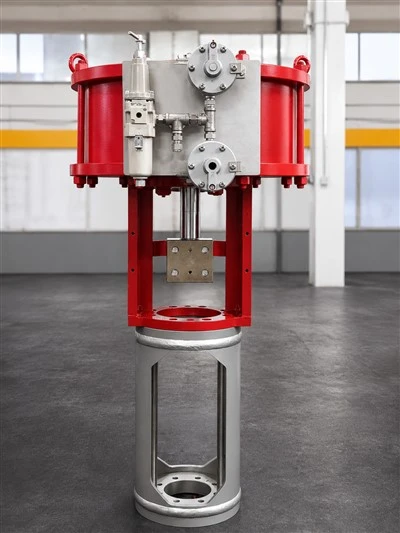
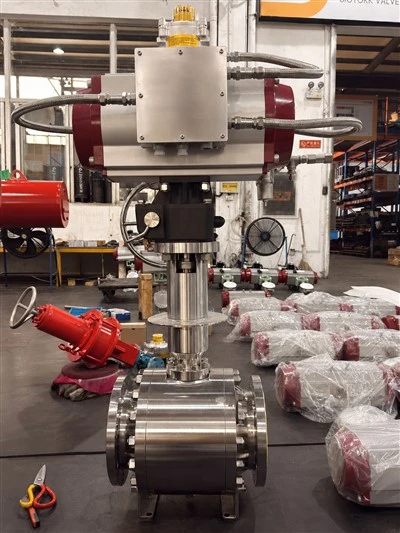
Pneumatic rotary actuators operate by using compressed air as their power source. The compressed air enters the actuator chamber, where it acts on a piston or a vane. This force causes the piston or vane to move, which is then translated into rotational motion. The simplicity of this design makes pneumatic rotary actuators relatively easy to maintain and repair. For instance, our Part Turn Actuator utilizes this principle to provide precise and reliable part - turn operations.
On the other hand, electric rotary actuators rely on an electric motor. The motor converts electrical energy into mechanical energy and drives a gearbox or a screw mechanism to achieve rotational movement. Electric actuators can be further classified into different types such as stepper motors, servo motors, etc., each with its own set of characteristics.
Performance and Precision
In terms of performance, both types have their strengths.
Pneumatic rotary actuators are known for their high - speed operation. They can achieve rapid starts and stops, making them ideal for applications that require quick movement, such as in packaging lines or sorting systems. They also have a high power - to - weight ratio, meaning they can generate a relatively large amount of torque for their size. However, when it comes to precision, pneumatic actuators may have some limitations. The compressibility of air can lead to some degree of play or inaccuracy in positioning, especially in applications that demand very high precision.
Electric rotary actuators, especially those equipped with servo motors, offer outstanding precision. They can be programmed to achieve very accurate angular positions and can hold those positions with high repeatability. This makes them suitable for applications in the semiconductor industry, robotics, and other fields where precision is of utmost importance. For example, in a robotic arm, an electric actuator can ensure that the arm reaches the exact position required for picking and placing small components.
Cost and Energy Efficiency
Cost is often a significant factor in the decision - making process.
Pneumatic rotary actuators are generally more cost - effective in terms of upfront costs. The components of a pneumatic system, such as the actuator itself, valves, and air compressors, are relatively inexpensive compared to electric actuator systems. Additionally, the maintenance costs of pneumatic actuators are also relatively low. However, pneumatic systems can be less energy - efficient. Compressing air requires a significant amount of energy, and there can be energy losses in the form of air leakage in the system.
Electric rotary actuators, on the other hand, have a higher upfront cost. The cost of the motor, control electronics, and sensors can add up quickly. But they are more energy - efficient in many applications. Electric motors convert electrical energy into mechanical energy with relatively high efficiency, and modern electronic controls can optimize the energy consumption of the actuator.
Safety and Environmental Considerations
Safety is a crucial aspect in industrial settings.
Pneumatic rotary actuators are considered relatively safe. They do not generate sparks, which makes them suitable for use in explosive or hazardous environments. In case of a power failure, a pneumatic actuator can often be manually operated to a safe position. For example, our Actuator with Bevel Gear Manual Override allows for manual operation during emergencies.


Electric actuators may pose some safety risks, especially in wet or dusty environments. Electrical components are vulnerable to short - circuits and can be a fire hazard if not properly installed and maintained. However, modern electric actuators come with various safety features such as overload protection and short - circuit protection.
From an environmental perspective, pneumatic actuators may have a negative impact if there is significant air leakage in the system. Compressed air systems require a continuous supply of energy to maintain the air pressure, which contributes to overall energy consumption. Electric actuators, although generally more energy - efficient, rely on electricity, which may be generated from non - renewable sources.
Installation and Maintenance
Installation of pneumatic rotary actuators is relatively straightforward. The system mainly consists of the actuator, pneumatic valves, and air tubing. The components are easy to install and can be integrated into existing industrial systems with minimal modifications. Maintenance of pneumatic actuators typically involves checking for air leaks, lubricating moving parts, and replacing worn - out seals.
Electric rotary actuators require more complex installation. The electrical wiring, control panels, and sensors need to be carefully installed and calibrated. Maintenance of electric actuators may involve more technical knowledge, such as troubleshooting electrical faults and replacing electronic components.
Application Suitability
The choice between pneumatic and electric rotary actuators ultimately depends on the specific application requirements.
Pneumatic rotary actuators are well - suited for applications where high - speed operation, simplicity, and cost - effectiveness are important. They are commonly used in industries such as automotive manufacturing, food and beverage processing, and textile production. For example, in an automotive assembly line, pneumatic Rotary Piston Actuator can be used to quickly rotate parts into position for welding or assembly.
Electric rotary actuators are the preferred choice for applications that demand high precision, accurate positioning, and complex control. They are widely used in the aerospace, medical device, and electronics industries. For instance, in a medical imaging device, an electric Angular Actuator can be used to precisely adjust the angle of the imaging sensor.
Conclusion
In conclusion, both pneumatic and electric rotary actuators have their own unique advantages and disadvantages. Pneumatic rotary actuators offer high - speed operation, cost - effectiveness, and safety in certain environments, while electric rotary actuators provide superior precision and energy efficiency in many applications.
As a pneumatic rotary actuator supplier, I can offer a wide range of Pneumatic Single - Acting Actuator With Bevel Gear Drive and other types of pneumatic actuators that are designed to meet the diverse needs of different industries. If you are considering which type of actuator is best for your application, I encourage you to contact me for a detailed consultation. I can help you evaluate your requirements and recommend the most suitable solution. Whether you need a high - speed pneumatic actuator for a fast - paced production line or a precision electric actuator for a high - end application, I'm here to assist you in making the right choice.
References
- "Industrial Pneumatic Actuators: Principles, Selection, and Applications" by XYZ Author
- "Electric Actuators for Automation: Design and Control" by ABC Writer