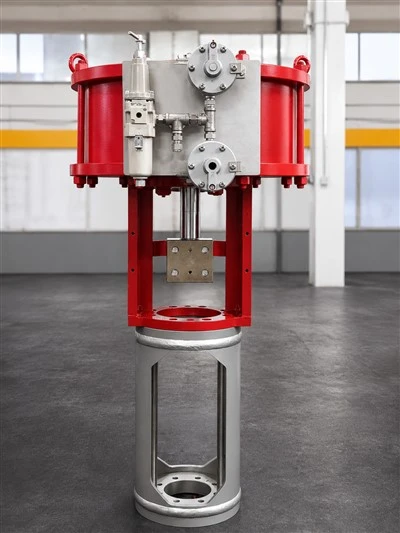
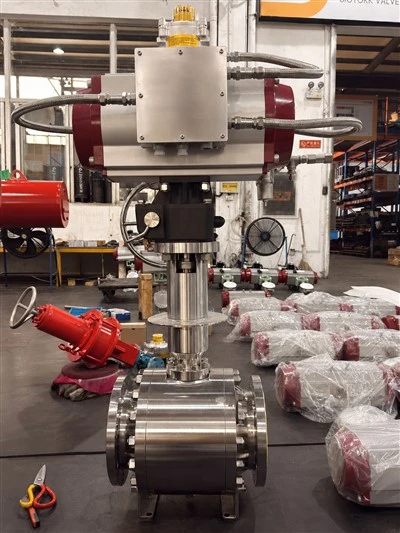
Hey there! As a supplier of Rotary Piston Actuators, I get a ton of questions about how to pick the right size for a specific application. It's not always a walk in the park, but with the right info, you can make an informed decision. So, let's dive in and break down the key factors you need to consider when selecting the right size of a Rotary Piston Actuator.
Understanding the Basics of Rotary Piston Actuators
First off, let's quickly go over what a Rotary Piston Actuator is. It's a device that converts fluid energy into mechanical rotational motion. These actuators are widely used in various industries, from manufacturing to automation, because they offer precise control and high torque output.
Factors to Consider When Selecting the Size
Torque Requirements
The most important factor when choosing the size of a Rotary Piston Actuator is the torque it needs to generate. Torque is the force that causes an object to rotate, and it's measured in Newton-meters (N·m). To determine the torque requirements for your application, you need to consider the load you're trying to move, the distance from the pivot point, and the type of motion (e.g., continuous rotation or intermittent movement).
For example, if you're using the actuator to open and close a valve, you'll need to calculate the torque required to overcome the friction and resistance of the valve. You can do this by using the valve manufacturer's specifications or by conducting a simple test. Once you have the torque requirements, you can choose an actuator that can deliver the necessary torque.
Rotation Angle
Another important factor is the rotation angle. Rotary Piston Actuators can typically rotate between 90° and 360°, depending on the design. You need to choose an actuator that can provide the required rotation angle for your application. If you need a full 360° rotation, you'll need to select an actuator that is designed for continuous rotation. On the other hand, if you only need a partial rotation, such as 90° or 180°, you can choose a quarter-turn actuator.
Speed and Acceleration
The speed and acceleration of the actuator are also important considerations. You need to choose an actuator that can operate at the required speed and acceleration for your application. If you need a high-speed operation, you'll need to select an actuator with a high flow rate and a low mass. On the other hand, if you need a slow and smooth operation, you can choose an actuator with a low flow rate and a high mass.
Operating Environment
The operating environment is another factor that can affect the size and performance of the actuator. You need to choose an actuator that is suitable for the temperature, humidity, and other environmental conditions in your application. For example, if you're using the actuator in a harsh environment, such as a chemical plant or a food processing facility, you'll need to select an actuator that is made of corrosion-resistant materials.
Types of Rotary Piston Actuators
There are several types of Rotary Piston Actuators available on the market, each with its own advantages and disadvantages. Here are some of the most common types:
Pneumatic Single-Acting Actuator With Bevel Gear Drive
This type of actuator uses compressed air to generate rotational motion. It's a single-acting actuator, which means it only moves in one direction when air is applied. The bevel gear drive provides a high torque output and a smooth operation.
Compact Pneumatic Quarter-Turn Actuator
This is a compact and lightweight actuator that is designed for applications where space is limited. It provides a 90° rotation and is ideal for valve control and other similar applications.
Actuator with Bevel Gear Manual Override
This type of actuator has a manual override feature that allows you to operate the actuator manually in case of a power failure or other emergency. The bevel gear drive provides a high torque output and a smooth operation.
Pneumatic Quarter-Turn Valve Actuator
This actuator is specifically designed for valve control applications. It provides a 90° rotation and is available in various sizes and configurations to meet the needs of different applications.
Part Turn Actuator
This type of actuator is designed for applications where a partial rotation is required. It can provide a rotation angle of up to 180° and is ideal for applications such as conveyor systems and material handling equipment.
How to Select the Right Size
Now that you understand the key factors and types of Rotary Piston Actuators, let's talk about how to select the right size for your application. Here are the steps you can follow:
Step 1: Determine the Torque Requirements
As mentioned earlier, the torque requirements are the most important factor when choosing the size of the actuator. You need to calculate the torque required to move the load and choose an actuator that can deliver the necessary torque.
Step 2: Determine the Rotation Angle
Next, you need to determine the rotation angle required for your application. You can choose an actuator that can provide the required rotation angle.
Step 3: Consider the Speed and Acceleration
You also need to consider the speed and acceleration requirements for your application. You can choose an actuator that can operate at the required speed and acceleration.
Step 4: Evaluate the Operating Environment
The operating environment is another important factor to consider. You need to choose an actuator that is suitable for the temperature, humidity, and other environmental conditions in your application.


Step 5: Select the Type of Actuator
Based on your requirements, you can select the type of actuator that is most suitable for your application. You can choose from the different types of Rotary Piston Actuators available on the market.
Step 6: Check the Manufacturer's Specifications
Once you have selected the type of actuator, you need to check the manufacturer's specifications to ensure that it meets your requirements. You can look for information such as the torque output, rotation angle, speed, and acceleration.
Conclusion
Selecting the right size of a Rotary Piston Actuator for a specific application is crucial for ensuring optimal performance and reliability. By considering the key factors such as torque requirements, rotation angle, speed, acceleration, and operating environment, you can make an informed decision and choose an actuator that meets your needs.
If you're still unsure about which size or type of Rotary Piston Actuator is right for your application, don't hesitate to reach out to us. We're here to help you find the perfect solution for your needs. Whether you're in the manufacturing, automation, or any other industry, we have the expertise and experience to provide you with the best Rotary Piston Actuators. So, let's start a conversation and see how we can assist you in your procurement process.
References
- "Pneumatic Actuators: Selection and Sizing," Pneumatic Handbook, various authors.
- "Rotary Actuators: Principles and Applications," Industrial Automation Textbook, multiple contributors.