In the realm of air pressure actuator systems, air filters play a pivotal role that often goes unnoticed. As an established supplier of air pressure actuators, I've witnessed firsthand the impact that air filters have on the performance, efficiency, and longevity of these systems. In this blog, we'll delve into the significance of air filters and how they contribute to the seamless operation of air pressure actuator systems.
Understanding Air Pressure Actuator Systems
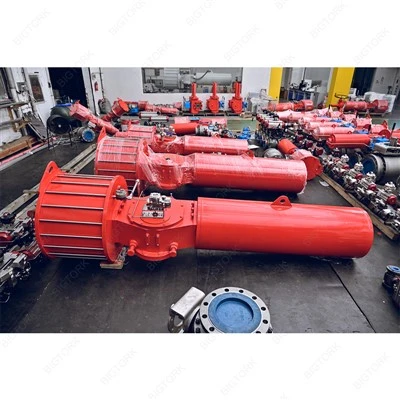
Before we explore the role of air filters, let's briefly understand what air pressure actuator systems are. These systems are designed to convert air pressure into mechanical motion, which is then used to control various types of equipment and machinery. Air pressure actuators come in different types, including Heavy Duty Rotary Actuator, Spring Return Actuator, P350 Double-Acting Scotch Yoke Actuator, Single Acting Actuator, and Double Acting Actuator. They are widely used in industries such as manufacturing, automotive, aerospace, and robotics, where precise and reliable motion control is essential.


The Function of Air Filters in Air Pressure Actuator Systems
The primary function of an air filter in an air pressure actuator system is to remove contaminants from the compressed air before it enters the actuator. Compressed air is a common power source for air pressure actuators, but it often contains impurities such as dust, dirt, oil, and moisture. These contaminants can cause a range of problems, including:
- Reduced Performance: Contaminants can clog the internal components of the actuator, such as valves, pistons, and cylinders, which can reduce the actuator's efficiency and performance. This can result in slower response times, decreased force output, and inconsistent operation.
- Increased Wear and Tear: The presence of contaminants can also cause increased wear and tear on the actuator's components, which can lead to premature failure and the need for costly repairs or replacements.
- Malfunction and Breakdown: In severe cases, contaminants can cause the actuator to malfunction or break down completely, which can result in production downtime and lost revenue.
By removing these contaminants, air filters help to ensure that the compressed air entering the actuator is clean and free of impurities. This helps to maintain the performance and efficiency of the actuator, reduce wear and tear on its components, and prevent malfunctions and breakdowns.
Types of Air Filters Used in Air Pressure Actuator Systems
There are several types of air filters used in air pressure actuator systems, each designed to remove specific types of contaminants. The most common types of air filters include:
- Particulate Filters: These filters are designed to remove solid particles, such as dust, dirt, and debris, from the compressed air. They typically use a porous medium, such as paper or mesh, to trap the particles.
- Coalescing Filters: Coalescing filters are used to remove liquid contaminants, such as oil and water, from the compressed air. They work by causing the liquid droplets to combine or "coalesce" into larger droplets, which can then be separated from the air using a separator.
- Adsorption Filters: Adsorption filters are designed to remove gaseous contaminants, such as odors, fumes, and volatile organic compounds (VOCs), from the compressed air. They use an adsorbent material, such as activated carbon, to adsorb the gaseous contaminants.
Factors to Consider When Selecting an Air Filter
When selecting an air filter for an air pressure actuator system, there are several factors to consider, including:
- Contaminant Type: The type of contaminants present in the compressed air will determine the type of air filter required. For example, if the compressed air contains a high level of dust and dirt, a particulate filter may be sufficient. However, if the air also contains oil and water, a coalescing filter may be necessary.
- Filtration Efficiency: The filtration efficiency of an air filter is measured by its ability to remove contaminants from the compressed air. Higher filtration efficiency means that more contaminants are removed, which can help to improve the performance and longevity of the actuator.
- Flow Rate: The flow rate of the compressed air through the air filter is also an important consideration. The filter must be able to handle the required flow rate without causing excessive pressure drop, which can reduce the efficiency of the actuator.
- Maintenance Requirements: Different types of air filters have different maintenance requirements. Some filters may need to be replaced regularly, while others can be cleaned and reused. It's important to consider the maintenance requirements of the filter when selecting it to ensure that it can be easily maintained and serviced.
Importance of Regular Maintenance
Regular maintenance of air filters is essential to ensure their continued effectiveness. Over time, the filter media can become clogged with contaminants, which can reduce its filtration efficiency and cause increased pressure drop. This can lead to decreased performance and increased wear and tear on the actuator.
To maintain the performance of the air filter, it's important to follow the manufacturer's recommended maintenance schedule. This may include cleaning or replacing the filter media at regular intervals, as well as inspecting the filter housing for any signs of damage or leaks.
Conclusion
In conclusion, air filters play a crucial role in the performance, efficiency, and longevity of air pressure actuator systems. By removing contaminants from the compressed air, they help to ensure that the actuator operates smoothly and reliably, reducing the risk of malfunctions and breakdowns. When selecting an air filter, it's important to consider the type of contaminants present in the compressed air, the filtration efficiency, the flow rate, and the maintenance requirements. Regular maintenance of the air filter is also essential to ensure its continued effectiveness.
If you're in the market for high-quality air pressure actuators or need advice on selecting the right air filter for your system, we're here to help. [For more information about our products and services, please feel free to contact us and start a purchase negotiation.](Your contact details should be added here if available, but as per the instruction, we don't create them)
References
- ASME PTC 19.11-2010, Performance Test Code on Air Compressors and Exhausters
- ISO 8573-1:2010, Compressed air -- Part 1: Contaminants and purity classes
- Parker Hannifin Corporation, "Air Filtration Basics"