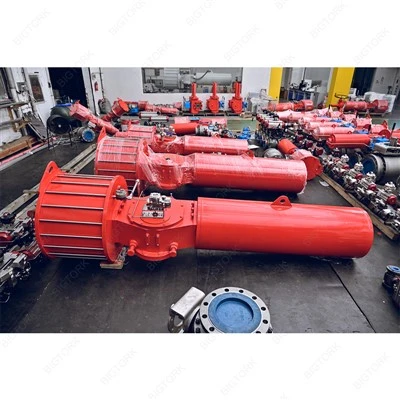
Scotch yoke actuators are widely used in various industries for their ability to convert linear motion into rotary motion efficiently. As a scotch yoke actuator supplier, I have witnessed firsthand the growing demand for these devices. However, it's crucial to understand their environmental impact in today's environmentally conscious world.
Energy Consumption and Efficiency
One of the primary environmental aspects to consider is the energy consumption of scotch yoke actuators. These actuators are generally powered by various energy sources, including pneumatics and hydraulics. When it comes to pneumatic scotch yoke actuators, they require a compressed air supply. The process of compressing air is energy - intensive.
According to studies, air compressors can account for a significant portion of a plant's overall energy consumption. Inefficient air compressors that power scotch yoke actuators can lead to excess energy wastage. For example, if the compressor is not properly sized for the actuator's requirements or if there are leaks in the air distribution system, this will result in more energy being used than necessary.
On the other hand, well - designed scotch yoke actuators can have a positive impact in terms of energy efficiency. Their mechanical design allows for smooth and efficient conversion of linear motion into rotary motion. Compared to some other types of actuators, they may require less energy to achieve the same level of torque output. For instance, our BG Series Scotch Yoke Actuator has been engineered to optimize energy use during operation.
Material Usage and Waste Generation
The manufacturing of scotch yoke actuators involves the use of various materials such as metals (e.g., steel, aluminum) and plastics. The extraction and processing of these materials have significant environmental consequences. For example, the mining of iron ore for steel production is a resource - intensive process that can lead to deforestation, soil erosion, and water pollution.
However, as a responsible supplier, we are committed to reducing the environmental impact associated with material usage. We strive to source materials from suppliers who adhere to sustainable practices. Additionally, we are constantly researching and developing new actuator designs that use less material without sacrificing performance.
Another aspect related to materials is waste generation. At the end of their lifecycle, scotch yoke actuators need to be disposed of. If not properly managed, this can lead to environmental pollution. That's why we encourage our customers to consider recycling or reusing the actuators. Our actuators are designed in a way that makes it easier to disassemble and recycle the different components. For example, the metal parts can be melted down and reused in the production of new steel products, and some plastics can also be recycled.
Emissions
The operation and maintenance of scotch yoke actuators can contribute to emissions. In the case of pneumatic actuators, the compressed air systems may require lubricants. Improper handling or disposal of these lubricants can lead to soil and water contamination. Moreover, if the air compressor uses fossil - fuel - based energy sources, there will be greenhouse gas emissions associated with its operation.
We are actively working on solutions to reduce emissions. For our Air Pressure Actuator, we are exploring the use of alternative energy sources for powering the air compressors, such as solar or wind energy. Additionally, we are promoting the use of biodegradable lubricants in our actuators to minimize the environmental impact of lubricant disposal.
Noise Pollution
Scotch yoke actuators can generate noise during their operation, especially when the actuator experiences high - speed movements or is powered by pneumatic systems. Noise pollution can have a negative impact on both the environment and human health. For workers in industrial settings where scotch yoke actuators are used, prolonged exposure to high - level noise can lead to hearing loss and other health problems.
To address this issue, we have incorporated noise - reducing features in our actuator designs. For example, we use damping materials in critical areas of the actuator to absorb vibrations and reduce noise levels. By doing so, we not only contribute to a more environmentally friendly workplace but also improve the well - being of the workers.
Impact on the Surrounding Ecosystem
In industrial applications where scotch yoke actuators are used, there is a potential impact on the surrounding ecosystem. For example, in the oil and gas industry, actuators are used to control valves in pipelines. Any leakage from the actuators or associated systems can contaminate soil and water, which can harm plants and animals in the area.
We understand the importance of preventing such environmental disasters. Our Scotch Yoke Valve Actuator is designed with high - quality seals and reliable control mechanisms to minimize the risk of leaks. By ensuring the proper functioning of our actuators, we help protect the surrounding ecosystem from potential pollution.
Comparison with Other Actuator Types
When evaluating the environmental impact of scotch yoke actuators, it's also important to compare them with other types of actuators. For example, electric actuators have their own set of environmental considerations. While they do not have the same energy - intensive air compression process as pneumatic scotch yoke actuators, the production and disposal of the batteries or the electricity generation for electric actuators also have environmental implications.
Scotch yoke actuators, in many cases, have a more straightforward mechanical design compared to some complex electric actuator systems. This can lead to less energy being used during the manufacturing process and potentially a longer lifespan, which means less frequent replacement and waste generation.
Our Commitment to Sustainability
As a scotch yoke actuator supplier, we are dedicated to minimizing the environmental impact of our products. We invest in research and development to improve the energy efficiency of our actuators, reduce material usage, and lower emissions. We also provide our customers with educational resources on how to operate and maintain the actuators in an environmentally friendly way.
We offer different types of scotch yoke actuators to meet the diverse needs of our customers. Our Single Acting Actuator and Double Acting Actuator are designed with sustainability in mind. Whether you need an actuator for a small - scale industrial application or a large - scale project, we have the right solution for you.


Conclusion
In conclusion, scotch yoke actuators have both positive and negative environmental impacts. While they can be energy - efficient and have a relatively simple mechanical design compared to some alternatives, they also face challenges in terms of energy consumption, material usage, emissions, noise pollution, and potential ecosystem impacts.
As a supplier, we are taking proactive steps to address these environmental issues. Our commitment to sustainability is reflected in our product design, manufacturing processes, and the support we provide to our customers.
If you are interested in learning more about our scotch yoke actuators and how they can be part of your sustainable industrial solutions, we invite you to contact us for a procurement discussion. We are ready to work with you to find the best actuator options that meet your requirements while minimizing the environmental footprint.
References
- "Industrial Actuator Energy Efficiency Guidelines", International Energy Agency
- "Environmental Impact of Material Extraction in Manufacturing", Journal of Sustainable Manufacturing