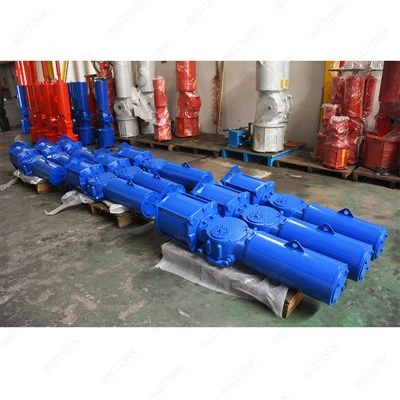
Back - pressure is a critical factor that can significantly impact the performance of air - operated actuators. As a leading supplier of Air Operated Actuator, I have witnessed firsthand the various effects of back - pressure on these essential devices across different industrial applications.
Understanding Air - Operated Actuators
Air - operated actuators are widely used in the industrial sector due to their reliability, responsiveness, and ability to operate in harsh environments. They convert compressed air energy into mechanical motion, which is then used to control valves, dampers, and other mechanical components. There are two main types of air - operated actuators: piston actuators and diaphragm actuators. Piston actuators, such as the Air Piston Actuator, are known for their high force output and are often used in applications that require substantial power. Diaphragm actuators, on the other hand, are more suitable for applications where precise control is needed.
What is Back - Pressure?
Back - pressure refers to the pressure that builds up behind a device or within a system, opposing the normal flow of a fluid or the movement of a mechanical component. In the context of air - operated actuators, back - pressure can occur when there is resistance in the downstream piping, valve, or other components of the system. This resistance can be caused by various factors, including the design of the piping system, the presence of blockages, or the operation of other devices in the system.
Effects of Back - Pressure on Air - Operated Actuators
Reduced Actuator Force
One of the most significant effects of back - pressure on air - operated actuators is the reduction of actuator force. When back - pressure builds up, it creates an opposing force that acts against the force generated by the compressed air in the actuator. This results in a decrease in the net force available to move the actuator's piston or diaphragm. As a consequence, the actuator may not be able to fully open or close the valve or perform its intended function correctly. For example, in a Pneumatic Butterfly Valve Actuator, reduced force can lead to incomplete valve closure, which may cause leaks and affect the overall efficiency of the system.
Increased Response Time
Back - pressure can also increase the response time of air - operated actuators. The opposing force created by back - pressure makes it more difficult for the actuator to move quickly. This delay in response can be a critical issue in applications where precise and rapid control is required, such as in chemical processing plants or power generation facilities. In these industries, even a slight delay in actuator response can lead to significant operational problems, including product quality issues, equipment damage, and safety hazards.
Wear and Tear
High back - pressure can accelerate the wear and tear of air - operated actuators. The increased stress on the actuator's components due to the opposing force can cause premature failure of seals, pistons, and other moving parts. This not only increases maintenance costs but also reduces the reliability and lifespan of the actuator. For example, in Industrial Valve Actuators, excessive wear can lead to valve malfunction, which may disrupt the entire production process.
Energy Consumption
To overcome the effects of back - pressure, air - operated actuators may require more compressed air to generate the necessary force. This increased demand for compressed air results in higher energy consumption, which can lead to increased operating costs for industrial facilities. In addition, the need for larger compressors or higher operating pressures can also increase the initial investment in the compressed air system.
Factors Contributing to Back - Pressure
Several factors can contribute to the development of back - pressure in air - operated actuator systems. These include:
Pipe Design
The layout and diameter of the piping system can significantly affect back - pressure. Narrow pipes, sharp bends, and long pipe runs can all increase resistance to airflow, leading to the buildup of back - pressure. For example, if the piping system is poorly designed with multiple elbows and reducers, it can impede the smooth flow of compressed air to the actuator, causing back - pressure to rise.
Valve Design
The type and design of the valve controlled by the actuator can also influence back - pressure. Some valves, such as globe valves, have a higher flow resistance compared to other types, such as ball valves. If a high - resistance valve is used in a system, it can create more back - pressure, especially when the valve is partially closed.


System Blockages
Blockages in the piping system or the valve itself can cause a significant increase in back - pressure. These blockages can be caused by debris, corrosion products, or foreign objects. For example, in an industrial environment, dust and dirt can accumulate in the piping over time, leading to reduced flow and increased back - pressure.
Mitigating the Effects of Back - Pressure
To minimize the impact of back - pressure on air - operated actuators, several strategies can be employed:
Proper System Design
Careful consideration should be given to the design of the piping system and the selection of valves. Using larger diameter pipes, minimizing the number of bends, and choosing low - resistance valves can help reduce back - pressure. For example, in the design of Industrial Pneumatic Actuators systems, engineers should aim to create a streamlined and efficient airflow path to the actuator.
Pressure Relief Devices
Installing pressure relief devices in the system can help prevent excessive back - pressure from building up. These devices, such as pressure relief valves, can open automatically when the pressure exceeds a certain limit, allowing the excess air to escape and reducing the back - pressure on the actuator.
Regular Maintenance
Regular maintenance of the air - operated actuator system is essential to prevent blockages and ensure proper functioning. This includes cleaning the piping, inspecting the valves, and replacing worn - out components. By keeping the system clean and well - maintained, the risk of back - pressure buildup can be significantly reduced.
Conclusion
Back - pressure can have a profound impact on the performance, reliability, and energy efficiency of air - operated actuators. As a supplier of high - quality air - operated actuators, we understand the importance of addressing back - pressure issues to ensure the optimal operation of our customers' systems. By understanding the causes and effects of back - pressure and implementing appropriate mitigation strategies, industrial facilities can improve the performance of their air - operated actuators, reduce maintenance costs, and enhance overall operational efficiency.
If you are facing challenges related to back - pressure in your air - operated actuator systems or are looking for high - quality actuators that can withstand various operating conditions, we are here to help. Our team of experts can provide you with customized solutions based on your specific requirements. Contact us today to start a discussion about your procurement needs and how our products can meet them.
References
- Smith, J. (2020). Handbook of Pneumatic Actuators. Mechanical Engineering Press.
- Johnson, A. (2019). Fundamentals of Industrial Valve and Actuator Systems. Chemical Industry Publications.
- Brown, C. (2021). Airflow and Pressure Analysis in Pneumatic Systems. Fluid Dynamics Journal.