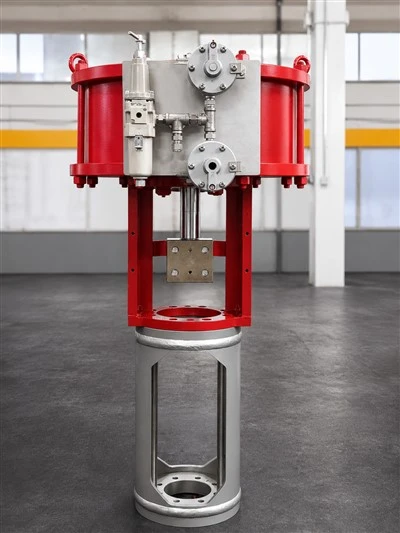
Hey there! As a supplier of Air Actuators, I've seen firsthand how crucial quality control is in this industry. Air actuators play a vital role in various industrial applications, converting air pressure into mechanical motion. They're used in everything from manufacturing to oil and gas. So, to ensure our customers get the best products, we've put in place several quality control measures.
Raw Material Inspection
The very first step of our quality control process starts with the raw materials. We source high - grade materials from trusted suppliers. When the materials arrive at our facility, we conduct a thorough inspection. We check for things like the material's hardness, density, and chemical composition. For example, if the material is supposed to be a certain type of steel for its strength, we use special testing equipment to confirm its alloy content. This ensures that the foundation of our Air Actuator is strong and reliable.
In - Process Quality Checks
During the manufacturing process, we have multiple quality checkpoints. We don't just wait until the end to see if everything's okay. For instance, when machining the components of the air actuator, we have operators constantly measuring the dimensions. Even the slightest deviation from the design specifications can lead to problems down the line. So, we use precision measuring tools like calipers and micrometers.
We also have quality control technicians conducting random inspections on the production line. They'll take a sample of the components being made and subject them to various tests. This might include checking the smoothness of a piston, which is a critical part of a Pneumatic Piston Actuator. If the piston has any rough spots, it could cause leaks or reduce the actuator's efficiency.
Assembly Inspection
Once the individual components are manufactured, it's time for assembly. The assembly process itself is highly regulated. Our assembly workers are trained to follow strict procedures. They use torque wrenches to ensure that all the bolts and fasteners are tightened to the correct specifications. Over - tightening or under - tightening can lead to issues like component failure or misalignment.


After the assembly is complete, we conduct a functional test. We connect the actuator to a pneumatic system and operate it through a series of cycles. This tests the actuator's ability to perform its intended function, such as opening and closing a valve. We monitor factors like the actuator's speed, force output, and stability. If any issues are detected, the actuator is sent back for further inspection and adjustment.
Performance Testing
Performance testing is a comprehensive phase in our quality control. We put the assembled air actuators through a series of simulated real - world conditions. For example, we test them under different pressure levels to see how they perform. This is crucial because in actual industrial applications, the air pressure can vary. We also test the actuators at different temperatures to ensure they'll work in both hot and cold environments.
Our Double Acting Actuator undergoes especially rigorous performance testing. Double - acting actuators use air pressure to both extend and retract the piston. We test the balance between the two actions to make sure the actuator responds accurately and consistently in both directions.
Finishing and Packaging Quality
The finishing touches are also important for quality. We apply a high - quality coating to the air actuators to protect them from corrosion and wear. We inspect the coating for any signs of unevenness or defects. After the finishing is done, we carefully package the actuators. The packaging is designed to protect the actuators during shipping. We use cushioned materials and sturdy boxes. We also label the packages clearly with important information like the actuator type, serial number, and handling instructions.
Documentation and Traceability
Throughout the entire quality control process, we keep detailed documentation. Each air actuator has a unique serial number, and we record every test result, inspection, and any corrective actions taken for that particular unit. This traceability is crucial. If a customer has an issue with an actuator, we can quickly look up its history and find out exactly what happened during its production. It also helps us identify any trends or recurring problems so we can continuously improve our manufacturing process.
Third - Party Certification
To add an extra layer of credibility to our quality control, we seek third - party certifications. These certifications are issued by independent organizations that have strict standards for product quality. Having these certifications shows our customers that our Heavy Duty Actuator and other products meet or exceed industry - recognized quality benchmarks.
Continuous Improvement
Quality control isn't a one - time thing. We're always looking for ways to improve. We collect feedback from our customers and analyze it to see if there are any areas where we can do better. We also keep an eye on new technologies and industry trends. For example, if there's a new type of material or a more efficient manufacturing process available, we'll consider implementing it to improve the quality of our Scotch Yoke Type Actuator and other products.
Conclusion
In conclusion, our quality control measures are like a safety net for our customers. We start from the very beginning with raw material inspection and carry it all the way through to the packaging and beyond. We're committed to providing high - quality air actuators that meet the needs of our customers in various industries.
If you're in the market for reliable air actuators, we'd love to talk to you. Let's have a chat about how our products can fit into your operations. Drop us a line, and we can start the conversation about your specific requirements.
References
- Industrial Pneumatic Actuator Handbook
- Best Practices in Actuator Manufacturing Quality Control