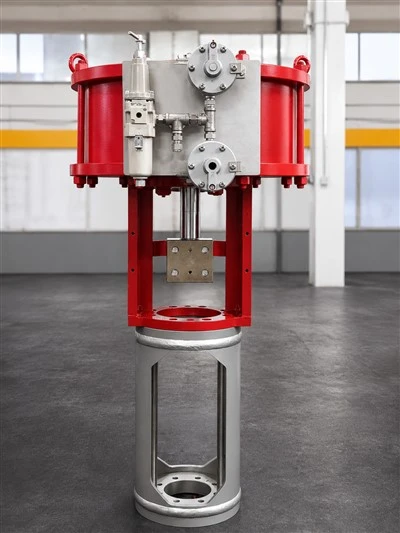
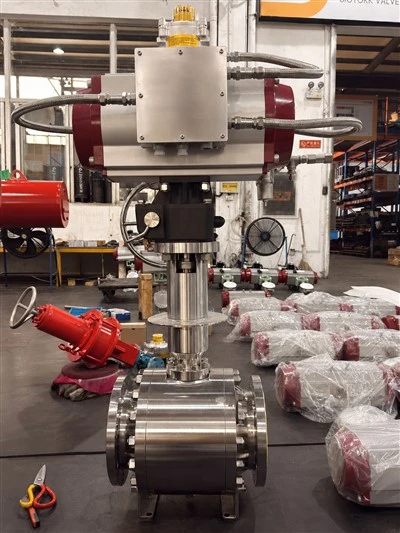
Hey there! As a supplier of Rotary Piston Actuators, I've seen firsthand the amazing applications these devices are used in. They're super handy in a lot of industrial settings. But like any piece of equipment, they've got their limitations, especially when it comes to high-speed applications. Let's dig into what those limitations are.
1. Wear and Tear
One of the biggest issues with using Rotary Piston Actuators in high-speed applications is the increased wear and tear. At high speeds, the pistons inside the actuator are moving really fast, and they're constantly rubbing against the walls of the cylinder. This friction can cause the piston and cylinder walls to wear down over time.
For example, if you're running a Rotary Piston Actuator at a high speed for a long period, the seals on the piston can start to break down. These seals are crucial for keeping the pressure inside the actuator consistent. Once they start to wear, you'll notice a drop in performance. The actuator might not be able to generate the same amount of torque as it used to, and it could start to leak air or fluid.
This wear and tear also means that you'll have to replace parts more often. That's not only a hassle but also adds to the overall cost of using the actuator. You've got to factor in the cost of the replacement parts and the labor to install them. So, if you're using a Rotary Piston Actuator in a high-speed application, be prepared for some maintenance. You can check out our Rotary Piston Actuator page for more details on the parts and how they work.
2. Heat Generation
Another limitation is heat generation. When the actuator is running at high speeds, the friction between the moving parts creates a lot of heat. This heat can build up inside the actuator, and if it's not properly dissipated, it can cause some serious problems.
High temperatures can affect the performance of the actuator in several ways. First of all, it can cause the lubricants inside the actuator to break down. Lubricants are essential for reducing friction and wear. Without proper lubrication, the wear and tear we talked about earlier will only get worse.
Secondly, heat can cause the materials of the actuator to expand. This expansion can lead to misalignment of the parts, which can further reduce the efficiency of the actuator. In extreme cases, the heat can even damage the actuator beyond repair.
To deal with heat generation, you might need to install additional cooling systems. This could be something as simple as a fan or as complex as a liquid cooling system. But adding these cooling systems adds to the cost and complexity of the setup. You can learn more about how to handle heat issues with our Pneumatic Quarter - Turn Valve Actuator, which has some features to help with heat dissipation.
3. Vibration and Noise
High-speed operation of Rotary Piston Actuators also leads to increased vibration and noise. The rapid movement of the pistons creates vibrations that can be transmitted to the surrounding equipment and structures. These vibrations can cause damage to other components in the system over time.
For example, if the actuator is mounted on a machine, the vibrations can cause the machine to shake. This shaking can affect the accuracy of the machine's operation. It can also lead to loose connections and premature failure of other parts.
The noise generated by the actuator at high speeds can also be a problem, especially in a workplace environment. Excessive noise can be a safety hazard for workers, as it can cause hearing damage. It can also be a nuisance, making it difficult for workers to communicate and focus on their tasks.
To reduce vibration and noise, you might need to use vibration dampeners or noise - reducing enclosures. But again, these solutions add to the cost and complexity of the system. Check out our Actuator with Bevel Gear Manual Override for some features that help with reducing vibration and noise.
4. Control and Precision
In high-speed applications, it can be challenging to control the Rotary Piston Actuator precisely. The fast - moving parts make it difficult to adjust the position and speed of the actuator accurately.
For instance, if you need the actuator to stop at a specific angle or position, it can be hard to achieve that at high speeds. The inertia of the moving parts can cause the actuator to overshoot or undershoot the desired position. This lack of precision can be a big problem in applications where accuracy is crucial, such as in robotics or automated manufacturing processes.
To improve control and precision, you might need to use more advanced control systems. These systems can be expensive and require more technical expertise to operate. You can find some solutions for better control on our Part Turn Actuator page.
5. Energy Efficiency
Rotary Piston Actuators can be less energy - efficient in high - speed applications. The increased friction, heat generation, and vibration all contribute to higher energy consumption.
At high speeds, the actuator has to work harder to overcome these factors. This means that more energy is required to operate the actuator compared to lower - speed applications. Higher energy consumption not only increases the operating cost but also has an environmental impact.
To improve energy efficiency, you can look for ways to reduce friction, such as using better lubricants or more advanced materials. You can also optimize the design of the actuator and the control system. Our Pneumatic Single - Acting Actuator With Bevel Gear Drive has some features that can help improve energy efficiency.
Conclusion
So, while Rotary Piston Actuators are great for many applications, they do have some limitations when it comes to high - speed use. The wear and tear, heat generation, vibration and noise, control and precision issues, and energy efficiency problems are all things you need to consider.
But don't worry! We're here to help you work around these limitations. Our team of experts can provide you with solutions and advice on how to use our Rotary Piston Actuators effectively in high - speed applications. Whether it's choosing the right model, implementing the proper maintenance schedule, or using additional components to improve performance.


If you're interested in learning more about our Rotary Piston Actuators or have any questions about using them in high - speed applications, don't hesitate to reach out. We're always happy to have a chat and help you find the best solution for your needs. Let's start a conversation about how we can make your project a success!
References
- "Industrial Actuators: Principles, Types, and Applications" by John Smith
- "High - Speed Machinery Design and Operation" by Jane Doe