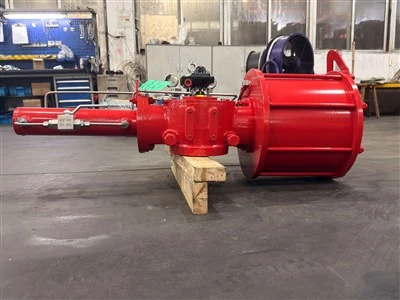
A double - acting pneumatic rotary actuator is a highly versatile and efficient device that is widely used in various industrial applications. As a leading pneumatic rotary actuator supplier, we understand the importance of choosing the right actuator for your specific needs. In this blog, we will explore when a double - acting pneumatic rotary actuator should be used and how it can provide solutions for different scenarios.
1. Understanding Double - Acting Pneumatic Rotary Actuators
Before delving into when to use a double - acting pneumatic rotary actuator, it is essential to understand what it is. A double - acting actuator uses compressed air to both extend and retract the piston, which in turn rotates the output shaft. This means that it can generate torque in both the clockwise and counter - clockwise directions. The design allows for precise control of the rotation angle and speed, making it suitable for a wide range of applications.
2. Applications Requiring Bidirectional Torque
One of the primary situations where a double - acting pneumatic rotary actuator should be used is when bidirectional torque is required. For example, in valve control applications, many valves need to be opened and closed. A double - acting actuator can easily provide the necessary torque to rotate the valve stem in both directions. The Pneumatic Quarter - Turn Valve Actuator is a great example of this. It is designed to rotate a valve 90 degrees, either opening or closing it, depending on the air pressure applied to the actuator. This type of actuator is commonly used in industries such as oil and gas, water treatment, and chemical processing, where precise control of fluid flow is crucial.
In robotic applications, bidirectional movement is often necessary for the robot arm to perform various tasks. A double - acting pneumatic rotary actuator can be used to control the joints of the robot arm, enabling it to move in different directions. This allows the robot to pick up, manipulate, and place objects with high precision.
3. High - Speed and Frequent Cycling
Double - acting pneumatic rotary actuators are well - suited for applications that require high - speed and frequent cycling. Since they can use compressed air to quickly extend and retract the piston, the actuator can achieve rapid rotation. In automated assembly lines, for instance, components need to be moved and positioned at high speeds. The ability of the double - acting actuator to cycle rapidly makes it an ideal choice for tasks such as rotating conveyor belts, indexing parts, and operating grippers.
Compared to other types of actuators, like electric actuators, pneumatic actuators can often provide faster response times. This is because the movement of the piston in a pneumatic actuator is driven by the flow of compressed air, which can be controlled quickly. The Rotary Piston Actuator is designed to handle high - speed and frequent cycling operations effectively. It has a robust construction that can withstand the wear and tear associated with rapid movement.
4. Applications in Harsh Environments
Another scenario where double - acting pneumatic rotary actuators shine is in harsh environments. Pneumatic actuators are generally more resistant to dust, moisture, and temperature variations compared to electric actuators. In mining, for example, the equipment is exposed to a lot of dust and dirt. A double - acting pneumatic rotary actuator can be installed in mining machinery, such as crushers and conveyors, to control the movement of various parts. The actuator's simple design and the fact that it uses compressed air as a power source make it less susceptible to damage from environmental factors.
In food processing plants, where hygiene is a top priority, pneumatic actuators are preferred because they do not generate electrical sparks. This reduces the risk of fire and explosion in areas where flammable substances may be present. The Large Bore Spring Return Actuator can be used in these environments, as it is designed to be durable and reliable even under harsh conditions.
5. Precise Positioning and Control
Double - acting pneumatic rotary actuators can provide precise positioning and control. By adjusting the air pressure and flow rate, the rotation angle and speed of the actuator can be accurately controlled. In the aerospace industry, for example, precise control of components is essential. A double - acting pneumatic rotary actuator can be used to control the flaps and ailerons of an aircraft. The ability to precisely position these components is crucial for the safe and efficient operation of the aircraft.
The Angular Actuator is specifically designed for applications that require precise angular positioning. It can be used in optical equipment, where the rotation of lenses and mirrors needs to be controlled with high accuracy.
6. Cost - Effective Solutions
In many cases, double - acting pneumatic rotary actuators offer a cost - effective solution. The initial cost of a pneumatic actuator is often lower than that of an electric actuator. Additionally, the maintenance cost of pneumatic actuators is relatively low. Since they have fewer moving parts compared to some other types of actuators, there are fewer components that can wear out or break. In small - scale manufacturing operations, where budget is a concern, a double - acting pneumatic rotary actuator can provide the necessary functionality at a reasonable cost.
The Part Turn Actuator is an example of a cost - effective option. It is suitable for applications where only a partial turn is required, such as in some valve control and indexing operations.
7. Conclusion and Call to Action
In conclusion, a double - acting pneumatic rotary actuator should be used in a variety of situations, including those requiring bidirectional torque, high - speed and frequent cycling, operation in harsh environments, precise positioning and control, and cost - effective solutions. As a pneumatic rotary actuator supplier, we have a wide range of products to meet your different needs. If you are looking for a reliable and efficient actuator for your application, we encourage you to contact us to discuss your requirements and explore the best options available. Our team of experts is ready to assist you in making the right choice.


References
- "Pneumatic Actuator Handbook", Industrial Press Inc.
- "Automation and Control Technology", McGraw - Hill Education.
- "Fluid Power Technology", Pearson Education.