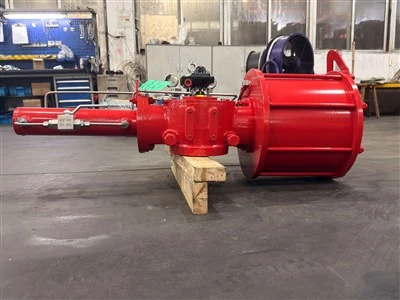
Double acting actuators are widely used in various industrial applications due to their ability to provide bidirectional motion. As a supplier of double acting actuators, I understand their advantages well, such as precise control, high force output, and the capacity to work in different operational modes. However, it's also crucial to be aware of their disadvantages. In this blog, I will explore the drawbacks of double acting actuators to give you a comprehensive understanding of these devices.
High Cost of Installation and Maintenance
One of the most significant disadvantages of double acting actuators is the high cost associated with their installation and maintenance. These actuators are more complex in design compared to their single - acting counterparts. They require a more elaborate piping system, additional valves, and control components to operate effectively. The installation process demands a high level of expertise and precision, which often leads to increased labor costs.
For example, when installing a Scotch Yoke Valve Actuator, the technician needs to ensure that the air supply lines are properly connected, and the actuator is correctly aligned with the valve. Any misalignment or improper installation can lead to premature wear and tear, reducing the actuator's lifespan and increasing the likelihood of breakdowns.
Maintenance of double acting actuators is also expensive. They have more moving parts, which means there are more components that can fail. Regular inspections, lubrication, and replacement of worn - out parts are necessary to keep the actuator in good working condition. The cost of spare parts for double acting actuators can also be relatively high, especially if they are specialized or made from high - quality materials.
Energy Consumption
Double acting actuators typically consume more energy than single - acting actuators. This is because they require a continuous supply of pressurized air or hydraulic fluid to operate in both directions. The energy is used to move the piston or other moving parts back and forth, which results in higher operating costs over time.
In an industrial setting where multiple double acting actuators are used, the cumulative energy consumption can be substantial. For instance, in a large manufacturing plant using Air Torque Actuators for various valve control applications, the energy bill for operating these actuators can be a significant portion of the overall production cost.


Moreover, the energy - consuming nature of double acting actuators also has environmental implications. Higher energy consumption means more fossil fuels are burned to generate the necessary power, leading to increased greenhouse gas emissions.
Complexity in Control
The control of double acting actuators is more complex compared to single - acting actuators. They require a more sophisticated control system to manage the flow of pressurized air or hydraulic fluid in both directions. This complexity can lead to difficulties in programming and troubleshooting.
A malfunction in the control system can cause the actuator to operate erratically or even fail to function altogether. For example, if the control valve that regulates the air flow in a P350 Double - Acting Scotch Yoke Actuator malfunctions, the actuator may not move to the desired position or may move too slowly.
The complexity of the control system also means that operators need to have a higher level of training and expertise to operate and maintain the actuators effectively. This can be a challenge for some companies, especially those with limited technical resources.
Susceptibility to Contamination
Double acting actuators are more susceptible to contamination compared to single - acting actuators. The presence of contaminants in the air or hydraulic fluid can cause significant damage to the internal components of the actuator.
For example, dust, dirt, and moisture in the air supply can clog the valves and ports, reducing the actuator's performance. In a hydraulic double acting actuator, contaminants in the hydraulic fluid can cause wear and tear on the piston, seals, and other moving parts.
Contamination can also lead to corrosion of the internal components, especially in environments where there is a high level of humidity or exposure to corrosive substances. This can significantly reduce the lifespan of the actuator and increase the frequency of maintenance and replacement.
Limited Stroke Length and Force Output
In some cases, double acting actuators may have limitations in terms of stroke length and force output. The design of the actuator may restrict the maximum distance the piston can travel, which can be a problem in applications where a large stroke length is required.
Similarly, the force output of a double acting actuator may be limited by its size and design. In applications where a high - force output is needed, such as in heavy - duty industrial machinery, a double acting actuator may not be able to provide the required force. For example, a BG Series Scotch Yoke Actuator may have a specific force - output range, and if the application demands a force outside this range, an alternative actuator may be required.
Dependence on External Power Source
Double acting actuators are highly dependent on an external power source, such as a compressor for pneumatic actuators or a hydraulic pump for hydraulic actuators. Any disruption in the power supply can cause the actuator to stop working.
In a manufacturing plant, a power outage or a malfunction in the compressor can bring the production process to a halt if it relies on Air Pressure Actuators. This can result in significant losses in terms of production time and revenue.
Moreover, the need for an external power source also adds to the overall complexity and cost of the system. The power source needs to be properly sized and maintained to ensure reliable operation of the actuators.
Conclusion
While double acting actuators offer many advantages in industrial applications, they also come with several disadvantages. The high cost of installation and maintenance, energy consumption, complexity in control, susceptibility to contamination, limited stroke length and force output, and dependence on external power source are all factors that need to be considered when choosing an actuator for a particular application.
However, it's important to note that these disadvantages can be mitigated through proper design, installation, and maintenance. As a supplier of double acting actuators, I am committed to providing high - quality products and technical support to help our customers overcome these challenges.
If you are considering using double acting actuators in your industrial application and want to discuss how to address these potential drawbacks, please feel free to contact us. We can provide you with detailed information about our products and solutions tailored to your specific needs.
References
- "Actuators: Principles, Applications, and Selection", Industrial Automation Handbook
- "Pneumatic and Hydraulic Actuator Technology", Journal of Mechanical Engineering