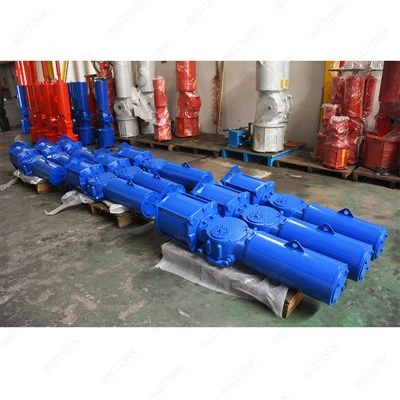
Air pressure actuators are vital components in many industrial applications, powering valves and other mechanisms. However, like any mechanical device, they can experience failures. As a trusted Air Pressure Actuator supplier, we've dealt with various actuator issues and have the expertise to guide you through troubleshooting.
Understanding Air Pressure Actuators
Before delving into troubleshooting, let's briefly understand what air pressure actuators are. An air pressure actuator, such as the ones we supply at our Air Pressure Actuator product line, uses compressed air to generate linear or rotary motion. Types include the Scotch Yoke Type Actuator, which is known for its efficient conversion of linear piston motion into rotary valve shaft motion, and the Heavy Duty Rotary Actuator, designed for high - torque applications.


Common Symptoms of Actuator Failures
1. No Movement
One of the most obvious signs of an actuator failure is when it fails to move. This could be due to a lack of air supply, a blocked air passage, or a mechanical issue within the actuator.
2. Inconsistent Movement
If the actuator moves erratically, stops and starts, or doesn't reach its full stroke, there may be problems with the air pressure regulation, internal leaks, or worn - out components.
3. Excessive Noise
Unusual noises during actuator operation, such as rattling, hissing, or grinding, can indicate loose parts, air leaks, or damaged bearings.
Troubleshooting Steps
Step 1: Check the Air Supply
The first thing to do when troubleshooting an air pressure actuator is to verify the air supply. Ensure that the air compressor is running properly and delivering the correct pressure. Check for any blockages in the air lines, including filters, regulators, and valves. A clogged filter can restrict the air flow, leading to actuator malfunctions.
Inspect the air hoses and connections for leaks. A simple way to detect air leaks is to apply a soapy water solution to the connections. If bubbles form, there is a leak that needs to be fixed, either by tightening the connection or replacing a faulty seal.
Step 2: Examine the Actuator's Mechanical Components
Inspect the actuator's mechanical parts for signs of wear or damage. For example, in a Scotch Yoke Type Actuator, check the yoke mechanism for any signs of misalignment, excessive wear, or breakage. The pins and bearings in the actuator should also be examined for smooth operation. If any parts are worn out, they should be replaced with genuine replacement parts to ensure proper functioning.
Step 3: Evaluate the Air Pressure Regulation
The air pressure regulator plays a crucial role in controlling the pressure supplied to the actuator. Make sure the regulator is set to the correct pressure according to the actuator's specifications. If the pressure is too high or too low, it can cause the actuator to malfunction. Use a pressure gauge to measure the actual pressure at the actuator inlet and compare it with the recommended pressure.
Step 4: Check for Internal Leaks
Internal leaks within the actuator can cause inconsistent movement or a loss of power. To check for internal leaks, isolate the actuator from the air supply and observe the pressure gauge. If the pressure drops over time, it indicates an internal leak. Depending on the type of actuator, such as the P350 Double - Acting Scotch Yoke Actuator, the seals and gaskets may need to be inspected and replaced if necessary.
Step 5: Review the Control System
If the actuator is part of a control system, check the control signals and valves. Malfunctioning control valves can prevent the proper supply or exhaust of air, causing actuator failures. Ensure that the control signals are being sent correctly and that the control valves are opening and closing as required.
Case Studies
Let's look at two common scenarios and how we resolved them.
Case 1: No Movement in a Heavy - Duty Actuator
A client reported that their Heavy Duty Actuator was not moving. We first checked the air supply and found that the filter was clogged, restricting the air flow. After replacing the filter and ensuring the air pressure was within the correct range, the actuator started working normally.
Case 2: Inconsistent Movement in a P350 Double - Acting Scotch Yoke Actuator
Another client noticed inconsistent movement in their P350 Double - Acting Scotch Yoke Actuator. Upon inspection, we discovered an internal leak in one of the seals. After replacing the faulty seal, the actuator performed flawlessly.
Preventive Maintenance
To minimize the likelihood of actuator failures, preventive maintenance is essential. Regularly inspect and clean the air filters, lubricate the moving parts, and check the air pressure and control system. Keep a record of the actuator's performance over time to identify any potential issues before they develop into major problems.
Conclusion
Troubleshooting air pressure actuator failures requires a systematic approach, starting from checking the air supply and moving on to examining the mechanical components, air pressure regulation, and control system. By following these steps and conducting regular preventive maintenance, you can ensure the reliable operation of your air pressure actuators.
As a leading supplier of high - quality air pressure actuators, we are committed to providing our customers with the best products and technical support. If you are experiencing issues with your actuators or are considering purchasing new ones for your applications, don't hesitate to contact us for professional advice and solutions. We would be more than happy to discuss your requirements and assist you in making the right choice for your business.
References
- "Pneumatic Actuators: Principles and Applications" - Industrial Automation Handbook
- "Maintenance Guide for Scotch Yoke Actuators" - Manufacturer's Technical Documentation