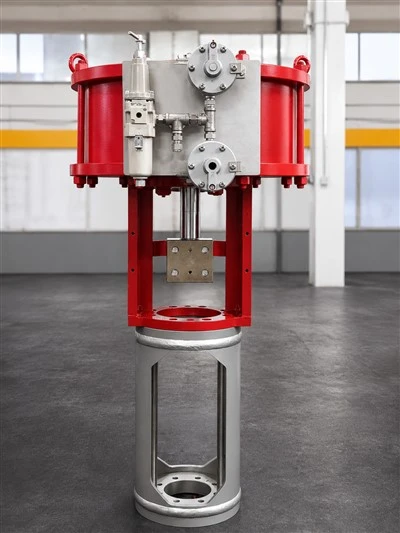
Hey there! As a supplier of Rotary Piston Actuators, I often get asked about the operating temperature range of these nifty devices. So, let's dive right in and explore what temperatures these actuators can handle.
Understanding Rotary Piston Actuators
First off, for those who aren't super familiar, Rotary Piston Actuators are used in a bunch of different applications. They're great for converting fluid power into rotary motion, and you can find them in things like industrial machinery, automation systems, and even some automotive parts. We offer a variety of related products like the Angular Actuator, Part Turn Actuator, Pneumatic Quarter-Turn Valve Actuator, Compact Pneumatic Quarter-Turn Actuator, and Pneumatic Single-Acting Actuator With Bevel Gear Drive.
Factors Affecting Operating Temperature Range
The operating temperature range of a Rotary Piston Actuator isn't set in stone. There are a few factors that can influence it.
1. Seal Materials
The seals in the actuator play a huge role. Different seal materials have different temperature limits. For example, some rubber seals might start to break down or lose their elasticity at high temperatures. On the other hand, at low temperatures, they could become brittle and crack. So, when we're designing our actuators, we carefully choose seal materials that can withstand the expected temperature range.
2. Lubricants
Lubricants are essential for the smooth operation of the actuator. But they can also be affected by temperature. At high temperatures, lubricants can thin out and lose their ability to lubricate properly. At low temperatures, they can thicken, which might make the actuator harder to operate. That's why we use high-quality, temperature-resistant lubricants in our products.
3. Material of the Actuator Body
The material of the actuator body also matters. Metals like aluminum and steel have different thermal properties. Aluminum, for instance, has a relatively high thermal conductivity, which means it can transfer heat more easily. This can be an advantage in some applications, but it also means that the actuator might need to be designed differently to handle temperature changes.


Typical Operating Temperature Ranges
In general, the operating temperature range of our Rotary Piston Actuators can vary. For most standard models, the lower limit is around -20°C to -10°C (-4°F to 14°F). This means that the actuator can still function properly in cold environments, like in some outdoor industrial settings during winter.
The upper limit is usually around 60°C to 80°C (140°F to 176°F). This range allows the actuator to work well in normal industrial environments where there might be some heat generated by nearby machinery or processes.
However, we also offer special models that can handle more extreme temperatures. For applications in very cold environments, like in the Arctic or in cryogenic processes, we have actuators that can operate at temperatures as low as -40°C (-40°F). And for high-temperature applications, such as in metal foundries or in some chemical processing plants, we can provide actuators that can handle temperatures up to 120°C (248°F).
Testing and Quality Assurance
We take the operating temperature range of our Rotary Piston Actuators very seriously. Before any product leaves our facility, we subject it to rigorous temperature testing. We use specialized temperature chambers to simulate different temperature conditions and make sure that the actuator performs as expected.
During the testing process, we check for things like the actuator's torque output, rotational speed, and the integrity of the seals. If any issues are detected, we make the necessary adjustments to the design or the manufacturing process to ensure that the product meets our high-quality standards.
Choosing the Right Actuator for Your Temperature Requirements
When you're looking to purchase a Rotary Piston Actuator, it's crucial to consider the temperature conditions of your application. If you're working in a relatively normal temperature range, our standard models should be just fine. But if you have extreme temperature requirements, it's best to get in touch with us.
We have a team of experts who can help you choose the right actuator for your specific needs. They can look at your application, the expected temperature range, and other factors to recommend the most suitable product. And if our standard models don't quite meet your requirements, we can also explore custom solutions.
Conclusion
So, there you have it! The operating temperature range of a Rotary Piston Actuator can vary depending on several factors, but we've got you covered whether you need an actuator for normal or extreme temperature conditions. If you're in the market for a Rotary Piston Actuator or any of our related products like the Angular Actuator, Part Turn Actuator, Pneumatic Quarter-Turn Valve Actuator, Compact Pneumatic Quarter-Turn Actuator, or Pneumatic Single-Acting Actuator With Bevel Gear Drive, don't hesitate to reach out. We're here to help you find the perfect solution for your needs.
References
- Engineering textbooks on fluid power systems
- Manufacturer's specifications for seal materials and lubricants
- Industry standards for actuator performance and temperature ratings