Hey there! If you're in the market for a linear actuator, you've probably come across ball screws and lead screws. As a linear actuator supplier, I get asked about the differences between these two types a lot. So, I thought I'd break it down in a simple, easy-to-understand way.
Let's start with the basics. What exactly is a linear actuator? Well, it's a device that converts rotational motion into linear motion. Think of it like a machine that can move things in a straight line. They're used in all sorts of applications, from robotics and automation to aerospace and medical equipment.
Now, let's dive into the difference between ball screws and lead screws.
How They Work
The main difference between a ball screw and a lead screw lies in the way they transfer motion. A lead screw is a pretty simple setup. It consists of a threaded rod and a nut. When the rod rotates, the nut moves along the threads in a straight line. It's like turning a bolt and having a nut slide along it.
On the other hand, a ball screw has a more complex design. It also has a threaded rod and a nut, but between them are a series of ball bearings. These balls roll in the grooves between the rod and the nut. As the rod rotates, the balls move the nut along, reducing friction and allowing for smoother and more precise motion.
Efficiency
One of the biggest differences between the two is efficiency. Ball screws are generally much more efficient than lead screws. The ball bearings in a ball screw reduce the amount of friction, which means less energy is wasted in the form of heat. This makes ball screws a great choice for applications where power consumption is a concern, like in electric vehicles or high - speed automation systems.
Lead screws, on the other hand, have more friction because the nut slides directly on the threads of the rod. This means they're less efficient, and they can generate more heat during operation. However, in some low - speed, low - duty applications, the difference in efficiency might not be a deal - breaker.
Precision
When it comes to precision, ball screws are the clear winner. The ball bearings in a ball screw allow for very accurate and repeatable motion. They can achieve high levels of positional accuracy, which is crucial in applications like CNC machining, where even the slightest error can ruin a part.
Lead screws, while they can still provide a reasonable level of precision, are not as accurate as ball screws. The sliding action of the nut on the threads can lead to more backlash, which is the amount of play or movement in the reverse direction. In applications where precision isn't as critical, like in simple furniture mechanisms or some basic automation tasks, a lead screw might be just fine.
Load Capacity
In terms of load capacity, ball screws can generally handle higher loads than lead screws. The ball bearings distribute the load more evenly across the rod and nut, allowing the ball screw to support heavier weights without excessive wear. This makes ball screws ideal for applications like industrial presses or heavy - duty robotic arms.
Lead screws, while they can handle moderate loads, may not be the best choice for extremely heavy - duty applications. The sliding action of the nut can cause more wear and tear over time, especially under high loads.
Cost
Cost is always a factor when choosing a linear actuator. Lead screws are usually more affordable than ball screws. Their simpler design means they're easier and cheaper to manufacture. If you're working on a budget project or an application where the performance requirements of a ball screw aren't necessary, a lead screw could be the way to go.
Ball screws, with their more complex design and higher performance capabilities, tend to be more expensive. However, in applications where their efficiency, precision, and load - handling capabilities are essential, the extra cost is often justified.
Applications
Let's talk about some specific applications for each type.
Lead Screw Applications
- Light - duty Automation: In small - scale automation projects, like a simple conveyor belt system or a homemade 3D printer, lead screws can work great. They're affordable and easy to integrate, and they can handle the relatively low loads and precision requirements of these projects.
- Furniture and Appliances: You'll find lead screws in things like adjustable beds, office chairs, and some kitchen appliances. They provide a simple and cost - effective way to move parts in a straight line.
Ball Screw Applications
- CNC Machining: As mentioned earlier, the high precision and efficiency of ball screws make them perfect for CNC machines. They can ensure accurate positioning of the cutting tools, resulting in high - quality machined parts.
- Aerospace and Defense: In aerospace applications, where weight and performance are critical, ball screws are often used. They can handle the high loads and precision requirements of aircraft control systems and missile guidance systems.
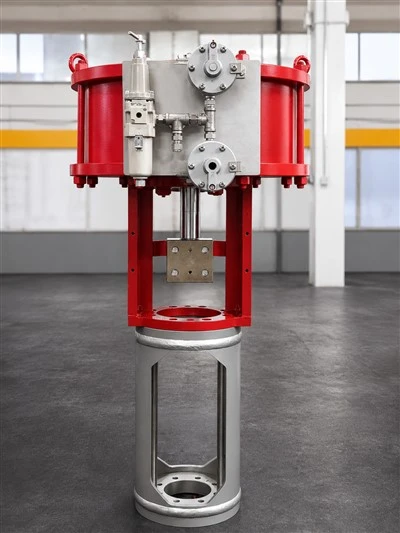
We offer a variety of linear actuators to suit different needs. For example, our ZSS300 Pneumatic Linear Actuator is a great option for applications where pneumatic power is preferred. It's reliable and can handle a wide range of loads.
If you need an actuator that can withstand harsh environments, our Ip68 Linear Actuator is a top choice. It's designed to be dust - tight and waterproof, making it suitable for outdoor and industrial settings.
The FC Linear Pneumatic Actuator is known for its high - speed performance and precise control. It's a great option for applications where quick and accurate movement is required.
Our Marine Linear Actuator is specifically designed for marine applications. It can resist corrosion from saltwater and handle the tough conditions on boats and ships.
And for valve control applications, our Linear Valve Actuator provides reliable and accurate operation.
So, whether you're leaning towards a ball screw or a lead screw linear actuator, we've got you covered. If you're not sure which one is right for your application, don't hesitate to reach out. We have a team of experts who can help you make the best decision based on your specific requirements.


In conclusion, the choice between a ball screw and a lead screw linear actuator depends on several factors, including efficiency, precision, load capacity, and cost. By understanding the differences between the two, you can make an informed decision that meets your needs and budget. If you're interested in purchasing a linear actuator or need more information, feel free to contact us for a detailed discussion and to start the procurement process.
References
- "Motion Control Handbook"
- "Linear Actuator Design and Application Guide"