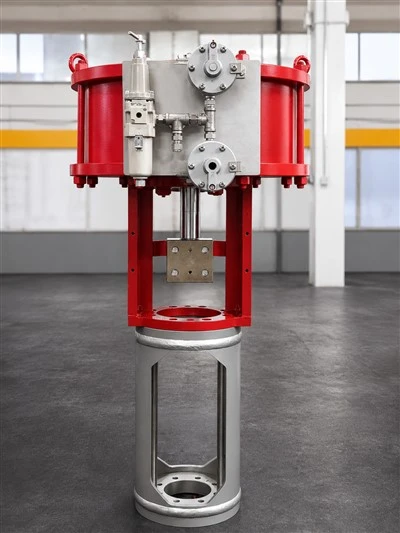
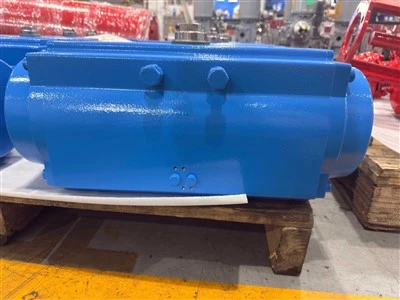
Hey there! As a supplier of Marine Linear Actuators, I often get asked about the vibration resistance of these nifty devices. So, let's dive right into it and explore what vibration resistance really means for marine linear actuators.
First off, what's a marine linear actuator? Well, it's a device that converts energy into linear motion. In the marine world, these actuators are used in all sorts of applications, like controlling valves, adjusting rudders, and operating hatches. They need to be tough and reliable because they're working in a pretty harsh environment.
Now, let's talk about vibration. On a boat, there's no shortage of it. The engines, the waves, and even the wind can all cause vibrations. These vibrations can be a real headache for mechanical components. If an actuator isn't vibration - resistant, it can wear out quickly, break down, or even fail completely. And when an actuator fails in a marine setting, it can lead to some serious problems, like losing control of vital systems.
So, what makes a marine linear actuator vibration - resistant? One of the key factors is the design. A good vibration - resistant actuator is built with sturdy materials. For example, high - strength alloys can be used for the actuator's body. These materials can withstand the constant shaking without getting damaged.
Another aspect is the internal mechanism. The gears, shafts, and other moving parts need to be precisely engineered. They should fit together snugly so that vibrations don't cause them to loosen or misalign. Some actuators even come with special damping mechanisms. These are like shock absorbers that help reduce the impact of the vibrations on the internal components.


Sealing is also crucial. In a marine environment, water and moisture are everywhere. A well - sealed actuator not only protects against water ingress but also helps isolate the internal parts from external vibrations. This way, the vibrations don't have as much of an impact on the delicate components inside.
Let's take a look at some of the products we offer. For example, our Double - acting Linear Actuator. This bad boy is designed to handle tough vibrations. Its double - acting design allows for precise control, and the robust construction gives it excellent vibration resistance. Whether it's being used to operate a valve on a large ship or a small boat's hatch, it can take a beating from vibrations without skipping a beat.
The ZSS300 Pneumatic Linear Actuator is another great option. It's got a compact design but don't let its size fool you. It's packed with features that make it vibration - resistant. The pneumatic system is well - protected, and the overall build quality ensures that it can withstand the vibrations commonly found in marine environments.
Our FC Linear Pneumatic Actuator is also a top - notch choice. It's engineered for high - performance and reliability. The linear design is optimized to reduce the effects of vibrations, and the materials used are of the highest quality. It's perfect for applications where precise linear motion and vibration resistance are both required.
The Side - Ported Single - Acting Linear Pneumatic Actuator is also worth mentioning. Its unique side - ported design gives it some advantages when it comes to vibration resistance. The single - acting operation is simple and efficient, and the actuator is built to last even in the face of constant vibrations.
And then there's the Linear Valve Actuator. This actuator is specifically designed for valve control. In a marine system, valves are constantly exposed to vibrations from the water flow and the ship's movement. Our Linear Valve Actuator is built to handle these vibrations, ensuring that the valves operate smoothly and accurately at all times.
How do we test the vibration resistance of our marine linear actuators? Well, we've got a state - of - the - art testing facility. We simulate the real - world vibrations that an actuator might encounter on a boat. We expose the actuators to different frequencies and intensities of vibrations for extended periods. By doing this, we can identify any weak points and make improvements to the design.
We also conduct field tests. We install our actuators on actual boats and monitor their performance over time. This gives us real - world data on how well they handle vibrations in a practical setting. And based on this feedback, we're able to fine - tune our products to make them even more vibration - resistant.
If you're in the market for a marine linear actuator, vibration resistance should be a top priority. You don't want to end up with an actuator that breaks down after a few months because of the vibrations. Our range of marine linear actuators is designed to offer you the best in vibration resistance, reliability, and performance.
Whether you're a boat builder, a marine engineer, or just someone looking to upgrade your boat's systems, we've got the right actuator for you. We're here to answer any questions you might have and help you find the perfect solution for your needs. So, if you're interested in learning more about our products, don't hesitate to reach out. We're eager to start a conversation and see how we can help you with your marine linear actuator requirements. Let's get in touch and start discussing the best options for your project.
References
- Marine Actuator Technology Handbook
- Journal of Marine Mechanical Systems