What is the feedback signal of a Part Turn Actuator?
In the realm of industrial automation and control systems, part turn actuators play a crucial role in enabling the efficient operation of various valves and other equipment that require angular movement within a limited range, typically less than 360 degrees. As a leading supplier of Part Turn Actuators, we understand the significance of feedback signals in ensuring the proper functioning and control of these actuators.
Understanding Part Turn Actuators
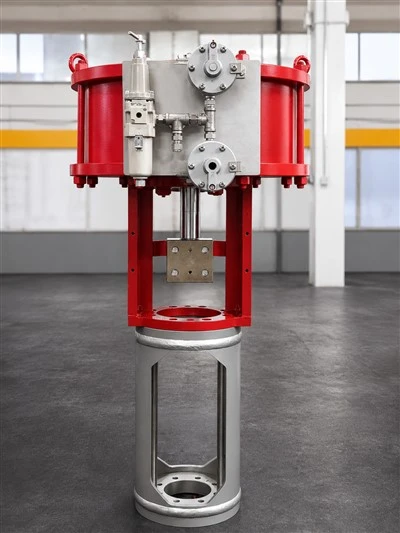
Before delving into the feedback signals, it is essential to have a clear understanding of what a part turn actuator is. A part turn actuator is a device designed to provide rotational motion to valves or other mechanisms, allowing them to open or close within a specific angular range. These actuators are commonly used in applications such as ball valves, butterfly valves, and dampers, where a quick and precise quarter - turn or partial turn movement is required.
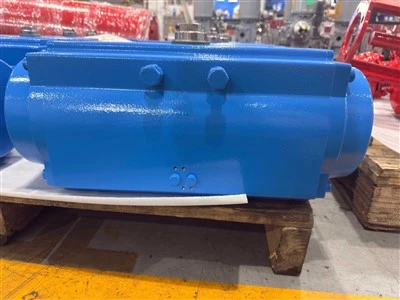
There are different types of part turn actuators, including pneumatic, electric, and hydraulic actuators. Pneumatic part turn actuators, for example, use compressed air as the power source to generate the rotational motion. They are known for their simplicity, reliability, and fast response times, making them suitable for a wide range of industrial applications. Our company offers a variety of pneumatic part turn actuators, such as the Pneumatic Quarter - Turn Valve Actuator and the Compact Pneumatic Quarter - Turn Actuator.
The Importance of Feedback Signals
Feedback signals are an integral part of any control system, and part turn actuators are no exception. A feedback signal provides information about the actual position, status, or performance of the actuator, which is then used by the control system to make adjustments and ensure that the actuator operates as intended.
One of the primary reasons for using feedback signals in part turn actuators is to achieve accurate positioning. In many applications, it is crucial to precisely control the opening or closing angle of the valve or mechanism. Without feedback, it would be difficult to determine the exact position of the actuator, leading to inaccuracies and potential operational issues. For example, in a chemical process, an inaccurate valve position could result in improper flow rates, which may affect the quality of the final product or even pose safety risks.


Feedback signals also help in monitoring the health and performance of the actuator. By continuously monitoring parameters such as position, torque, and temperature, the control system can detect any abnormal behavior or potential failures. This allows for proactive maintenance and reduces the likelihood of unexpected downtime. For instance, if the feedback signal indicates that the actuator is experiencing higher - than - normal torque, it could be a sign of mechanical problems such as wear and tear or obstruction.
Types of Feedback Signals
Position Feedback
Position feedback is perhaps the most common type of feedback signal used in part turn actuators. It provides information about the actual angular position of the actuator. There are several ways to measure and transmit position feedback:
- Potentiometers: A potentiometer is a variable resistor that changes its resistance based on the angular position of the actuator. As the actuator rotates, the wiper of the potentiometer moves along the resistive element, altering the resistance. The control system can then measure this resistance and convert it into an angular position. Potentiometers are relatively simple and cost - effective, but they may be subject to wear and tear over time.
- Encoders: Encoders are digital devices that provide precise position information. They can be either incremental or absolute. Incremental encoders generate a series of pulses as the actuator rotates, and the control system counts these pulses to determine the position change. Absolute encoders, on the other hand, provide a unique digital code for each position, allowing the control system to directly obtain the exact angular position without the need for counting. Encoders offer high accuracy and reliability, but they are generally more expensive than potentiometers.
Limit Switches
Limit switches are another type of feedback device used in part turn actuators. They are mechanical switches that are activated when the actuator reaches a specific position, typically the fully open or fully closed position. Limit switches can be used to provide a binary feedback signal, indicating whether the actuator is in the open or closed state. This information can be used by the control system to stop the actuator's movement and prevent over - travel. For example, when a valve reaches its fully open position, the limit switch is triggered, and the control system cuts off the power supply to the actuator.
Torque Feedback
Torque feedback provides information about the amount of torque being exerted by the actuator. It is important in applications where the actuator needs to overcome a certain resistance, such as when opening or closing a valve against high pressure. By monitoring the torque, the control system can ensure that the actuator is operating within its design limits and can detect any abnormal increases in torque that may indicate problems. Torque sensors, such as strain gauges, are commonly used to measure torque and provide the feedback signal.
Temperature Feedback
Temperature is an important parameter to monitor in part turn actuators, especially in applications where the actuator is exposed to high - temperature environments or generates a significant amount of heat during operation. High temperatures can affect the performance and lifespan of the actuator, as well as the materials used in its construction. Temperature sensors, such as thermocouples or resistance temperature detectors (RTDs), can be used to measure the temperature of the actuator and provide feedback to the control system. If the temperature exceeds a certain threshold, the control system can take appropriate actions, such as reducing the actuator's operating speed or shutting it down to prevent damage.
Integration of Feedback Signals into the Control System
Once the feedback signals are obtained from the part turn actuator, they need to be integrated into the control system. The control system can be a programmable logic controller (PLC), a distributed control system (DCS), or a dedicated actuator controller.
The feedback signals are typically transmitted to the control system through analog or digital communication interfaces. Analog signals, such as voltage or current signals, are used for signals like position feedback from potentiometers or torque feedback from strain gauges. Digital signals, on the other hand, are used for signals from encoders or limit switches.
The control system then uses the feedback information to compare the actual position or performance of the actuator with the desired setpoint. If there is a difference between the two, the control system can calculate the appropriate control action, such as adjusting the power supply to the actuator or sending a signal to a solenoid valve in a pneumatic actuator.
Our Offerings and the Role of Feedback Signals
As a supplier of part turn actuators, we ensure that our products are equipped with reliable feedback systems. Our Actuator with Bevel Gear Manual Override and Angular Actuator models are designed to meet the diverse needs of our customers, and the feedback signals play a vital role in their performance.
We understand that different applications may require different types of feedback signals and levels of accuracy. That's why we offer a range of options for position, torque, and temperature feedback. Whether you need a basic potentiometer - based position feedback for a simple application or a high - precision absolute encoder for a critical control system, we have the right solution for you.
Conclusion and Call to Action
In conclusion, feedback signals are essential for the proper functioning and control of part turn actuators. They enable accurate positioning, monitor the actuator's health and performance, and ensure safe and efficient operation. As a trusted supplier of part turn actuators, we are committed to providing high - quality products with reliable feedback systems.
If you are looking for a part turn actuator for your industrial application, we invite you to contact us for a detailed discussion. Our team of experts can help you select the right actuator and feedback system based on your specific requirements. We are dedicated to providing excellent customer service and ensuring that you get the best possible solution for your needs.
References
- "Automation of Industrial Processes" by Smith, J.
- "Actuator Technology and Applications" by Johnson, A.