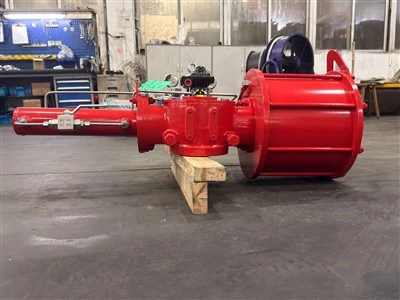
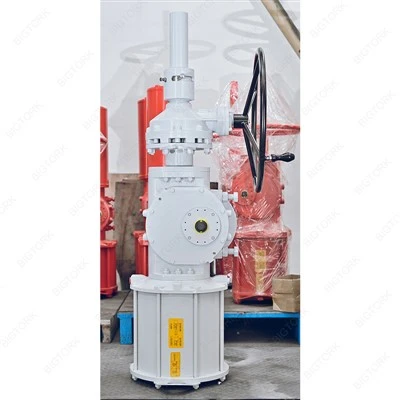
As a supplier of single acting actuators, I often get asked about the performance parameters of these nifty devices. So, I thought I'd take a moment to break it all down and give you a clear understanding of what to look for when choosing a single acting actuator.
Force Output
The force output is one of the most critical performance parameters of a single acting actuator. It determines the actuator's ability to move or hold a load. The force output is usually measured in pounds - force (lbf) or newtons (N). The amount of force an actuator can generate depends on several factors, such as the actuator's size, the air pressure applied, and the design of the internal components.
For example, if you're using an actuator to open or close a valve in a pipeline, you need to make sure that the actuator has enough force to overcome the resistance of the valve. A valve with a large diameter or high - pressure rating will require an actuator with a higher force output.
Stroke Length
The stroke length refers to the maximum distance that the actuator's piston or rod can travel. It's measured in inches or millimeters. The stroke length you need depends on the application. If you're using the actuator to move a part over a short distance, a shorter stroke length will suffice. However, if you need to move a part over a longer distance, you'll need an actuator with a longer stroke length.
Let's say you're using an actuator to lift a platform. The height that the platform needs to be lifted will determine the required stroke length of the actuator. If the platform needs to be lifted 12 inches, you'll need an actuator with a stroke length of at least 12 inches.
Speed of Operation
The speed of operation is another important performance parameter. It's usually measured in inches per second or millimeters per second. The speed at which an actuator can operate depends on the air flow rate, the size of the actuator, and the load it's moving.
In some applications, such as high - speed manufacturing processes, a fast - acting actuator is required. On the other hand, in applications where precision is more important than speed, a slower - acting actuator might be a better choice. For instance, in a robotic arm that needs to perform delicate tasks, a slower speed of operation allows for more accurate movements.
Operating Pressure
The operating pressure of a single acting actuator is the air pressure required to make the actuator work. It's measured in pounds per square inch (psi) or pascals (Pa). The operating pressure can vary depending on the design and size of the actuator.
Most single acting actuators are designed to operate within a specific pressure range. If the operating pressure is too low, the actuator might not generate enough force to move the load. If the operating pressure is too high, it can cause damage to the actuator. So, it's crucial to select an actuator that can operate within the available air pressure range in your system.
Duty Cycle
The duty cycle is the percentage of time that an actuator can be in operation within a given time period. For example, a duty cycle of 50% means that the actuator can be in operation for half of the time in a given cycle.
The duty cycle is important because it affects the lifespan of the actuator. If an actuator is operated at a high duty cycle for an extended period, it can lead to overheating and premature wear. So, you need to choose an actuator with a duty cycle that matches your application's requirements.
Accuracy and Repeatability
Accuracy refers to how closely the actuator can achieve the desired position or movement. Repeatability, on the other hand, is the ability of the actuator to return to the same position or perform the same movement repeatedly.
In applications where precision is crucial, such as in medical equipment or aerospace systems, high accuracy and repeatability are essential. A single acting actuator with poor accuracy and repeatability can lead to errors in the operation of the system.
Mounting Options
The mounting options available for a single acting actuator can also affect its performance. Different applications may require different mounting styles, such as flange - mounted, foot - mounted, or clevis - mounted.
The right mounting option ensures that the actuator is properly aligned and secured, which can improve its performance and lifespan. For example, a flange - mounted actuator provides a more stable and rigid connection compared to a clevis - mounted actuator, which is more suitable for applications where some flexibility is required.
Compatibility with Other Components
A single acting actuator needs to be compatible with other components in the system, such as valves, sensors, and controllers. Compatibility ensures that the actuator can work seamlessly with the rest of the system.
For example, if you're using an actuator to control a valve, the actuator needs to be compatible with the valve's size, type, and operating requirements. In addition, the actuator should be able to communicate effectively with the controller to receive commands and feedback.
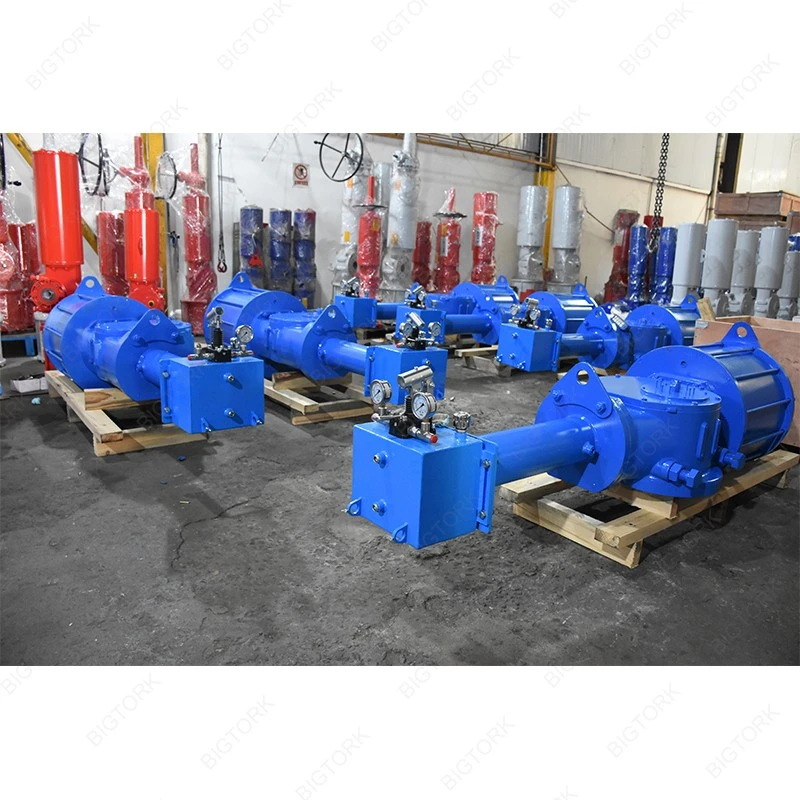

Our Product Range
As a supplier, we offer a wide range of single acting actuators with different performance parameters to meet various application needs. We also have related products like the Double - Acting P350Scotch Yoke Actuator, Heavy Duty Actuator, Air Actuator, Air Pressure Actuator, and Pneumatic Piston Actuator.
Let's Talk
If you're in the market for a single acting actuator or any of our related products, I'd love to have a chat with you. We can discuss your specific requirements and find the perfect actuator for your application. Whether you need high force output, a long stroke length, or a specific duty cycle, we've got you covered. So, don't hesitate to reach out and start the conversation about your procurement needs.
References
- "Pneumatic Actuator Handbook"
- "Actuator Design and Application Guide"