In the realm of industrial automation and fluid control, hydraulic actuators play a pivotal role. As a seasoned supplier of hydraulic actuators, I've witnessed firsthand the critical importance of understanding the relationship between pressure and flow within these devices. This knowledge is not only fundamental for engineers and technicians but also for anyone involved in the procurement and operation of hydraulic systems.
Understanding Hydraulic Actuators
Before delving into the relationship between pressure and flow, let's briefly define what a hydraulic actuator is. A hydraulic actuator is a mechanical device that converts hydraulic energy into mechanical motion. It typically consists of a cylinder or a motor and uses hydraulic fluid to generate linear or rotary motion. These actuators are widely used in various industries, including manufacturing, construction, and automotive, due to their high power density, precision, and reliability.
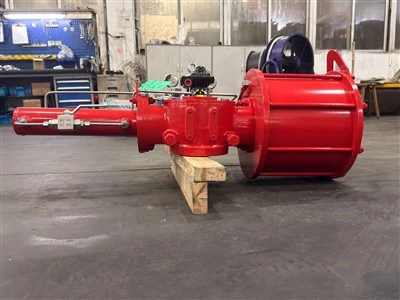
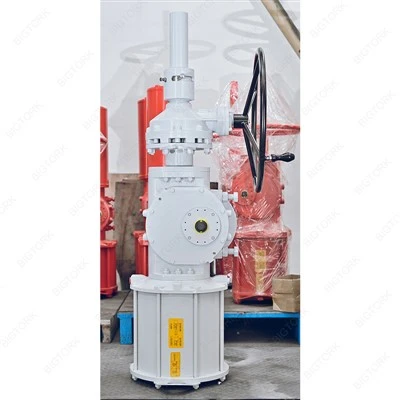
There are different types of hydraulic actuators available in the market, each designed for specific applications. For instance, the Butterfly Valve Hydraulic Actuator is commonly used in valve control systems to regulate the flow of fluids in pipelines. Its compact design and efficient operation make it a popular choice for many industrial applications.
Another type is the Single Acting Hydraulic Actuator. This actuator uses hydraulic pressure to move in one direction and a spring or external force to return to its original position. It is often used in applications where a simple and cost-effective solution is required.
The Corrosion-Resistant Quarter-Turn Hydraulic Actuator is designed for use in harsh environments where corrosion is a concern. It is commonly used in marine, chemical, and wastewater treatment industries.
Lastly, the Quarter-Turn Hydraulic Actuator is ideal for applications that require quick and precise valve actuation, such as in fire protection systems and industrial process control.
The Basics of Pressure and Flow
In a hydraulic system, pressure and flow are two fundamental concepts that are closely related. Pressure is defined as the force applied per unit area and is typically measured in pounds per square inch (psi) or pascals (Pa). It is responsible for generating the force required to move the actuator and perform the desired work.
Flow, on the other hand, refers to the volume of hydraulic fluid that passes through a given point in the system per unit time. It is usually measured in gallons per minute (gpm) or liters per minute (lpm). Flow determines the speed at which the actuator moves.
The relationship between pressure and flow can be described by the basic hydraulic equation: Force = Pressure x Area. This equation shows that the force generated by a hydraulic actuator is directly proportional to the pressure applied and the area of the piston or cylinder. Therefore, increasing the pressure or the piston area will result in a greater force output.
However, the relationship between pressure and flow is not always straightforward. In a hydraulic system, the flow rate is affected by several factors, including the size and length of the pipes, the viscosity of the hydraulic fluid, and the resistance offered by the actuator and other components.
The Impact of Pressure on Flow
In a hydraulic actuator, pressure has a significant impact on flow. When the pressure in the system increases, the force acting on the fluid also increases. This causes the fluid to flow more rapidly through the system, resulting in an increase in flow rate. However, this relationship is subject to the limitations of the system, such as the size of the pipes and the capacity of the pump.
For example, if the pressure is increased beyond the capacity of the pipes, the flow rate may actually decrease due to increased friction and resistance. This phenomenon is known as pressure drop. Pressure drop can have a significant impact on the performance of the hydraulic actuator, as it reduces the available force and speed.
To minimize pressure drop, it is important to select the appropriate pipe size and ensure that the hydraulic fluid has the correct viscosity. Additionally, the system should be designed to minimize the length of the pipes and the number of bends and fittings, as these can also contribute to pressure drop.


The Impact of Flow on Pressure
Conversely, the flow rate in a hydraulic system also affects the pressure. When the flow rate increases, the demand for hydraulic fluid also increases. If the pump is unable to supply the required amount of fluid, the pressure in the system will decrease. This can lead to a decrease in the force output of the actuator and a reduction in its performance.
On the other hand, if the flow rate is too low, the actuator may not move at the desired speed or may not be able to perform the required work. Therefore, it is essential to maintain the correct flow rate in the system to ensure optimal performance of the hydraulic actuator.
Balancing Pressure and Flow for Optimal Performance
Achieving the right balance between pressure and flow is crucial for the optimal performance of a hydraulic actuator. This requires careful consideration of the specific application requirements, such as the force and speed needed, as well as the characteristics of the hydraulic system, including the pump capacity, pipe size, and fluid viscosity.
In some applications, a high-pressure, low-flow system may be required to generate the necessary force. For example, in a heavy-duty lifting application, a high-pressure hydraulic actuator can provide the large force needed to lift heavy loads, even if the speed of movement is relatively slow.
In other applications, a low-pressure, high-flow system may be more suitable. For instance, in a fast-moving conveyor system, a hydraulic actuator with a high flow rate can ensure quick and smooth operation, even if the force requirements are relatively low.
As a hydraulic actuator supplier, we understand the importance of providing our customers with the right solutions for their specific needs. We offer a wide range of hydraulic actuators, each designed to meet the unique requirements of different applications. Our team of experts can work closely with you to analyze your needs, select the appropriate actuator, and ensure that it is installed and maintained correctly.
Contact Us for Procurement and Consultation
If you are in the market for hydraulic actuators or need more information about the relationship between pressure and flow in these devices, we encourage you to contact us. Our knowledgeable sales team is ready to assist you with your procurement needs and provide expert advice on selecting the right hydraulic actuators for your applications. We are committed to providing high-quality products and excellent customer service, and we look forward to working with you to achieve your goals.
References
- Hydraulic Systems: Principles and Maintenance by John F. Caruthers
- Fluid Power with Applications by Anthony Esposito
- Handbook of Hydraulic Power Systems by R. Keith Mobley