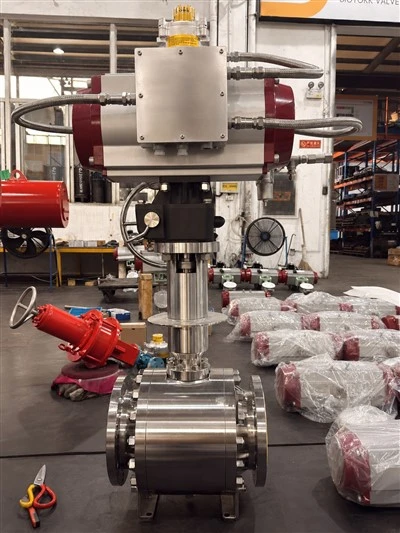
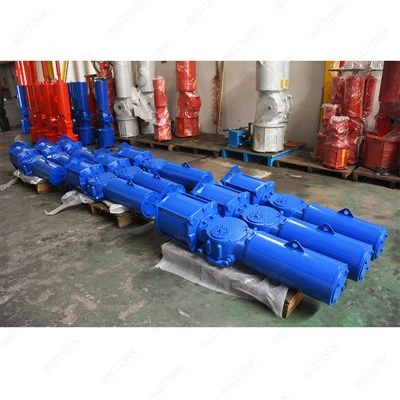
Let me start by saying that we're a heavy - duty actuator supplier. We've been in the business for quite some time, dealing with all sorts of pneumatic actuators, like the BG Series Scotch Yoke Actuator and the Air Torque Actuator.
Heavy - duty actuators are super useful in a bunch of industries. They're used in power generation plants, oil and gas refineries, and even in water treatment facilities. These actuators are built to handle tough jobs, providing the force needed to open and close valves and perform other control functions. But like any piece of equipment, they've got their limitations.
1. Limited Speed
One of the main limitations of heavy - duty actuators is their speed. These things are designed to generate a large amount of force, which often comes at the cost of speed. For example, in applications where you need rapid valve opening and closing, a heavy - duty actuator might not be the best choice. Say you're working with a Double Acting Actuator. If the process requires quick adjustments, the time it takes for the actuator to move can slow down the entire operation.
Most heavy - duty actuators work on a mechanical or pneumatic principle. Mechanical actuators rely on gears and linkages to convert rotary or linear motion. These mechanisms can be large and heavy, which means they take time to start and stop. Pneumatic actuators, on the other hand, use compressed air to generate force. The time it takes to fill and empty the air chambers can also limit the speed of operation.
2. High Energy Consumption
Another big drawback is the high energy consumption. Heavy - duty actuators need a lot of power to operate. For pneumatic actuators, that means a continuous supply of compressed air. The equipment needed to generate and maintain that air pressure, such as air compressors, consumes a significant amount of electricity. And if you're using an electric heavy - duty actuator, the power requirements can be even more substantial.
Take the Air Pressure Actuator as an example. These actuators often need a high - pressure air source to provide the necessary force. The cost of running the air compressor constantly can add up over time, making it an expensive option for long - term use. In industries where energy efficiency is a top priority, this can be a real deal - breaker.
3. Maintenance Requirements
Heavy - duty actuators demand a lot of maintenance. Due to their complex mechanisms and the harsh environments they often operate in, they're prone to wear and tear. Components like seals, bearings, and gears need regular inspection and replacement.
For instance, in a Scotch Yoke Valve Actuator, the scotch yoke mechanism is subject to a lot of friction. Over time, this friction can cause the components to wear out, leading to reduced performance and potential breakdowns. Regular lubrication, alignment checks, and part replacements are necessary to keep the actuator running smoothly. And let's not forget about the cost of maintenance. The parts can be expensive, and the labor required to perform the maintenance can also be substantial.
4. Size and Weight Constraints
Heavy - duty actuators are usually large and heavy. This can be a problem in applications where space is limited. For example, in some offshore oil platforms or in small - scale industrial plants, there may not be enough room to install a large heavy - duty actuator.
The weight of these actuators can also be an issue when it comes to installation and support. You need to have a sturdy structure to hold the actuator in place. If the support system isn't strong enough, it can lead to misalignment and premature failure of the actuator. Plus, when it comes to transportation, moving large and heavy actuators can be a logistical challenge.
5. Environmental Sensitivity
Many heavy - duty actuators are sensitive to the environment in which they operate. Pneumatic actuators can be affected by humidity, dust, and temperature changes. High humidity can cause corrosion inside the air chambers, while dust can clog the air passages. Extreme temperatures can also affect the performance of the actuator, as the viscosity of the lubricants and the properties of the materials can change.
Electric actuators can also be affected by environmental factors. Electrical components can malfunction in wet or dirty conditions, and high temperatures can cause overheating. In industries where the environment is harsh, such as chemical plants or mining operations, these sensitivities can lead to frequent breakdowns and costly repairs.


6. Limited Adaptability
Heavy - duty actuators are often designed for specific applications. Once they're installed, it can be difficult to modify them to suit different requirements. For example, if you initially installed an actuator to operate a certain type of valve and then need to change to a different valve type, you might find that the actuator isn't compatible.
The control systems for heavy - duty actuators are also quite specialized. Changing the control parameters or integrating the actuator with a new control system can be a complex and expensive process. This lack of adaptability can be a problem in industries where processes are constantly evolving.
Despite these limitations, heavy - duty actuators are still essential in many industrial applications. The key is to understand these drawbacks and work around them. As a heavy - duty actuator supplier, we can help you choose the right actuator for your specific needs and provide advice on how to minimize the impact of these limitations.
If you're in the market for heavy - duty actuators, or if you want to learn more about how to deal with their limitations, feel free to contact us. We're here to help you make the best decision for your business.
References
- Industrial Actuator Handbook: A guide to actuator technology and applications.
- Pneumatic Actuator Performance Studies: Research on the performance and limitations of pneumatic actuators.
- Electric Actuator Maintenance Manual: A resource for maintaining and troubleshooting electric actuators.