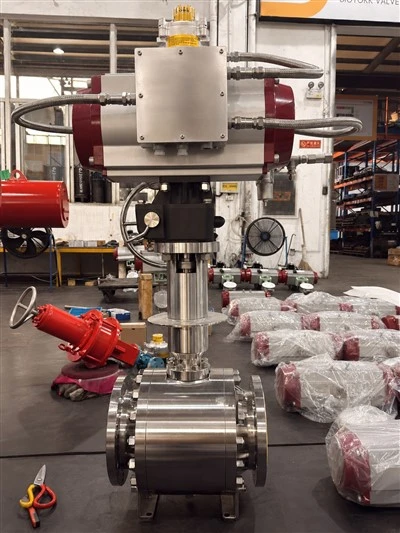
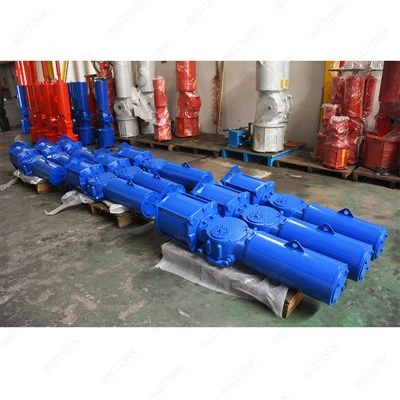
In the dynamic landscape of industrial machinery, air actuators play a pivotal role in converting energy into mechanical motion. As a leading supplier of air actuators, we've witnessed firsthand the transformative power of new technologies in enhancing the performance of these essential components. This blog post delves into the ways in which cutting - edge technologies are revolutionizing air actuator performance, offering insights into the advancements that are shaping the future of the industry.
Precision Engineering and Design Optimization
One of the most significant ways new technologies are improving air actuator performance is through precision engineering and design optimization. Advanced computer - aided design (CAD) and simulation tools allow engineers to create highly accurate models of air actuators. These tools enable the analysis of various design parameters, such as the shape of the piston, the dimensions of the cylinder, and the flow paths of the air.
For example, by using CFD (Computational Fluid Dynamics) simulations, engineers can study the airflow within the actuator. They can identify areas of high - pressure drop or turbulence, which can cause inefficiencies in the actuator's operation. By modifying the design based on these simulations, the actuator can achieve more uniform airflow, leading to smoother and more precise motion.
Our Scotch Yoke Type Actuator benefits greatly from such design optimization. The scotch yoke mechanism, which converts linear motion into rotary motion, has been refined using advanced design tools. This has resulted in a more efficient transfer of energy, reducing the amount of air required to achieve a given level of torque. As a result, our scotch yoke type actuators offer higher performance with lower energy consumption.
Material Advancements
The choice of materials in air actuator construction has a profound impact on its performance. New materials are being developed that offer superior strength, durability, and corrosion resistance compared to traditional materials.
For instance, high - performance polymers are increasingly being used in the construction of air actuator components. These polymers can withstand high temperatures and harsh chemical environments, making them ideal for applications in the chemical, oil, and gas industries. Additionally, they are often lighter than metal counterparts, which reduces the overall weight of the actuator. A lighter actuator means lower inertia, enabling faster start - up and stopping times.
In our Air Pressure Actuator, we use advanced composite materials for the piston and cylinder. These materials not only provide excellent wear resistance but also have a low coefficient of friction. This results in less energy loss due to friction, allowing the actuator to operate more efficiently. Moreover, the corrosion - resistant properties of these materials extend the service life of the actuator, reducing maintenance costs and downtime.
Smart Technology Integration
The era of the Internet of Things (IoT) has brought about a new wave of innovation in air actuator technology. Smart sensors and connectivity features are being integrated into air actuators, enabling real - time monitoring and control.
Smart sensors can measure various parameters such as position, pressure, temperature, and vibration. This data is then transmitted wirelessly to a central control system, where it can be analyzed to assess the health and performance of the actuator. For example, if a sensor detects an abnormal increase in temperature, it could indicate a problem with the actuator's lubrication or a mechanical issue. Early detection of such problems allows for proactive maintenance, preventing costly breakdowns.
Our Single Acting Actuator is equipped with smart sensors that continuously monitor its operation. The data collected can be used to optimize the actuator's performance. For example, the control system can adjust the air pressure based on the load requirements, ensuring that the actuator operates at its most efficient level. This not only saves energy but also extends the life of the actuator.
Advanced Control Systems
New technologies have also led to the development of more sophisticated control systems for air actuators. These systems offer greater flexibility and precision in controlling the actuator's motion.
Proportional control valves are a prime example of an advanced control technology. Unlike traditional on - off valves, proportional control valves can regulate the flow of air in proportion to an electrical input signal. This allows for precise control of the actuator's speed, position, and force. In applications where exact positioning is critical, such as in robotic arms or precision manufacturing equipment, proportional control valves can significantly improve the performance of air actuators.
Our Actuator Scotch Yoke can be paired with advanced proportional control systems. These systems enable smooth and accurate control of the rotary motion of the actuator, making it suitable for a wide range of applications that require high - precision movement.
Energy Efficiency Improvements
In today's world, energy efficiency is a top priority. New technologies are helping air actuators consume less energy while delivering the same or better performance.


One approach is the use of regenerative braking systems in air actuators. When an actuator decelerates, the kinetic energy can be converted back into electrical energy and stored for later use. This not only reduces energy consumption but also helps to extend the life of the actuator by reducing the wear and tear associated with traditional braking methods.
Another energy - saving technology is the use of variable - speed drives. These drives can adjust the actuator's speed according to the load requirements. For example, in applications where the actuator operates at different speeds depending on the task, a variable - speed drive can ensure that the actuator runs at the optimal speed, consuming only the necessary amount of energy.
Our P350 Double - Acting Scotch Yoke Actuator incorporates energy - saving features such as regenerative braking and variable - speed control. These technologies make our actuator a sustainable choice for industries that are looking to reduce their carbon footprint and energy costs.
Conclusion
The advancements in technology have brought about significant improvements in air actuator performance. From precision engineering and material advancements to smart technology integration and energy - saving features, these innovations are enhancing the efficiency, reliability, and longevity of air actuators.
As a supplier of air actuators, we are committed to staying at the forefront of these technological developments. We continuously invest in research and development to incorporate the latest technologies into our products, ensuring that our customers receive the highest - quality air actuators with superior performance.
If you are in the market for air actuators and are looking to take advantage of these technological advancements, we invite you to get in touch with us. Our team of experts is ready to discuss your specific requirements and help you find the perfect solution for your application.
References
- Khalil, O., & Arulpragasam, A. (2019). Design and Optimization of Pneumatic Actuators Using CFD. Journal of Mechanical Engineering Science.
- Smith, J., & Johnson, R. (2020). Advances in Smart Pneumatic Actuators: A Review. International Journal of Pneumatic Systems.
- Brown, L., & Green, M. (2021). Energy - Efficient Pneumatic Actuators for Industrial Applications. Energy Journal.