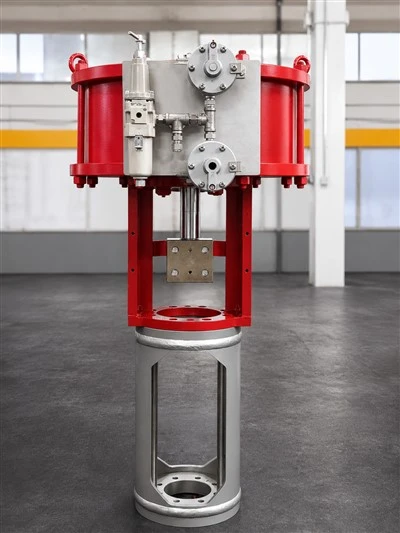
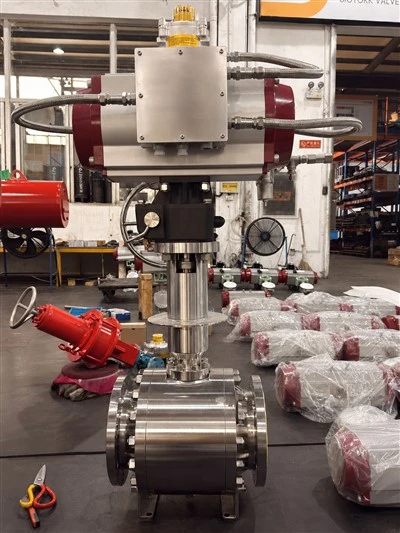
As a supplier of pneumatic rotary actuators, I often encounter inquiries from customers worldwide about the internationally recognized standards for these essential devices. Pneumatic rotary actuators play a crucial role in various industrial applications, including valve control, automation systems, and manufacturing processes. Understanding the standards that govern these actuators is vital for ensuring safety, reliability, and performance. In this blog post, I will delve into the key internationally recognized standards for pneumatic rotary actuators.
ISO Standards
The International Organization for Standardization (ISO) has developed a series of standards related to pneumatic rotary actuators. One of the most significant is ISO 5211, which pertains to the connection dimensions between valves and actuators. This standard ensures compatibility and interchangeability between different manufacturers' products. By adhering to ISO 5211, users can easily mount pneumatic rotary actuators on valves, simplifying installation and maintenance processes.
ISO 15552 is another important standard that covers general requirements for pneumatic cylinders, including rotary actuators. It specifies dimensions, mounting interfaces, and performance criteria. This standard helps manufacturers produce actuators with consistent quality and performance, allowing end - users to select products that meet their specific needs more confidently. Compliance with ISO 15552 also ensures that the actuators can operate reliably in various industrial environments, with defined parameters for pressure, temperature, and other operating conditions.
NAMUR Standards
The NAMUR standard, developed by the user group of automation technology in the process industries, is well - known in the European market and has a global influence. In the context of pneumatic rotary actuators, NAMUR interfaces are widely used. The NAMUR standard defines the mounting dimensions and connection details for solenoid valves and proximity switches on pneumatic actuators.
This standard simplifies the integration of control elements with the actuator. For example, a solenoid valve with a NAMUR interface can be easily attached to a NAMUR - compliant pneumatic rotary actuator. This not only streamlines the installation process but also enhances the overall system's reliability and maintainability. Many of our Part Turn Actuator models are designed to be NAMUR - compliant, allowing for seamless integration with a wide range of control devices.
ASME Standards
The American Society of Mechanical Engineers (ASME) has standards that are relevant to pneumatic rotary actuators, especially in the United States and some countries that follow American engineering practices. ASME B16.34, for instance, deals with valves - flanged, threaded, and welding end. Although it is mainly focused on valves, the requirements for valve - actuator compatibility in this standard also have implications for pneumatic rotary actuators.
ASME requires that the actuators and valves work together safely and effectively. This includes considerations for pressure ratings, material compatibility, and mechanical strength. Our Pneumatic Single - Acting Actuator With Bevel Gear Drive is designed to meet the high - quality standards that are in line with ASME requirements, ensuring optimal performance in industrial systems that follow American engineering codes.
UL and CE Markings
In addition to the above - mentioned standards, there are important safety and quality markings. The Underwriters Laboratories (UL) certification is highly regarded in North America. A UL - listed pneumatic rotary actuator has undergone rigorous testing to ensure it meets safety and performance requirements. This certification gives customers confidence in the product's safety, especially in applications where safety is a top priority, such as in chemical plants or power generation facilities.
The CE marking, on the other hand, is mandatory for products sold in the European Economic Area (EEA). It indicates that the product complies with relevant European health, safety, and environmental protection regulations. Our Angular Actuator is available with both UL and CE markings, allowing us to serve customers in both the North American and European markets.
Impact of Standards on Product Design and Manufacturing
These internationally recognized standards have a profound impact on the design and manufacturing of pneumatic rotary actuators. As a supplier, we are committed to adhering to these standards at every stage of the production process.
In terms of design, the standards dictate the physical dimensions, such as the mounting holes and shaft sizes. This ensures that our actuators can be easily integrated into existing systems. For example, when designing an Actuator with Bevel Gear Manual Override, we must consider the NAMUR interface requirements for solenoid valve mounting as well as the ISO 5211 connection dimensions for valve mounting.
During manufacturing, the standards set strict quality control parameters. We use high - precision machining techniques to ensure that the internal components of the actuators meet the required tolerances. The materials used in the construction, such as the piston, cylinder, and gearbox, are carefully selected to meet the pressure and environmental requirements specified in the standards.
Testing and Certification
To ensure compliance with the standards, rigorous testing is carried out. Our testing procedures include pressure testing, torque testing, and endurance testing. Pressure testing verifies that the actuator can withstand the maximum operating pressure without leakage. Torque testing ensures that the actuator can provide the required output torque to operate the valve or perform the intended function. Endurance testing subjects the actuator to a large number of operating cycles to simulate long - term use and ensure its reliability.
After passing these tests, we obtain the necessary certifications, such as UL and CE markings. These certifications are not only a testament to the quality of our products but also a requirement for entering certain markets. For example, without the CE marking, it is impossible to sell our Pneumatic Quarter - Turn Valve Actuator in the European market.
Importance of Standards for Customers
For customers, choosing pneumatic rotary actuators that meet international standards is of utmost importance. Firstly, it ensures safety. Standards are developed to prevent accidents and failures, such as valve leakage or actuator malfunctions, which can have serious consequences in industrial applications.
Secondly, standardized products offer better compatibility. Customers can easily replace or upgrade existing actuators without having to worry about compatibility issues with valves or control systems. This reduces downtime and maintenance costs.


Finally, products that meet international standards usually have better performance and reliability. They are designed and manufactured to withstand harsh industrial environments and long - term use, ensuring stable operation of the entire system.
Conclusion
In conclusion, the internationally recognized standards for pneumatic rotary actuators, such as ISO, NAMUR, and ASME, along with important safety markings like UL and CE, play a crucial role in the design, manufacturing, and use of these actuators. As a supplier, we are dedicated to producing high - quality pneumatic rotary actuators that comply with these standards.
If you are in the market for reliable and compliant pneumatic rotary actuators, we invite you to contact us for a detailed discussion of your requirements. We can provide you with customized solutions based on your specific applications and industry needs. Our team of experts is always ready to assist you in selecting the most suitable products and ensuring a seamless integration into your systems.
References
- ISO 5211 - 2017, Mounting interfaces for industrial valves - Part 1: Mounting dimensions for actuator attachment to valves
- ISO 15552 - 2013, Pneumatic fluid power - Cylinders - General requirements and dimensions
- NAMUR standards for automation technology in process industries
- ASME B16.34 - 2017, Valves - Flanged, Threaded, and Welding End