How to Control an Air Pressure Actuator
As a leading provider of air pressure actuators, I understand the significance of effective control of these devices in various industrial applications. In this blog post, I will delve into the intricacies of controlling an air pressure actuator, exploring the different types, control methods, and best practices.
Understanding Air Pressure Actuators
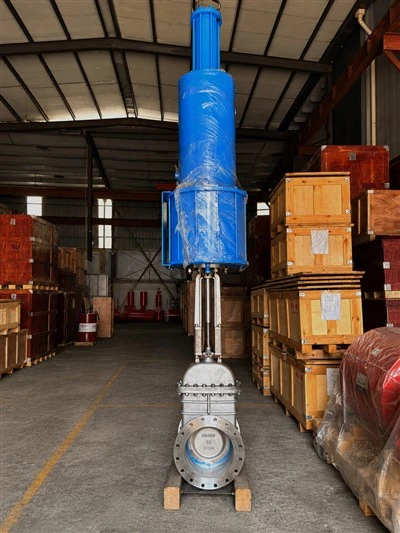
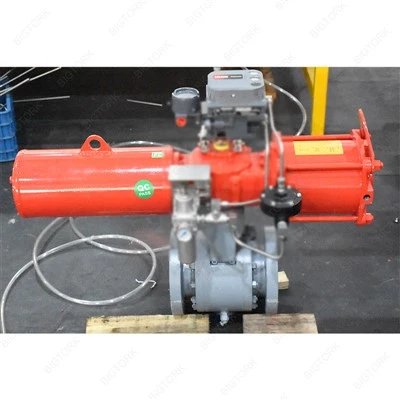
Air pressure actuators, also known as Air Actuator, convert compressed air energy into mechanical motion. They are widely used in industrial automation, manufacturing, and process control due to their simplicity, reliability, and cost - effectiveness. The most common types of air pressure actuators are single acting and double acting actuators, each with its own set of characteristics and control requirements.
Single Acting Actuator
A Single Acting Actuator uses compressed air to move the actuator in one direction, while a spring or other external force returns it to its original position. This type of actuator is often used in applications where a fail - safe position is required. For example, in a valve control system, a single acting actuator can be used to close the valve in case of air supply failure.
Double Acting Actuator
A Double Acting Actuator uses compressed air to move the actuator in both directions. This provides more flexibility in control and allows for greater force and speed in operation. Double acting actuators are commonly used in applications where continuous and reversible motion is needed, such as in robotic arms and linear motion systems.
Scotch Yoke Type Actuator
One of the most efficient and popular designs among air pressure actuators is the Scotch Yoke Type Actuator. This type of actuator converts the linear motion of the piston into rotary motion using a scotch yoke mechanism. It offers high torque output, smooth operation, and is suitable for applications such as valve actuators. Our Double - Acting P350Scotch Yoke Actuator is a prime example of a high - performance scotch yoke actuator, providing reliable and precise control in demanding industrial environments.
Control Methods
On - Off Control
The simplest form of air pressure actuator control is on - off control. In this method, the actuator is either fully extended or fully retracted. A solenoid valve is commonly used to control the air supply to the actuator. When the solenoid valve is energized, compressed air is supplied to the actuator, causing it to move. When the solenoid valve is de - energized, the air is vented, and the actuator returns to its home position (in the case of a single acting actuator) or stops moving (in the case of a double acting actuator).
On - off control is suitable for applications where a simple, binary action is required, such as opening or closing a valve quickly. However, it lacks the ability to provide precise positioning or variable speed control.
Proportional Control
Proportional control allows for more precise control of the air pressure actuator. Instead of simply turning the actuator on or off, proportional control adjusts the air pressure supplied to the actuator based on a control signal. This is typically achieved using a proportional pressure regulator or a servo - valve.
The control signal can be an electrical signal, such as a 4 - 20 mA or 0 - 10 V DC signal, which is proportional to the desired position or speed of the actuator. The proportional pressure regulator then adjusts the air pressure accordingly, allowing for smooth and accurate control of the actuator's position or speed. Proportional control is commonly used in applications where precise positioning, force control, or variable speed operation is required, such as in robotic assembly lines or advanced manufacturing processes.
Position Control
Position control is a specialized form of proportional control that focuses on accurately positioning the actuator at a specific location. This is achieved using a feedback device, such as a linear encoder or a potentiometer, to measure the actual position of the actuator. The measured position is then compared to the desired position, and the control system adjusts the air pressure to the actuator to minimize the position error.
Position control systems can be very precise, with the ability to position the actuator within a few thousandths of an inch. They are widely used in applications such as machine tooling, pick - and - place robots, and automated inspection systems.
Best Practices for Controlling Air Pressure Actuators
Proper Sizing and Selection
Before attempting to control an air pressure actuator, it is crucial to select the right actuator for the application. Consider factors such as the required force, speed, and stroke length. Using an undersized actuator can lead to poor performance and premature failure, while an oversized actuator can be wasteful and costly. Our team of experts can assist you in selecting the most suitable actuator for your specific needs.
Air Supply Quality
The quality of the compressed air supply has a significant impact on the performance and lifespan of the air pressure actuator. Contaminants such as dirt, oil, and water can cause damage to the actuator's internal components, leading to reduced efficiency and reliability. It is essential to use proper air filtration and drying systems to ensure that the compressed air is clean and dry.
Maintenance and Inspection
Regular maintenance and inspection of the air pressure actuator and its control system are essential for optimal performance. Check for leaks, worn seals, and damaged components regularly. Lubricate the actuator as recommended by the manufacturer to ensure smooth operation. Additionally, calibrate the control system periodically to maintain accurate positioning and speed control.
Conclusion
Controlling an air pressure actuator requires a good understanding of the actuator type, control methods, and best practices. Whether you need a simple on - off control for a basic valve application or a precise proportional position control for a high - end manufacturing process, we have the right air pressure actuator and control solution for you.
If you are interested in learning more about our air pressure actuators or if you have a specific application in mind, I encourage you to contact us to discuss your requirements. Our experienced team is ready to assist you in finding the best actuator and control system for your project. Let's work together to achieve efficient and reliable automation in your industrial processes.


References
- Pneumatic Systems Handbook, [Author's Name], [Publication Year]
- Industrial Automation: Principles and Practice, [Author's Name], [Publication Year]