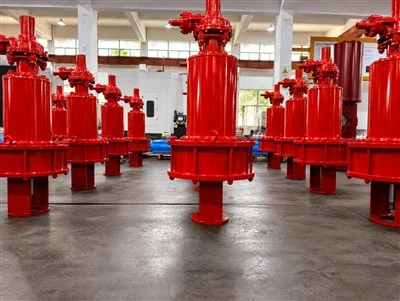
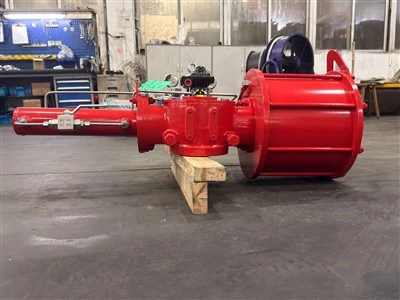
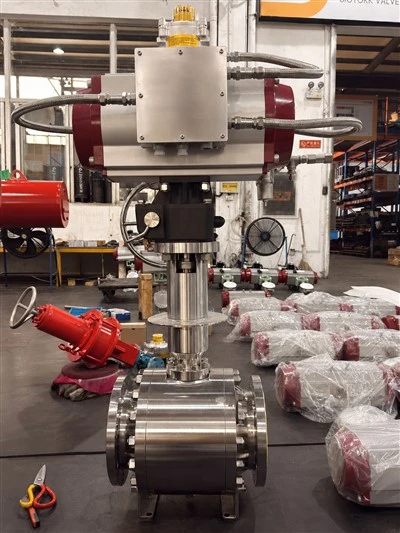
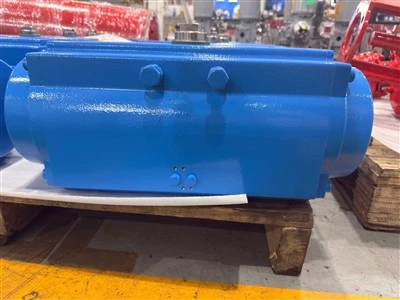
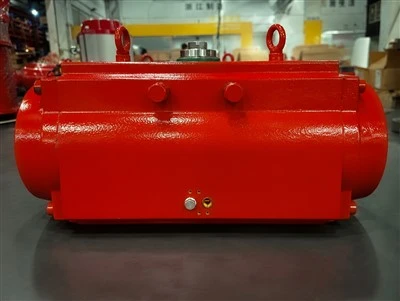
The working principle of a fork type actuator is that compressed air enters the cylinder and pushes the fork type piston to move in a straight line. This linear motion is converted into the rotational motion of a disc through the design of a fork, which in turn drives the rotation of the output shaft, achieving control of the valve.
Specifically, the internal structure of a fork type actuator includes a piston, which begins linear motion when compressed air enters the cylinder. The piston converts linear motion into rotational motion of a disc through the design of a shift fork. This rotational motion further drives the rotation of the output shaft, achieving control of the valve.
The design features of the fork type actuator include its compact internal structure, small volume, fast action speed, and low gas consumption. In addition, the fork type actuator can also be set to a normally open or normally closed state to meet different application requirements.