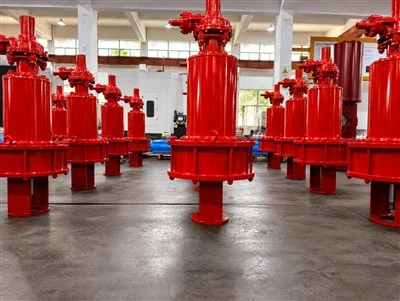
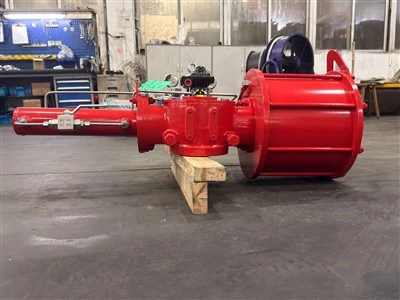
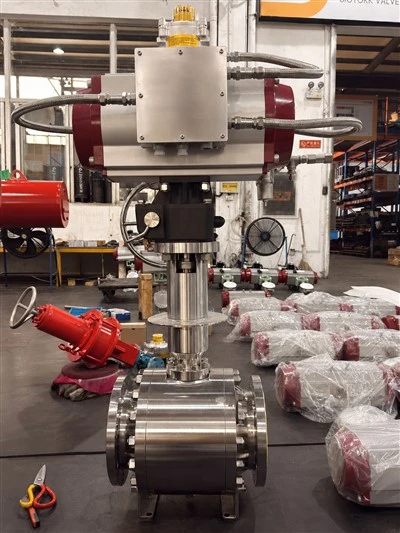
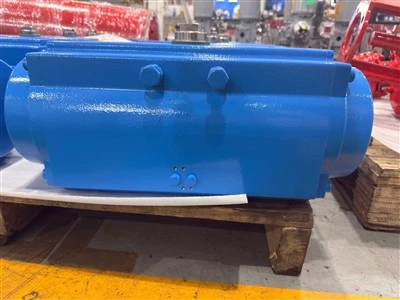
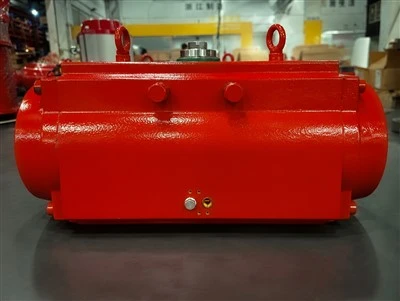
The main function of a fork type actuator is to control the opening and closing of valves through pneumatic means. It uses compressed air to drive the piston movement, and converts the linear motion of the piston into rotational motion through a shift fork, thereby driving the output shaft to rotate and control the valve.
Fork type actuators have the following characteristics and advantages:
High torque: Fork type actuators can provide a large torque when opening or closing valves, making them particularly suitable for controlling valves that require high torque, such as butterfly valves and ball valves.
Long life: Using smooth and wear-resistant shaft sleeves and multi-point guide seals to reduce friction, improve sealing performance, and thus extend service life.
Small size and light weight: Compared to other types of actuators, fork type actuators are smaller in size and lighter in weight, making them easier to install while providing the same torque.
Energy saving and environmental protection: With low gas consumption, it reduces the burden on the compressor and saves energy.
Quick response: Fast working speed and sensitive response.