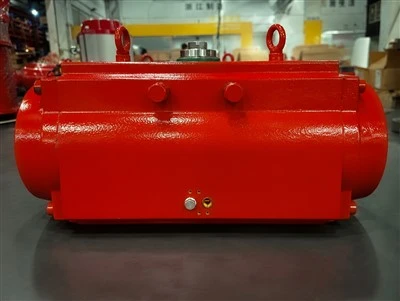
1. Handle position
Before manually operating the pneumatic actuator, it is necessary to first determine the position of the handle. The handle is usually located at the top or side of the actuator, and may vary depending on different models and brands. Some actuators may also be equipped with a tool free unloading handle function for changing the handle position.
2. Rotation direction
Another key element of manual operation of pneumatic actuators is the direction of rotation. Generally speaking, the rotation direction of the actuator should be clockwise. If you find significant resistance during operation, it is likely due to incorrect rotation direction. In this case, you only need to slightly adjust the position of the handle to match the correct rotation direction.
3. Push-pull force degree
When manually operating pneumatic actuators, pay attention to the pushing and pulling force of the handle, and do not use excessive force to operate, otherwise the actuator may be damaged. Generally speaking, the pushing and pulling force of the handle should be consistent with when using a pneumatic actuator. If you feel that the pushing and pulling force of the handle is too large or too small, it is likely that the valve of the pneumatic actuator has malfunctioned and needs further inspection and repair.
4. Precautions
1. Before manually operating the pneumatic actuator, ensure that the fire source and static power source have been completely eliminated to avoid accidents during operation.
During manual operation, the correct operating procedures should be followed to ensure safety and operational effectiveness.
After manual operation is completed, the handle should be returned to its original position to ensure that no misoperation occurs during the next use.