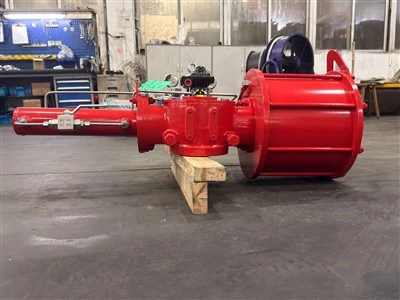
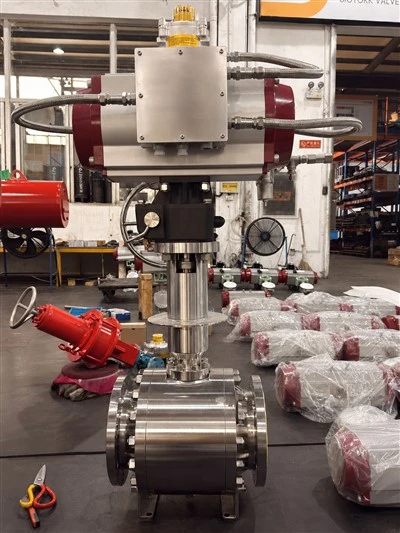
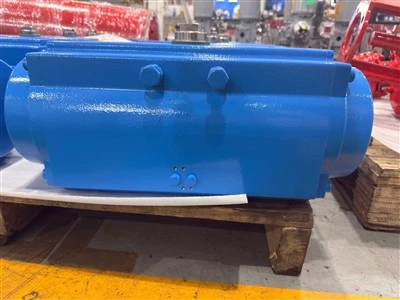
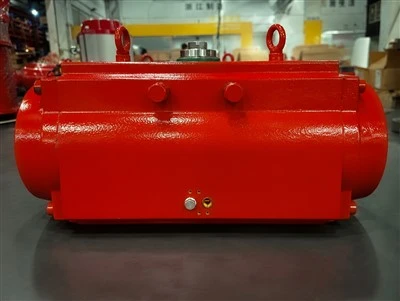
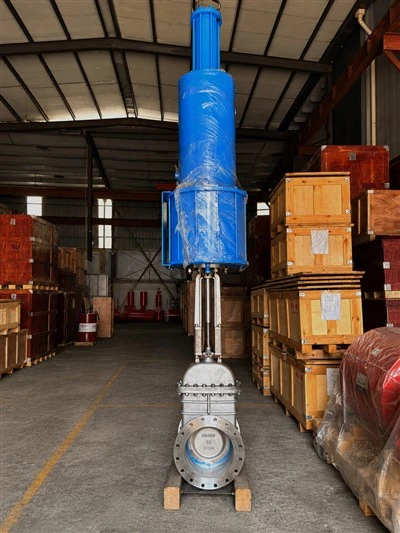
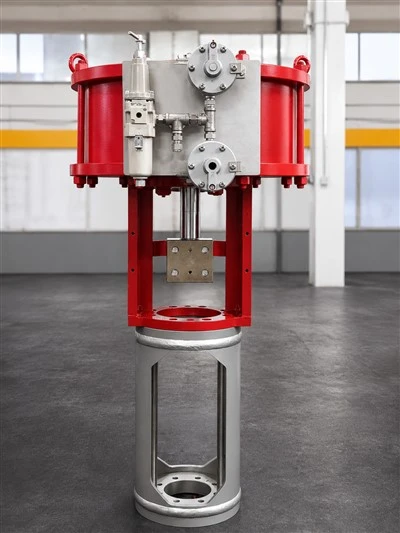
The working principle of pneumatic angular stroke actuators is to control the rotation of valves by driving gears and pistons through compressed air. After receiving the control signal, the pneumatic angular stroke actuator sends compressed air into the cylinder to push the piston, which in turn drives the gear to rotate, completing the opening or closing action of the valve.
Specifically, the working principle of pneumatic angular stroke actuators includes the following steps:
Receiving signal: The actuator receives standard current signals (such as 4-20mA) from regulators or other instruments.
Gas driven: Compressed air enters the cylinder and drives the piston to move.
Gear rotation: The movement of the piston drives the gear to rotate, achieving the opening or closing of the valve.
Feedback control: Accurate position control and feedback are achieved through auxiliary devices such as valve positioners.
The characteristics and applications of pneumatic angular stroke actuators include:
Features: High output torque, compact structure, in compliance with international standards, and good interchangeability.
Application: Widely used in power plants, chemical industry, refining and other occasions that require explosion-proof control.