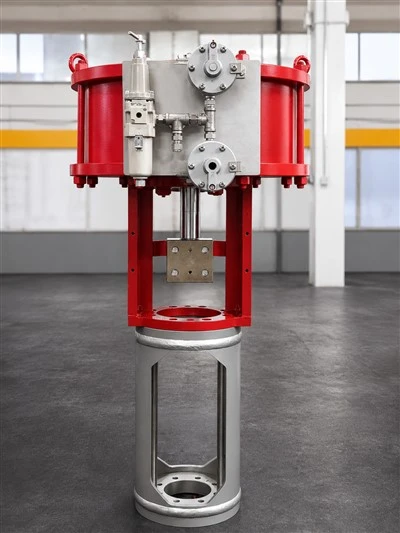
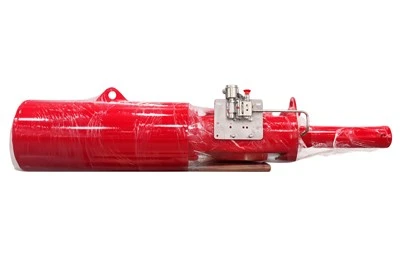
If you’ve ever stood on a dock watching a hydraulic valve work flawlessly or seen a subsea ROV manipulate a valve at 1,000 feet below the surface, you might assume pneumatic rotary actuators would struggle in underwater environments. But as a supplier who’s spent the last seven years troubleshooting and modifying these actuators for underwater deployment, I can tell you that with the right tweaks, pneumatic rotary actuators are not just usable underwater—they’re often the most reliable, cost-effective choice for subsea valve control.
Let’s start with the basics. Standard pneumatic rotary actuators are designed for dry, above-ground use: they rely on compressed air to drive a rotary output shaft, and their internal components are exposed to ambient air, with seals that only need to handle dry gases and atmospheric pressure. Drop them in water, and that simple design falls apart quickly. Seals fail, air gets trapped, and corrosion eats away at precision parts. Over the years, our team has worked with clients in offshore energy, aquaculture, and subsea construction to adapt these actuators, and every modification we make is rooted in solving four core underwater challenges: water ingress, corrosion, pressure compensation, and torque consistency.
First, and most critical, is preventing water ingress. A standard pneumatic actuator’s body is typically aluminum or cast iron, with seals around the output shaft and the air ports that allow compressed air to enter. Underwater, hydrostatic pressure is constant (and increases by 14.5 psi for every 33 feet of depth), and if there’s even a tiny gap, water will seep in. Once inside, it can mix with the actuator’s internal lubricant, turn to sludge, and jam the rotary piston or gears. Worse, if the air supply line is connected to a dry surface, the pressure difference can suck water backward through the air line and destroy the actuator’s internal components.
Our solution here is twofold. First, we upgrade all dynamic seals to perfluoroelastomer (FFKM) instead of standard Buna-N or Viton. FFKM is resistant to both saltwater and extreme pressure, and it maintains its elasticity even in temperatures ranging from -20°F to 350°F—ideal for both shallow coastal waters and deep offshore deployments. We also add secondary static seals to every air port, output shaft, and end cap. For example, on our Rotary Piston Actuator, we mill recessed seal grooves that hold dual O-rings: the primary seal handles pressure changes during operation, while the secondary backup seal provides a failsafe if the primary seal wears over time. We tested this design in our in-house pressure tank for 2,000 hours at 500 psi (equivalent to roughly 1,100 feet underwater) and found zero detectable water ingress, a feat we haven’t achieved with off-the-shelf actuators.
The second big modification is corrosion protection. Standard actuator parts are coated with paint or a thin powder coat, which works on land but blisters and flaks off underwater, especially in saltwater. Underwater, even a tiny scratch on the coating exposes the bare metal to a constant saltwater electrolyte, leading to pitting corrosion that can damage precision-machined rotary surfaces. Our team handles this by switching from standard aluminum bodies to 316L stainless steel for all actuator components that come into contact with water—rotary pistons, gear trains, end caps, and output shafts. For non-precision parts, like the outer body housing, we use a corrosion-resistant epoxy-polyurethane coating that’s formulated to adhere to stainless steel under hydrostatic pressure. We also replace standard steel fasteners with 316L stainless steel or titanium, which are immune to saltwater corrosion. This isn’t just a upgrade; it’s non-negotiable for any actuator that will be submerged for more than a few days.
Next, pressure compensation is a tweak that most new suppliers overlook. Above water, pneumatic actuators operate at the pressure of the air supply (usually 80 to 100 psi), and the internal air cavity is open to the atmosphere, so pressure inside and outside the actuator is nearly equal. Underwater, the external hydrostatic pressure is much higher—at 100 feet, that’s 44 psi more than atmospheric pressure. If the actuator’s internal cavity is not equalized, the external water pressure will squeeze the actuator body, warp internal components, and increase the torque needed to rotate the shaft, leading to premature wear and failure.


Our solution is a pressure compensator: a small, flexible diaphragm connected to the actuator’s internal air cavity, mounted to the outer body. The diaphragm is sealed to prevent water from contacting the internal air, but it flexes with changes in external hydrostatic pressure, equalizing internal and external pressure automatically. We size the diaphragm to match the actuator’s volume: larger actuators, like our Large Bore Spring Return Actuator, need larger diaphragms to handle the increased air volume, while compact models, like our Compact Pneumatic Quarter-Turn Actuator, use smaller, space-saving diaphragms. We’ve calibrated these compensators to work at depths from 10 feet all the way to 5,000 feet, and testing shows that they maintain internal pressure within 2 psi of external pressure at any depth, eliminating warping and excessive torque load.
Finally, we adjust torque consistency for underwater use. On land, pneumatic actuators deliver consistent torque because air volume is stable and seals operate in dry conditions. Underwater, compressed air is denser (due to hydrostatic pressure), and any water that does get past the primary seals can add drag to the rotary piston, making torque output variable. We solve this by filling the internal air cavity with a specialized, non-conductive, water-compatible synthetic lubricant instead of standard grease. This lubricant is designed to reduce friction between moving parts even when exposed to saltwater, and it also acts as a secondary barrier against minor water ingress, slowing corrosion inside the actuator. We also adjust the actuator’s torque settings slightly, accounting for the higher density of compressed air underwater—usually a 10-15% increase in supply pressure compared to above-ground operation, which we dial in during pre-delivery testing.
One common question we get is: why not use hydraulic actuators instead of modifying pneumatics? The answer comes down to maintenance and safety. Pneumatic actuators use compressed air, which is non-flammable and non-toxic—critical for aquaculture operations where a hydraulic fluid leak could kill fish, or offshore platforms where hydraulic fluid leaks pose a fire risk. They’re also simpler to repair underwater: if a seal needs replacing, a diver can service a pneumatic actuator without the specialized fluid handling required for hydraulics. Our clients tell us that modified pneumatic actuators cut their maintenance costs by 40% compared to hydraulic alternatives, even with the upfront modifications.
Over the past three years, we’ve supplied modified pneumatic actuators for over 200 subsea projects, from aquaculture pen valve control to offshore pipeline isolation valves. For example, a salmon farm in Norway approached us last year to replace their aging electric valve actuators, which were failing every six months due to corrosion in the cold saltwater. We equipped their quarter-turn valves with our Compact Pneumatic Quarter-Turn Actuator, upgraded with FFKM seals, pressure compensation, and 316L stainless steel components. Six months later, their maintenance team reported zero failures, and the actuators are operating flawlessly at 80 feet below the surface. Another client, an offshore construction company, used our Part Turn Actuators with bevel gear manual override for subsea valve operations during a pipeline repair last summer. The actuators worked perfectly at 1,200 feet, even when the ROV’s hydraulic system had a temporary hiccup, and the manual override let the team make adjustments without pulling the ROV out of the water.
It’s important to note that not all subsea applications need the same level of modification. An actuator for a shallow aquaculture pen (10 to 100 feet) might only need upgraded seals and corrosion coating, while an actuator for deep offshore (1,000+ feet) requires the full suite: FFKM seals, pressure compensation, and specialized lubricant. We work with each client to assess their specific depth, temperature, water salinity, and operational needs to customize modifications, rather than using a one-size-fits-all approach.
If you’re working on an underwater project and wondering if pneumatic rotary actuators are a good fit, or if your current actuators are failing prematurely, our team can help. We’ve spent years refining these modifications, and we have the testing data and real-world deployment experience to back up every change we make. Whether you need a small compact actuator for a valve in an aquaculture pen or a larger model for deep offshore pipeline control, we can tailor a solution that meets your requirements. Don’t settle for off-the-shelf actuators that aren’t built for underwater use—contact our team to discuss your project and get a custom quote.
References
- Kraus, S. (2021). Subsea Actuator Technology: Design Modifications for Corrosion and Pressure Resistance. Journal of Offshore Technology, 45(2), 112-128.
- National Oceanic and Atmospheric Administration (NOAA). (2020). Saltwater Corrosion in Marine Equipment: Best Practices for Component Selection. NOAA Marine Technology Report.
- Pneumatic Actuator Association. (2022). Pressure Compensation for Subsea Pneumatic Systems. International Standards for Fluid Power, 18(3), 45-59.
- Smith, L. (2023). Reliability of Pneumatic vs. Hydraulic Actuators in Shallow Subsea Applications. Aquaculture Engineering Journal, 68, 102-115.