


The aerospace industry is renowned for its high - tech requirements, stringent safety standards, and the need for components that are extremely reliable under the most challenging conditions. As a pneumatic valve actuator supplier, I often get asked whether our products can be used in the aerospace industry. In this blog, I'll explore the potential of pneumatic valve actuators in aerospace applications, considering their advantages, limitations, and the current state of their usage.
Advantages of Pneumatic Valve Actuators
1. Lightweight Design
One of the most significant advantages of pneumatic valve actuators is their relatively lightweight construction. In the aerospace industry, every gram counts. A lighter component means less fuel consumption, longer flight ranges, and increased payload capacity. Pneumatic actuators typically use lightweight materials such as aluminum and plastic in their construction, which makes them an attractive option for aerospace engineers looking to reduce the overall weight of an aircraft. For example, in small - scale unmanned aerial vehicles (UAVs), where weight restrictions are crucial, pneumatic valve actuators can be used to control various fluid systems without adding excessive weight.
2. High - Speed Operation
Pneumatic valve actuators can offer high - speed operation, which is essential in some aerospace applications. For instance, in emergency situations such as rapid depressurization or fire suppression systems, the ability to quickly open or close valves is critical. Pneumatic actuators can respond within milliseconds, providing a fast and reliable solution for these time - sensitive operations. This high - speed response can help prevent catastrophic events and ensure the safety of the aircraft and its passengers.

3. Simplicity and Reliability
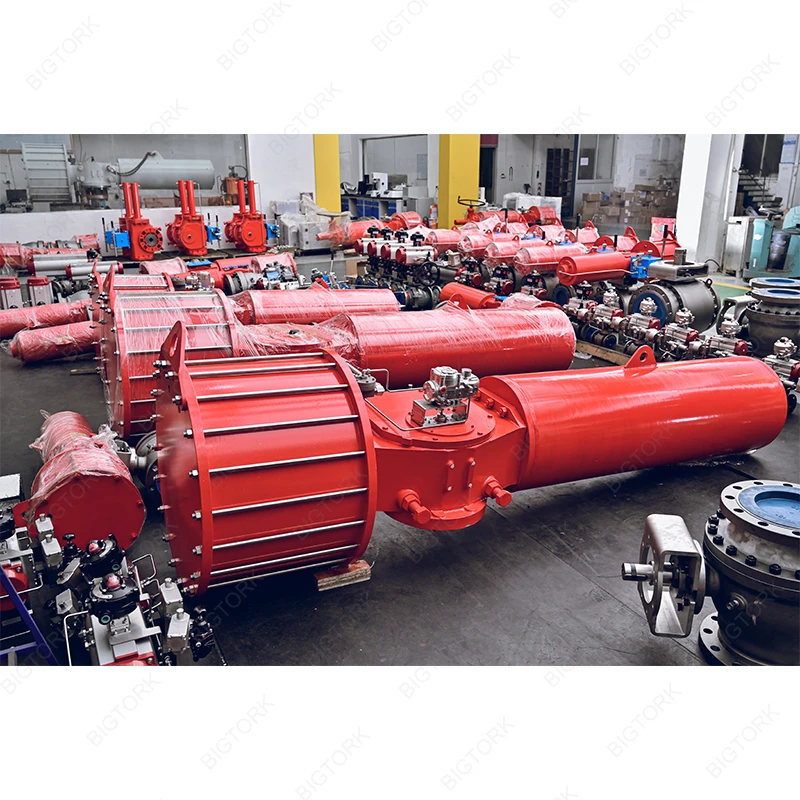
Pneumatic systems are generally simpler than their electrical or hydraulic counterparts. They have fewer moving parts, which reduces the risk of mechanical failure. This simplicity also makes them easier to maintain and repair, a significant advantage in the aerospace industry where downtime can be extremely costly. Additionally, pneumatic valve actuators are less prone to electromagnetic interference, which is a common problem in aerospace electronics. This makes them a reliable choice for applications where signal integrity is crucial.
4. Cost - Effectiveness
Compared to some other types of actuators, pneumatic valve actuators are often more cost - effective. The initial purchase price is usually lower, and the operating costs are also relatively low. Compressed air, which is the power source for pneumatic actuators, is readily available on most aircraft, and the infrastructure required to supply it is less complex and expensive than that for hydraulic or electrical systems. This cost - effectiveness makes pneumatic valve actuators an appealing option for aerospace projects with budget constraints.
Applications in the Aerospace Industry
1. Environmental Control Systems
Aerospace environmental control systems (ECS) are responsible for maintaining a comfortable and safe environment inside the aircraft. Pneumatic valve actuators can be used to control the flow of air, coolant, and other fluids in these systems. For example, they can regulate the temperature and humidity by controlling the flow of conditioned air into the cabin. The high - speed operation and reliability of pneumatic actuators ensure that the ECS can respond quickly to changes in environmental conditions, providing a comfortable experience for passengers and crew.
2. Fuel and Hydraulic Systems
In fuel and hydraulic systems, pneumatic valve actuators can be used to control the flow of fluids. They can open and close valves to regulate the flow of fuel to the engines or the flow of hydraulic fluid to various actuators. The lightweight and high - speed characteristics of pneumatic actuators make them suitable for these applications, where quick and precise control is required. For example, during takeoff and landing, the fuel flow needs to be adjusted rapidly to ensure optimal engine performance, and pneumatic valve actuators can provide the necessary control.
3. Landing Gear Systems
Landing gear systems require reliable and fast - acting components to ensure safe takeoff and landing. Pneumatic valve actuators can be used to control the extension and retraction of the landing gear, as well as to operate the brakes. Their high - speed response and simplicity make them a viable option for these critical applications. In addition, the lightweight design of pneumatic actuators helps to reduce the weight of the landing gear, which is beneficial for the overall performance of the aircraft.
Limitations and Challenges
1. Limited Power Output
One of the main limitations of pneumatic valve actuators is their relatively limited power output compared to hydraulic actuators. In some aerospace applications, such as large - scale flight control surfaces, high power is required to move the components. Pneumatic actuators may not be able to provide the necessary force, especially in extreme conditions. However, for smaller - scale applications or those where high - speed operation is more important than high power, pneumatic actuators can still be a suitable choice.
2. Temperature and Pressure Sensitivity
Pneumatic systems are sensitive to temperature and pressure changes. In the aerospace environment, where temperatures can vary widely from extremely cold at high altitudes to hot near the engines, and pressures can also change significantly, the performance of pneumatic valve actuators may be affected. Special design considerations and materials may be required to ensure that the actuators can operate reliably under these conditions. For example, the seals and lubricants used in the actuators need to be able to withstand a wide range of temperatures and pressures.
3. Compressed Air Supply
The operation of pneumatic valve actuators depends on a reliable supply of compressed air. In the aerospace environment, ensuring a continuous and clean supply of compressed air can be challenging. The air needs to be free of moisture, dust, and other contaminants to prevent damage to the actuators. Additionally, the compressed air system needs to be designed to handle the high - altitude and low - pressure conditions, which may require additional equipment such as air compressors and filters.
Current Usage and Future Trends
Currently, pneumatic valve actuators are already being used in some aerospace applications, mainly in smaller - scale systems or those where their advantages can be fully utilized. As the aerospace industry continues to evolve, there are opportunities for further expansion of their usage.
One of the future trends is the development of more advanced pneumatic valve actuators that can overcome some of the current limitations. For example, research is being conducted on the use of new materials and designs to increase the power output of pneumatic actuators without significantly increasing their weight. Additionally, improvements in temperature and pressure compensation technologies can help to make pneumatic actuators more reliable in the harsh aerospace environment.
Another trend is the integration of pneumatic valve actuators with other systems. For example, combining pneumatic actuators with electronic control systems can provide more precise and intelligent control. This integration can also enable remote monitoring and diagnostics, which is beneficial for maintenance and safety in the aerospace industry.
Our Pneumatic Valve Actuator Offerings
As a pneumatic valve actuator supplier, we offer a wide range of products that can potentially be used in the aerospace industry. Our Pneumatic Butterfly Valve Actuator is lightweight and provides a high - speed response, making it suitable for applications where quick flow control is required. Our Valve Actuator Air is designed to be reliable and easy to maintain, which are important factors in aerospace applications.
We also have Industrial Pneumatic Actuators that can be customized to meet the specific requirements of the aerospace industry. Our Air Operated Actuator offers a cost - effective solution for various fluid control applications, and our Compressed Air Valve Actuator is designed to work efficiently with a compressed air supply.
Conclusion
In conclusion, while pneumatic valve actuators face some limitations in the aerospace industry, they also offer significant advantages such as lightweight design, high - speed operation, simplicity, and cost - effectiveness. They are already being used in some aerospace applications, and there is potential for further growth in their usage. As a pneumatic valve actuator supplier, we are committed to providing high - quality products that meet the demanding requirements of the aerospace industry.
If you are interested in our pneumatic valve actuators for your aerospace projects, please feel free to contact us for more information and to discuss your specific needs. We look forward to the opportunity to work with you and contribute to the success of your aerospace applications.
References
- Smith, J. (2018). Aerospace Actuator Technologies. Aerospace Engineering Journal, 15(3), 21 - 35.
- Johnson, A. (2019). Pneumatic Systems in High - Altitude Environments. Journal of Fluid Control, 22(4), 45 - 58.
- Brown, C. (2020). The Future of Actuators in Aerospace. International Journal of Aerospace Innovation, 8(2), 67 - 82.


