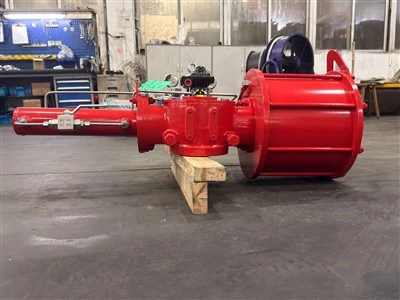
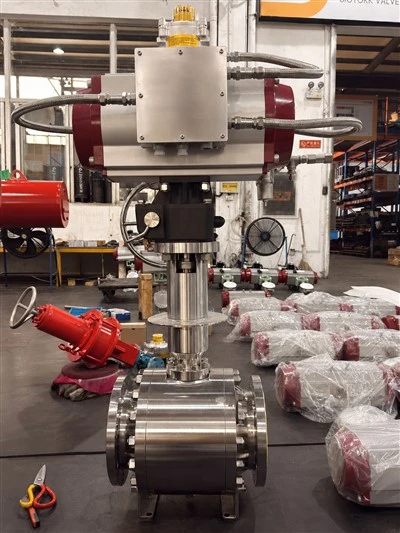
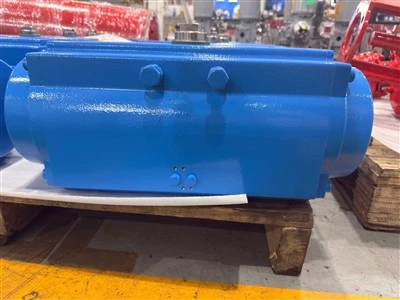
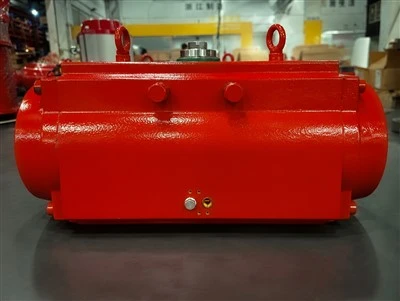
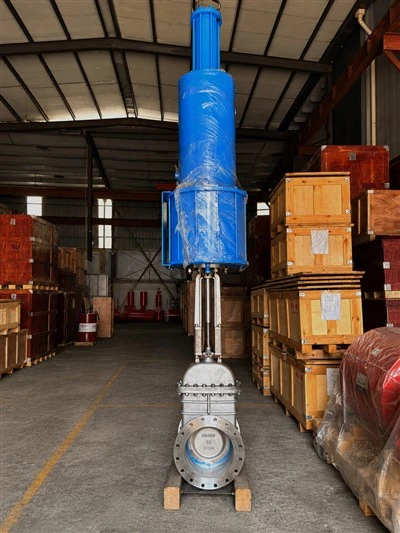
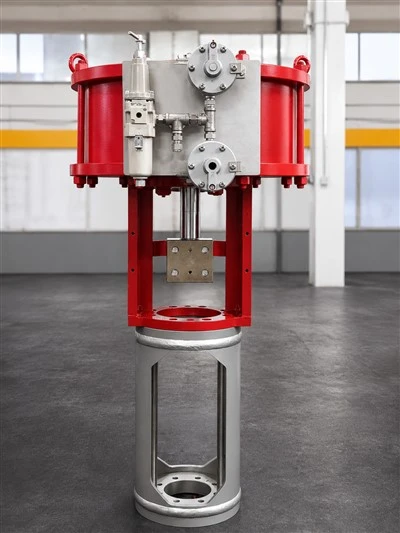
The working principle of a hydraulic linear actuator is to drive the actuator's movement through hydraulic pressure, achieving linear motion. When exceptional anti deviation ability, high thrust, and fast formation speed are required, hydraulic actuators are an ideal choice. The incompressibility of liquids makes hydraulic actuators have excellent anti deviation ability, which is very important for regulating operating conditions.
The structure of a hydraulic linear actuator mainly includes a motor, an oil pump, an electro-hydraulic servo valve, and other parts. The motor drives the oil pump to produce hydraulic oil, which is transported through pipelines to the actuator, pushing the piston or cylinder to make linear motion. The electro-hydraulic servo valve adjusts the flow rate and pressure of hydraulic oil according to the control signal, thereby achieving precise control.