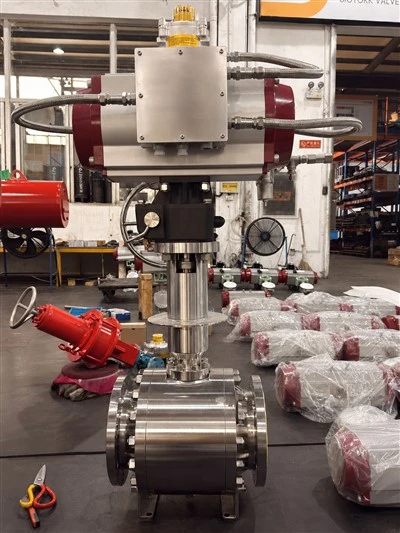
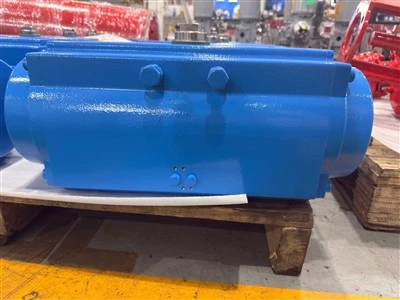
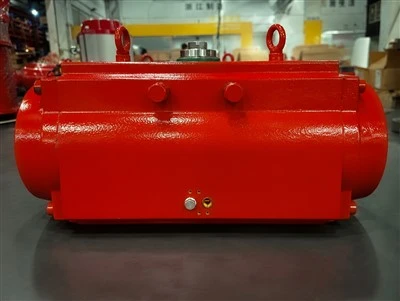
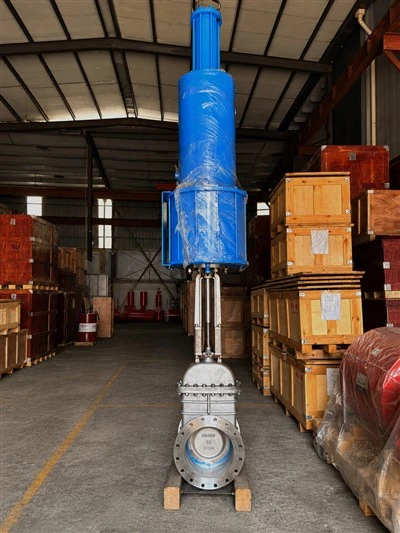
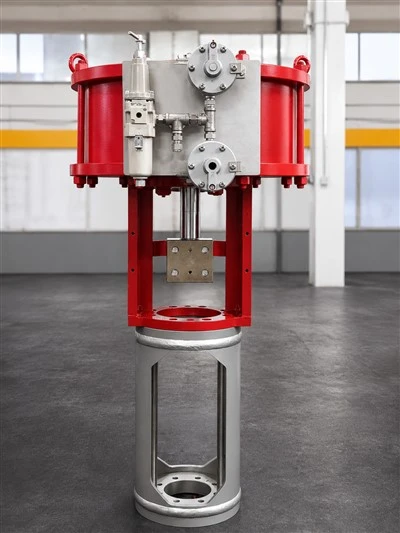
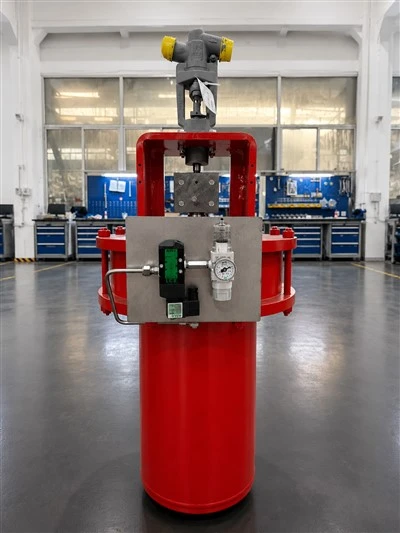
When choosing a hydraulic actuator, the first step is to clarify the core requirements, namely the specific purpose and working environment of the actuator. Hydraulic actuators are mainly used to provide linear or rotational motion, suitable for applications that require high or large torque. When choosing, the following key factors need to be considered: force or torque requirements, speed and response time, accuracy and repeatability, environmental conditions, size and weight, power and control system compatibility, as well as cost and maintenance requirements.
The specific steps for selecting a hydraulic actuator are explained in detail as follows:
Force or torque requirements: The actuator must be able to generate sufficient force or torque to meet the application requirements. It is necessary to review the manufacturer's specifications to ensure that the actuator meets or exceeds the applied force or torque requirements.
Speed and response time: For applications that require fast and precise movement, choose actuators with faster speed and shorter response time.
Accuracy and repeatability: For applications that require precise positioning and control, evaluate the ability of the actuator to reach a specific position and continuously return to that position.
Environmental conditions: Consider factors such as temperature, humidity, dust, and vibration to select actuators that can operate under specific application conditions.
Size and weight: In applications where space is limited or weight is a critical factor, choose actuators with compact design and lightweight materials.
Compatibility of power supply and control system: Ensure that the voltage, current, and control signal requirements of the actuator are compatible with existing infrastructure.
Cost and maintenance requirements: Evaluate initial and long-term costs to determine total cost of ownership.