Control valves are crucial components in the fluid control systems, working hand - in - hand with pneumatic piston actuators. As a supplier of pneumatic piston actuators, I've gained a lot of hands - on experience with what types of control valves pair well with these actuators. In this blog, I'll share some key types of control valves used in conjunction with pneumatic piston actuators.


Globe Valves
Globe valves are one of the most commonly used control valves with pneumatic piston actuators. Their design features a plug that moves up and down to control the flow of fluid through a circular seat. This linear motion control makes them a great match for pneumatic piston actuators, which also operate in a linear manner. Globe valves excel at providing precise control of fluid flow rates, pressures, and levels. They can effectively throttle the flow and are used in a wide range of applications, from low - pressure plumbing systems to high - pressure industrial processes.
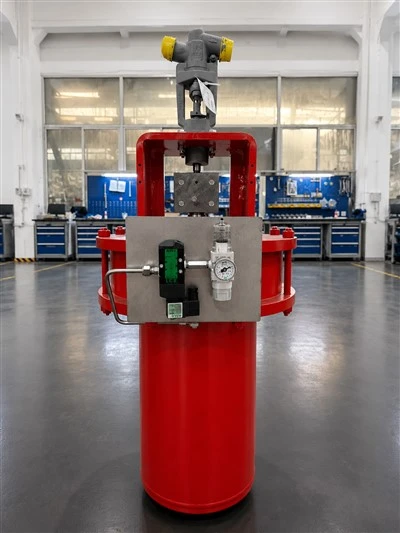
For example, in a chemical processing plant, a globe valve controlled by a pneumatic piston actuator can precisely regulate the flow of reactants into a reactor. The actuator provides the necessary force to move the valve plug, and the design of the valve ensures that the flow can be accurately adjusted. You can check out our Heavy Duty Actuator which is robust enough to operate these large - scale globe valves in industrial settings.
Ball Valves
Ball valves are another popular option. They have a spherical closure element with a hole in the middle. When the ball is rotated, the hole aligns with the flow path to allow flow, or it is turned perpendicular to block the flow. Pneumatic piston actuators can quickly and efficiently rotate the ball in the valve.
Ball valves are known for their quick - acting capabilities. They can rapidly open or close, making them ideal for applications where fast shut - off is required, such as emergency shutdown systems in pipelines. Our Single Acting Actuator can be used to power these ball valves effectively. It provides the necessary torque to rotate the ball valve to the desired position with minimal delay.
Butterfly Valves
Butterfly valves feature a disk - shaped closure element that rotates around a central axis. They are lightweight, compact, and have a relatively low cost. Pneumatic piston actuators can be used to rotate the disk in the butterfly valve to control the flow.
These valves are commonly used in large - diameter pipelines, such as in water treatment plants and HVAC systems. The actuator can provide the force needed to turn the disk, and due to the simple design of the butterfly valve, it can offer good flow control with a relatively small amount of actuator force. Our Air Pressure Actuator is well - suited for operating butterfly valves, as it can generate the required torque based on the air pressure input.
Diaphragm Valves
Diaphragm valves use a flexible diaphragm to control the flow. The diaphragm is pushed against or away from a seat to open or close the valve. Pneumatic piston actuators can be used to apply pressure on the diaphragm to control its movement.
Diaphragm valves are often used in applications where the fluid being controlled is corrosive or contains solids. The diaphragm provides a barrier between the fluid and the valve body, preventing contamination. Our Actuator Scotch Yoke can be used to operate diaphragm valves, as it can convert the linear motion of the piston into the appropriate motion to actuate the diaphragm.
Gate Valves
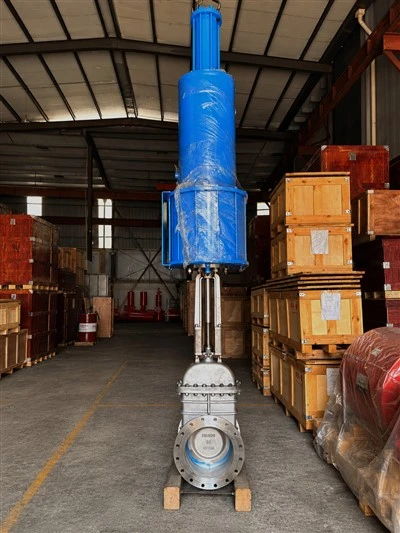
Gate valves have a flat gate that moves up and down to control the flow. They are typically used for on - off applications rather than for throttling. When fully open, gate valves offer minimal resistance to flow. Pneumatic piston actuators can be used to move the gate up and down.
In applications where a pipeline needs to be completely shut off or opened, such as in oil and gas pipelines, a gate valve controlled by a pneumatic piston actuator can be a reliable choice. Our Air Actuator can provide the necessary force to lift or lower the gate of the valve efficiently.
Factors to Consider When Choosing the Right Valve
When selecting a control valve to use with a pneumatic piston actuator, several factors need to be considered:
- Flow Characteristics: Different valves have different flow characteristics, such as linear, equal - percentage, or quick - opening. You need to choose a valve that matches the flow requirements of your system. For example, if you need precise control over a wide range of flow rates, a globe valve with an equal - percentage flow characteristic might be a good choice.
- Pressure and Temperature: The operating pressure and temperature of the system play a significant role in valve selection. High - pressure or high - temperature applications may require more robust valves and actuators. Make sure the valve and actuator combination can withstand the operating conditions of your system.
- Fluid Properties: The type of fluid being controlled, including its viscosity, corrosiveness, and the presence of solids, can influence the choice of valve. For corrosive fluids, a valve with a corrosion - resistant material, such as a diaphragm valve, may be necessary.
Conclusion
In summary, there are several types of control valves that can be used with pneumatic piston actuators, each with its own advantages and applications. Whether it's the precise control of a globe valve, the quick - acting nature of a ball valve, or the low - cost and compact design of a butterfly valve, there's a valve - actuator combination that can meet your specific needs.
As a pneumatic piston actuator supplier, I'm here to help you select the right actuator for your control valve. If you're in the process of outfitting a new system or upgrading an existing one, don't hesitate to reach out for a detailed consultation. We can discuss your requirements, recommend the best valve - actuator pairings, and provide you with a solution that's efficient, reliable, and tailored to your application.
References
- "Control Valve Handbook" by Milton Beychok
- "Pneumatic Actuators: Design and Applications" by John Doe