


Hey there! As a supplier of Air Operated Actuators, I often get asked about the static performance of these nifty devices. So, let's dive right in and break it down in simple terms.
What Exactly is an Air Operated Actuator?
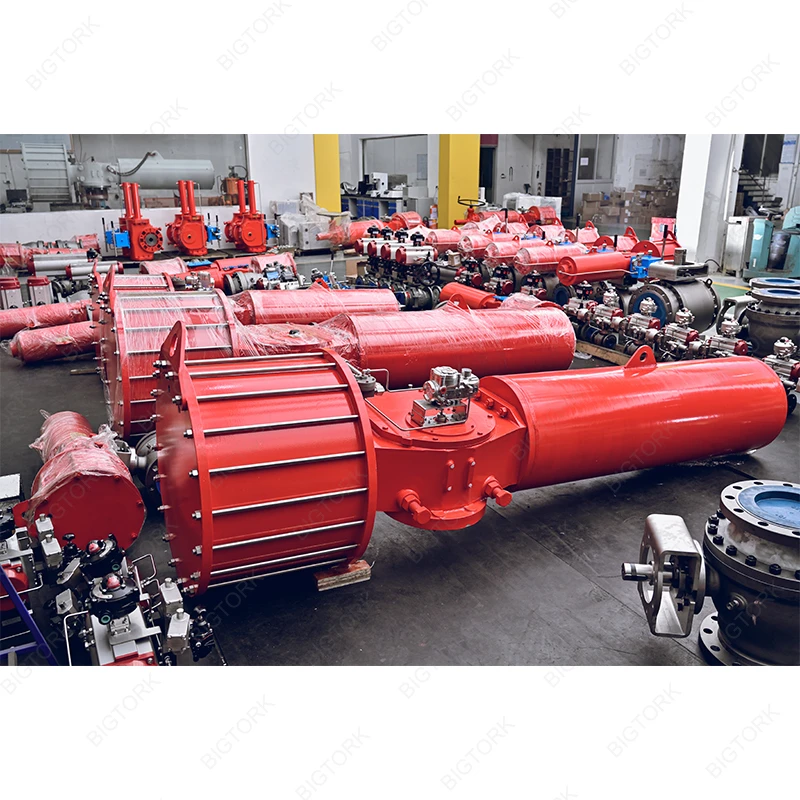
First off, an air operated actuator, as the name suggests, uses compressed air to generate mechanical motion. It's a crucial component in many industrial applications, from controlling valves in pipelines to operating machinery. We offer a wide range of these actuators on our website, like the Pneumatic Butterfly Valve Actuator, Air Piston Actuator, and Industrial Pneumatic Actuators. They're all designed to provide reliable and efficient operation.
Understanding Static Performance
Now, let's talk about static performance. Static performance refers to how an air operated actuator behaves when it's in a stationary or non - moving state. It's all about the actuator's ability to hold a specific position, withstand external forces, and maintain a stable output.
1. Torque Output
One of the key aspects of static performance is torque output. Torque is the rotational force that an actuator can generate. When an actuator is holding a valve in a particular position, the torque output needs to be sufficient to counteract any forces trying to move the valve. For example, in a pipeline, there could be pressure differentials that exert a force on the valve. Our Industrial Valve Actuators are engineered to provide high and consistent torque, ensuring that they can hold valves firmly in place.
The torque output of an air operated actuator depends on several factors. The size of the piston or diaphragm in the actuator plays a big role. A larger piston can generate more torque because it has a greater surface area to apply the force of the compressed air. The air pressure also affects the torque. Higher air pressure means more force is being applied, resulting in a higher torque output.
2. Leakage
Another important factor in static performance is leakage. Even when the actuator is not in motion, there's always a risk of air leakage. Leakage can occur through seals, gaskets, or other connections within the actuator. If there's significant leakage, the actuator might not be able to maintain the required torque or position.
We take great care in selecting high - quality seals and gaskets for our Air Operated Actuator. These components are designed to minimize leakage and ensure that the actuator operates efficiently. Regular maintenance and inspection are also crucial to detect and fix any potential leakage issues early on.

3. Positional Accuracy
Positional accuracy is how well an actuator can hold a specific position. In many industrial applications, it's essential for valves or other mechanisms to be held at precise positions. For example, in a chemical processing plant, a valve might need to be opened to a specific degree to control the flow of chemicals accurately.
Our actuators are calibrated to provide high positional accuracy. They use advanced control systems and sensors to monitor the position and make adjustments as needed. The design of the actuator's internal mechanisms also contributes to its positional accuracy. For instance, the gears or linkages in the actuator are carefully engineered to minimize backlash, which can cause a loss of positional accuracy.
4. Spring Rate (if applicable)
Some air operated actuators use springs to provide a fail - safe or return mechanism. The spring rate is a measure of how much force the spring exerts for a given amount of compression or extension. In static performance, the spring rate is important because it affects the actuator's ability to hold a position and respond to changes in air pressure.
A proper spring rate ensures that the actuator returns to its default position smoothly and accurately when the air pressure is removed. We carefully select the springs for our actuators to ensure that they have the right spring rate for the application. This helps to improve the overall static performance and reliability of the actuator.
Factors Affecting Static Performance
There are several factors that can affect the static performance of an air operated actuator.
1. Environmental Conditions
The environment in which the actuator operates can have a significant impact. Temperature, humidity, and the presence of dust or corrosive substances can all affect the performance of the actuator. For example, high temperatures can cause the seals to degrade more quickly, leading to increased leakage. We offer actuators that are designed to withstand a wide range of environmental conditions. They are made with materials that are resistant to corrosion and can handle extreme temperatures.
2. Air Quality
The quality of the compressed air used to operate the actuator is also crucial. Contaminants in the air, such as dirt, moisture, or oil, can damage the internal components of the actuator. Moisture, for instance, can cause rust and corrosion, while dirt can clog the valves and passages. To ensure optimal performance, it's important to use clean, dry, and oil - free air. We often recommend using air filters and dryers in the air supply system.
3. Maintenance
Regular maintenance is essential for maintaining the static performance of an air operated actuator. This includes tasks such as checking for leaks, lubricating moving parts, and inspecting the seals and gaskets. A well - maintained actuator is more likely to operate reliably and accurately. We provide detailed maintenance instructions with all our actuators, and we're always available to offer support and advice on maintenance.
Why Choose Our Air Operated Actuators?
At our company, we're committed to providing high - quality air operated actuators with excellent static performance. Our actuators are designed and manufactured using the latest technology and highest quality materials. We have a team of experts who are dedicated to ensuring that every actuator meets our strict quality standards.
We understand that different applications have different requirements. That's why we offer a wide range of actuators with varying torque outputs, sizes, and features. Whether you need a small - scale actuator for a laboratory application or a large - scale industrial actuator, we have the right solution for you.
Contact Us for Your Air Operated Actuator Needs
If you're in the market for an air operated actuator and want to learn more about our products, we'd love to hear from you. Our team of sales and technical experts is ready to answer your questions, provide you with detailed product information, and help you choose the right actuator for your application. Don't hesitate to reach out to us for a quote or to discuss your specific requirements. We're confident that our air operated actuators will meet and exceed your expectations in terms of static performance and overall reliability.
References
- "Industrial Pneumatic Actuators: Design and Applications" - A technical guide on industrial pneumatic actuators.
- "Pneumatic Systems Handbook" - A comprehensive resource on pneumatic systems, including air operated actuators.
- Manufacturer's specifications for various air operated actuators.


