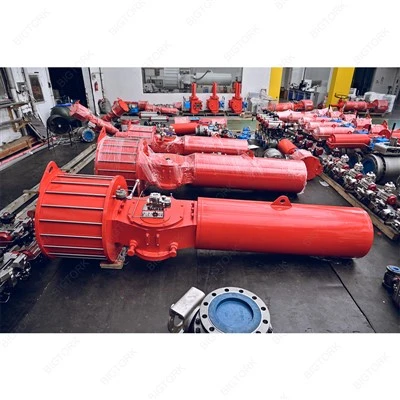
Hey there! As a supplier of Pneumatic Piston Actuator, I've seen firsthand how crucial it is to ensure a stable supply pressure for these devices. In this blog post, I'm gonna share some tips and tricks on how to do just that.
Understanding the Basics
First off, let's talk about what a pneumatic piston actuator is and how it works. A pneumatic piston actuator uses compressed air to generate linear or rotary motion. It's commonly used in industrial applications to control valves, dampers, and other equipment.
The key to a pneumatic piston actuator's performance is the supply pressure. If the pressure is too low, the actuator won't be able to generate enough force to move the load. On the other hand, if the pressure is too high, it can cause damage to the actuator and other components.
Factors Affecting Supply Pressure
There are several factors that can affect the supply pressure of a pneumatic piston actuator. Here are some of the most common ones:
- Air Compressor Capacity: The capacity of your air compressor plays a big role in determining the supply pressure. If your compressor can't deliver enough air, the pressure will drop.
- Pipe Size and Length: The size and length of the pipes that carry the compressed air can also affect the pressure. Longer pipes and smaller diameters can cause pressure drops.
- Leakage: Leaks in the air supply system can reduce the pressure. Even small leaks can add up over time and cause significant problems.
- Regulator Settings: The settings on your pressure regulator can also affect the supply pressure. Make sure the regulator is set to the correct pressure for your actuator.
Tips for Ensuring Stable Supply Pressure
Now that we know what factors can affect the supply pressure, let's talk about some tips for ensuring a stable supply.
1. Choose the Right Air Compressor
The first step is to choose an air compressor that has enough capacity to meet the demands of your pneumatic piston actuator. You'll need to consider factors like the actuator's size, the required force, and the duty cycle.
If you're not sure what size compressor you need, you can consult with a professional or use an online compressor sizing calculator.
2. Optimize Your Piping System
To minimize pressure drops, it's important to optimize your piping system. Here are some tips:
- Use the Right Pipe Size: Make sure you're using the correct pipe size for your application. A larger pipe diameter can reduce pressure drops.
- Keep Pipes Short: Try to keep your pipes as short as possible. Longer pipes can cause more pressure drops.
- Avoid Sharp Bends: Sharp bends in the pipes can also cause pressure drops. Use gentle curves instead.
- Insulate Your Pipes: Insulating your pipes can help reduce heat loss and improve the efficiency of your air supply system.
3. Check for Leaks Regularly
Leaks in the air supply system can cause a significant drop in pressure. To prevent this, it's important to check for leaks regularly. Here are some ways to do it:
- Visual Inspection: Look for signs of leaks, such as hissing sounds, moisture, or oil stains.
- Soap Solution: You can also use a soap solution to check for leaks. Apply the solution to the joints and connections in your air supply system. If there's a leak, you'll see bubbles forming.
- Leak Detection Equipment: There are also specialized leak detection equipment available that can help you find leaks more accurately.
4. Set the Pressure Regulator Correctly
The pressure regulator is an important component in your air supply system. It helps maintain a stable supply pressure for your pneumatic piston actuator.
To set the pressure regulator correctly, you'll need to know the required pressure for your actuator. You can usually find this information in the actuator's specifications.
Once you know the required pressure, adjust the regulator accordingly. Make sure to check the pressure regularly to ensure it stays within the desired range.
5. Use a Pressure Relief Valve
A pressure relief valve is a safety device that helps prevent overpressure in your air supply system. If the pressure exceeds a certain level, the valve will open and release the excess air.
Using a pressure relief valve can help protect your pneumatic piston actuator and other components from damage. Make sure to choose a valve that has the correct pressure rating for your application.


Different Types of Pneumatic Piston Actuators
There are several different types of pneumatic piston actuators available, each with its own advantages and disadvantages. Here are some of the most common types:
- Single Acting Actuator: A single acting actuator uses compressed air to move the piston in one direction. A spring is used to return the piston to its original position.
- Spring Return Actuator: Similar to a single acting actuator, a spring return actuator uses a spring to return the piston to its original position. However, it can also be used to provide a fail-safe function in case of a loss of air pressure.
- Scotch Yoke Type Actuator: A scotch yoke type actuator uses a scotch yoke mechanism to convert linear motion into rotary motion. It's commonly used in applications where a high torque output is required.
- Double-Acting P350Scotch Yoke Actuator: A double acting actuator uses compressed air to move the piston in both directions. It's more versatile than a single acting actuator and can be used in a wider range of applications.
Conclusion
Ensuring a stable supply pressure for your pneumatic piston actuator is essential for its performance and longevity. By following the tips and tricks outlined in this blog post, you can minimize pressure drops, prevent leaks, and keep your actuator running smoothly.
If you're in the market for a pneumatic piston actuator or need help with your air supply system, don't hesitate to reach out. We're here to help you find the right solution for your needs.
References
- Pneumatic Actuator Handbook
- Industrial Pneumatics: A Practical Approach
- Air Compressor Manuals